

The AR-15 is clearly America’s favorite rifle and, like any good rifle, the AR-15 is well-served by the presence of an optic.
However, the AR 15 optics market is flooded with options…
You can shove basically anything on there, and this can make this selection process of finding your best AR 15 optic somewhat overwhelming.
But don’t worry–I’ve got you covered. As an avid shooter and optics enthusiast, I’ve spent countless hours behind various optics, testing their performance in different scenarios.
Using my knowledge, I’ve put together a list of the best optics in the market for AR-15 rifles.
I’ll guide you through this diverse landscape of optics to help you zero in on the best choice for your AR-15, be it for close-range shooting or target shooting at longer distances.
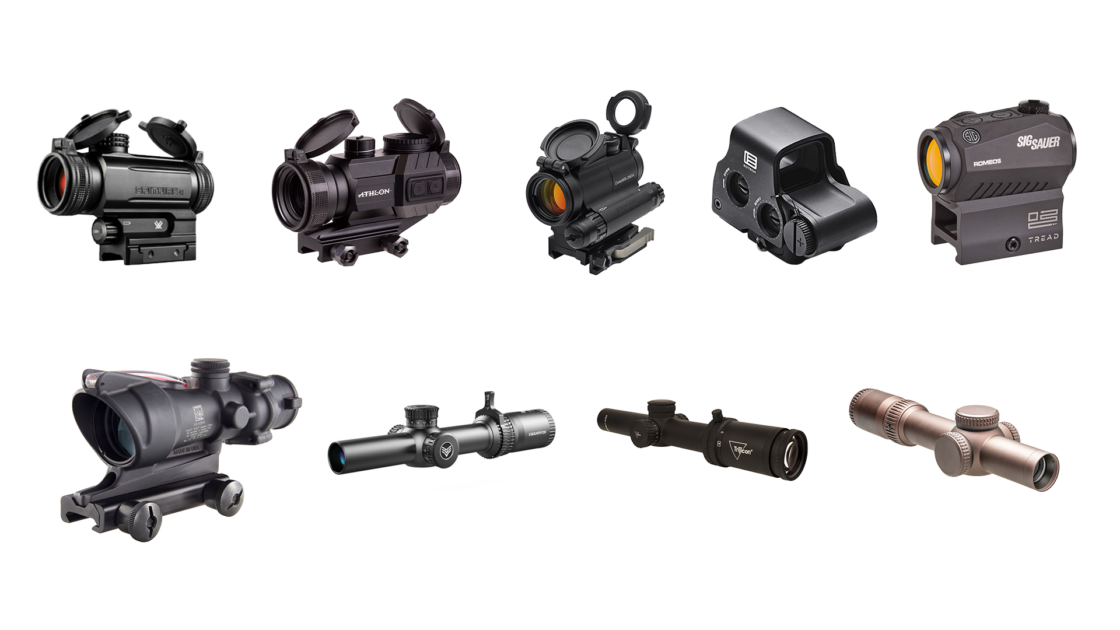
That said, most AR15 optics fall into three categories: Red Dots, Prism, and LPVOs.
So let’s take a closer look at those first.
Types of AR-15 Optics
There are a lot of different optics out there but you’ll mostly be using one of the following three types with your AR-15. Each type brings its own set of advantages, catering to specific shooting styles and preferences.
- Red dots – Red dots gain their name from the simple reticle they utilize. Most use a plain red dot that serves as your reticle although newer red dots are incorporating more complicated, multi-use reticles for a better degree of versatility. It’s a straightforward, non-magnified option that’s relatively easy to use from 5 to 200 yards or so. These simple optics can be tiny, lightweight, and have a minimal footprint overall. Holographic optics are not technically red dots but act in the same way. They can work with a broken window and can create more complicated reticles effectively. These optics serve the same purpose as a red dot in close-range shooting.
- Prism – Prism optics are often fixed power optics between 2.5 to 6 power. These optics are more compact and lighter than variable optics and tend to be extremely durable and simplistic. Prism optics utilize etched reticles that are illuminated. The etched reticles can be more complicated with bullet drop compensators, windage adjustments, and beyond. While the illumination utilizes batteries, should the batteries die or electronics fail, the etched reticle is still visible. There are a few prism optics that are 1x models that offer their own benefits over red dots. This includes the always-on etched reticle, a clear reticle for those with astigmatism, and the ability to utilize more complicated reticles.
- LPVOs – LPVO stands for Low Power Variable Optic. These versatile optics pack a punch and provide users with a magnification level that can range from 1x to 10x and everywhere in between. LPVOs come in various sizes, and the most common is 1-4x, 1-6x, 1-8x, and 1-10x. Most LPVOs use illuminated reticles that can act almost like a red dot at close ranges, and then the user can dial-in the magnification for longer range shots, target identification, and reconnaissance purposes. LPVOs are taking over the industry, and their versatility matches the AR 15 well.
When putting together this list, I made sure to include something for everyone to ensure that every shooter would be able to find something that suits their style. Here’s how I went about it.
How I Set Up To Curate The Best AR-15 Optics List
As someone who’s dived headfirst into the world of AR-15 optics, I’ve written tons about these babies and had the joy of not just owning a bunch of optics but also getting some sent over by companies. Heck, I’ve even had the chance to put a few through their paces at media events – a couple of those trials convinced me to snag a few for myself!
But before I got cracking on this article, I wanted to make sure I wasn’t missing any gems. So, I hit up a few pals in the industry, picked their brains about sights I hadn’t laid my hands on yet, and boy, did that add some serious depth to this guide. Those discussions helped me craft a comprehensive list of top-notch AR-15 optics, all aimed at fitting different needs and preferences – ’cause let’s be real, there’s no one-size-fits-all perfect optic out there for every shooter or scenario.
So, armed with this mix of personal tests, industry insights, and a passion for all things AR-15, let’s dive into my handpicked selection. Time to explore these optics and find the ones that truly shine for different shooting styles and situations.
Best AR Optics
Budget AR Optics
Best AR Optics
Budget AR Optics
Best AR-15 Optics Spec Comparison
Budget AR-15 Optics Spec Comparison
Reviews of the Best AR-15 Optics
When looking for a rifle scope there are so many options available, so it can be hard finding the best one that suits you. But have no fear because we’ve done all of your research for you! These are our top picks in this category.
Each optics reviewed here has its own unique features that make them stand out as something worth looking into further, whether you find yourself in a place that budget isn’t really an issue or you just want something simple, check out our reviews below and find a scope that suits you.

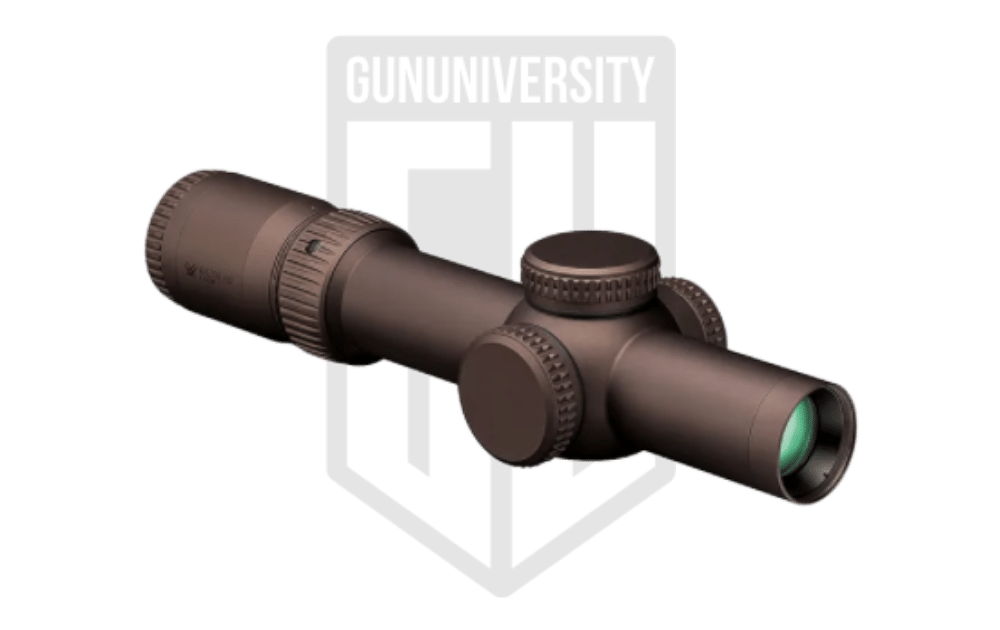
Vortex Razor HD Gen 3 1-10X24
The reticle incorporates both a large illuminated circle with a Christmas tree like reticle. This provides you points for both drop and wind compensation.
Reader’s Grade
TBD
Based on
0 Reviews
Your Grade
Do You Own This Accessory?
Leave A Review
Success Your Grade Has Been
Added To Our Reader’s Score
We use email to verify the accuracy of our reviews. We promise to never spam you.
Vortex Razor 1-10x Specs
-
Magnification
1-10x -
Objective Lens
24 mm -
Tube Diameter
34 mm -
Eye Relief
3.6 inches -
Weight
21.5 ounces
Vortex Razor 1-10x Review
As the proud owner of the Vortex Razor 1-10x, I can confidently say it’s a game-changer in the optics world. Let me tell you why it’s right at the top of my list among AR 15 optics even compared to other Vortex optics.
From the moment I picked it up, I was struck by how it crammed 10x magnification into a frame that feels like a 1-6x. That balance of magnification and weight is a major win, especially for long-distance shooting. It’s lightweight, yet delivers incredible clarity even at maximum power. Shots beyond 500 yards? No problem. The glass quality is top-tier, keeping images sharp and clear.
The reticle really adds to its versatility. The illuminated circle and Christmas tree-style layout are perfect for drop and wind holds, making long-distance shots easier. Yet, it’s just as adaptable for close-range work. It’s not as fast as a red dot, but it’s close.
There are some minor drawbacks, like slight distortion at 1x and a snug eye box at 10x, but with practice, those become non-issues. Durability-wise, it’s built like a tank, though I wish it had exposed turrets for finer adjustments.
This is a top-tier LPVO, no doubt. It handles everything from precision to long-distance shooting effortlessly, making it a worthy investment for anyone serious about their AR-15 setup.
Check out our full review of the Vortex Razor here.
Vortex Razor 1-10x Pros and Cons
- Incredible Versatility
- Brilliant Clarity
- Outstanding reticle
Aimpoint CompM5b
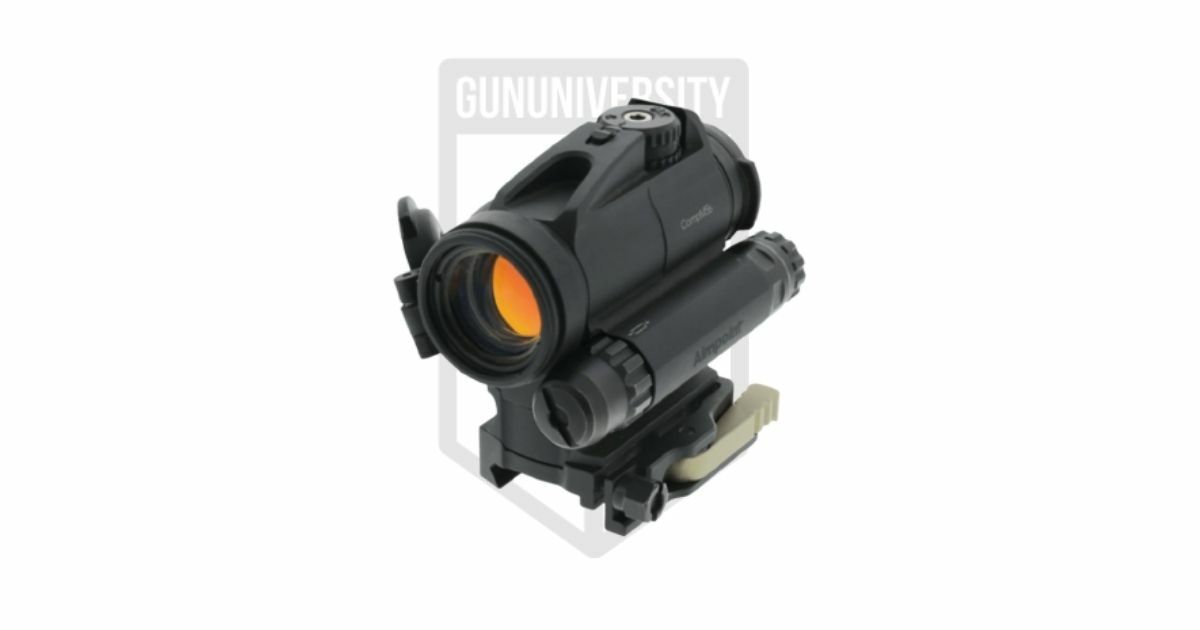
The new Comp M5b is a full-sized red dot optic that is topped with a set of innovative turrets. These turrets act as a bullet drop compensator and are designed around the 5.56’s ballistic drop.
Reader’s Grade
TBD
Based on
0 Reviews
Your Grade
Do You Own This Accessory?
Leave A Review
Success Your Grade Has Been
Added To Our Reader’s Score
We use email to verify the accuracy of our reviews. We promise to never spam you.
Aimpoint Comp M5b Specs
-
Magnification
1x -
Objective Lens
25 mm -
Tube Diameter
N/A -
Eye Relief
Unlimited -
Weight
6.3 ounces
Aimpoint Comp M5 Review
I got my hands on the Aimpoint Comp M5b, and it’s a serious contender in the red dot sights arena. Aimpoint has a history of pioneering red dot optics, and the Comp M5b continues that legacy. The Comp M5b is the best red dot sight you can get your hands on. It’s earned its place high on my list of recommendations, but why isn’t it at the very top? Let me break it down.
First off, this reflex sight boasts serious innovation. Those innovative turrets designed for the 5.56’s ballistic drop? They’re a game-changer for me. Adjusting the turret for range elevates the reticle, ensuring precise compensation for bullet drop. That adaptability is invaluable in dynamic shooting situations.
Durability is a standout feature. This sight is built like a tank and designed to withstand harsh conditions, which is crucial. Pair it with a magnifier, and you’ve got extra range without compromising reliability. Plus, the battery life—5 years on a single AAA battery—gives me peace of mind in the field.
Now, the 2 MOA reticle is rock solid, versatile for close-quarter engagements and medium-range shots. But co-witnessing with iron sights felt a bit restricted, and the plastic caps on the turret adjustments can be fiddly in cold conditions.
Despite these minor drawbacks, the CompM5b screams reliability. If you’re looking for an optic that can handle extreme conditions and deliver consistent results, the Aimpoint CompM5b is a solid choice. It might not be the absolute top pick, but it’s definitely one to consider for your high-end setups.
You can read my full review of the optic here.
Aimpoint Comp M5 Pros and Cons
- Innovative BDC turrets
- Bombproof design
- Ultra-long battery life.
Trijicon ACOG 4×32 BAC
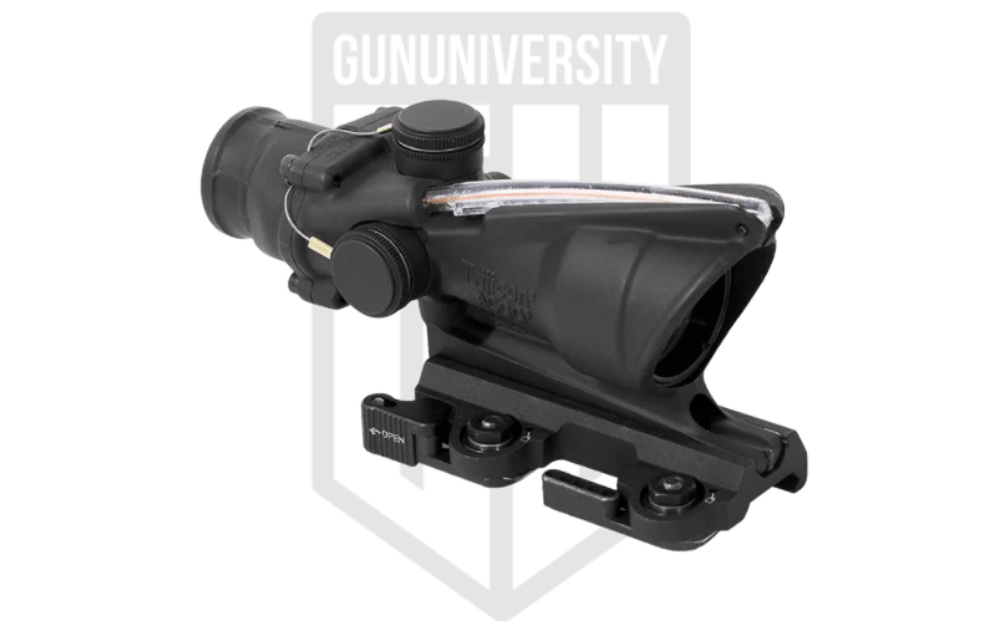
The ACOG is a compact, lightweight optic that is specifically designed around the M-16/M4/AR 15 platform. It offers excellent clarity, unbeatable durability, and it’s been more than proven in combat.
Reader’s Grade
A+
Based on
2 Reviews
Your Grade
Do You Own This Accessory?
Leave A Review
Success Your Grade Has Been
Added To Our Reader’s Score
We use email to verify the accuracy of our reviews. We promise to never spam you.
Trijicon ACOG 4×32 Specs
-
Magnification
4x -
Objective Lens
32 mm -
Tube Diameter
N/A -
Eye Relief
1.5 inches -
Weight
15.1 ounces
Trijicon ACOG 4×32 Review
Bias plays an important role in any kind of best-of list, and you should be aware of my bias. I love prisms, and I love ACOGs. After five years of carrying one in the USMC, it’s tough to convince me that the ACOG isn’t one of the best AR-15 optics ever created. Is it perfect? No, but dear lord do I love it.
When something is tough enough to survive the abuse not only through multiple deployments called for, but from the abuse and pain an 18-year-old Private can put through it, you know it’s meant to last. The ACOG is one of the toughest optics ever created. One of the best endorsements of the optic is that time it took an AK round in Iraq and stopped the round from hitting the Marine toting the rifle.
The ACOG is a beastly optic that also gives you enough magnification to touch targets out to 500 yards with the cheapest ammo Lake City could produce. Remember that for a large portion of the military, the first time they touch a rifle is boot camp; it’s not a wide breadth of experience, yet the majority of Marines qualify out to 500 yards without a problem.
That’s because the ACOG is so easy to use. The built-in bullet drop compensator is tailored to take the math and guesswork out of bullet drop. Align the right line with the right range and send it! It makes those 500-yard shots in the prone surprisingly easy.
The ACOG uses the power of the sun to keep the reticle daylight bright. Most prisms either aren’t daylight bright, or the batteries drain rapidly. The ACOG doesn’t have that problem. In fact, it can get too bright. An old Marine trick is to cover the fiber optic at the top with a bit of tape to tame the brightness. The reticle self-adjusts depending on the brightness
That doesn’t mean it’s a free lunch. It’s the opposite, actually. The ACOG remains an expensive optic. We are looking at a price point of above a grand. That’s ridiculous for such an old optic, but the ACOG perseveres. The eye relief is abysmal, and on M16A4s, we had to use the old nose-to-charging handle method to see through the optic.
While those problems are worth noting, there isn’t a more proven optic than the ACOG on AR-15 type rifles.
You can read the full review of this optic here.
Trijicon ACOG 4×32 Pros and Cons
- Unbeatable durability
- Versatile for close and moderate range shooting
- Lightweight and compact
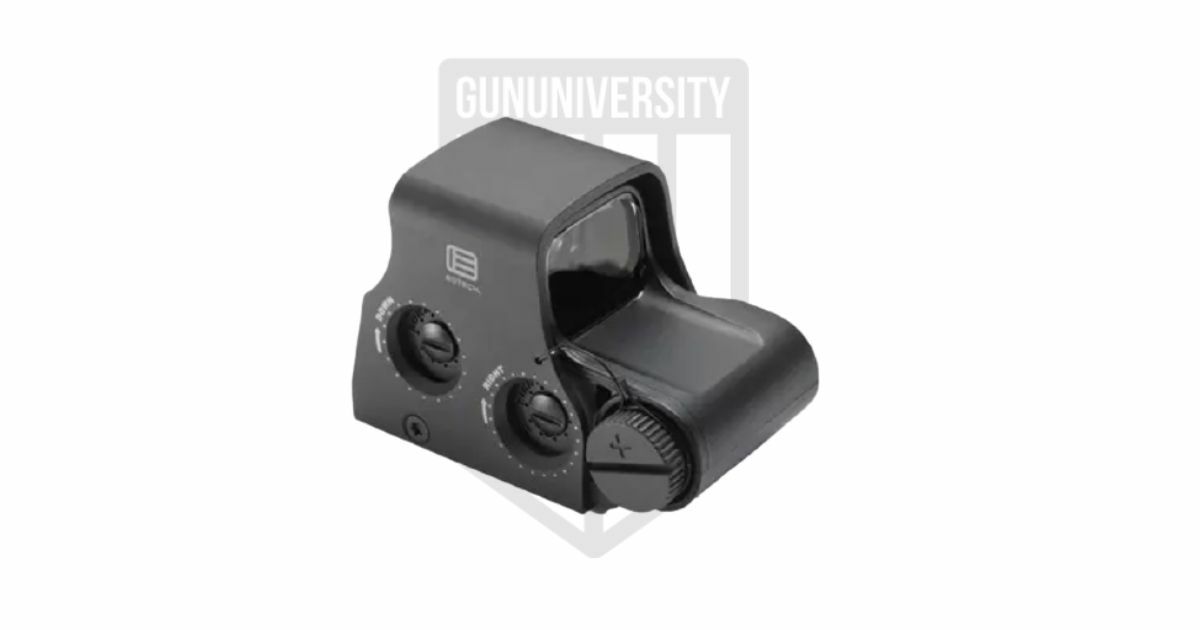
Eotech XPS3
The XPS3 is Eotech’s current flagship holographic optic designed for duty use. It’s a favorite of special operations and delivers excellent performance for close-range shooting.
Reader’s Grade
A+
Based on
1 Reviews
Your Grade
Do You Own This Accessory?
Leave A Review
Success Your Grade Has Been
Added To Our Reader’s Score
We use email to verify the accuracy of our reviews. We promise to never spam you.
Eotech XPS3 Specs
-
Magnification
1x -
Objective Lens
N/A -
Tube Diameter
N/A -
Eye Relief
Unlimited -
Weight
9 ounces
Eotech XPS3 Review
Whenever you see some super high-speed dude putting in work overseas, it seems like the Eotech XPS3, or a similar Eotech, is the go-to. I never really got it. It’s a reflex optic much like the Aimpoint T-2, with way less battery life. Why is it so popular, then my doubting self tried one, and it started to click. The Eotech uses a holographic reticle, which shrinks the battery life, but offers a few notable advantages.
If I’m trying to use night vision and passive aim, I want an EoTech. The super crisp reticle and the absolute ton of different nightvision settings make a big difference. The reticle looks like a reticle, not a blooming dot that’s tough to see and use with any form of precision. Also, being able to hit the NV button is quite nice, and allows you to swap to nightvision instantly versus dialing in settings until one works.
Let’s mix in a magnifier. My EoTech reticle still looks better. It’s crisper, doesn’t bloom, and generally looks a lot better than a magnified red dot. When you magnify a less-than-crisp dot, the less-than-crisp part also gets magnified. Obviously, this is less of an issue with higher quality dots, but a holographic reticle always looks fantastic when magnified.
We are three paragraphs in, and I haven’t even discussed the benefits of the XPS3. The XPS3 is the smaller optic. It’s compact, takes up less rail space, and leaves more room for magnifiers. Some of the original criticisms of the EOtech series were the size and weight. EoTech addressed these complaints with the XPS3 without sacrificing window size.
We get that wide-open field of view, EoTech’s popular circle-dot reticle, and clear glass. The XPS3 setup is the best EoTech yet, and once you get behind one, it starts clicking. I get the price, and I can deal with the battery life simply due to its performance. What remains confusing to me is why holographic optics are so few and far between, but then again, EoTech provides stiff competition.
Read our full review here.
Eotech XPS3 Pros and Cons
- Versatile
- Compact and lightweight
- Well Proven
Reader’s Grade
TBD
Based on
0 Reviews
Your Grade
Do You Own This Accessory?
Leave A Review
Success Your Grade Has Been
Added To Our Reader’s Score
We use email to verify the accuracy of our reviews. We promise to never spam you.
Trijicon Credo 1-4X Specs
-
Magnification
1-4x -
Objective Lens
24 mm -
Tube Diameter
30 mm -
Eye Relief
2.6 – 3.9 inches -
Weight
17.1 ounces
Trijicon Credo 1-4X Review
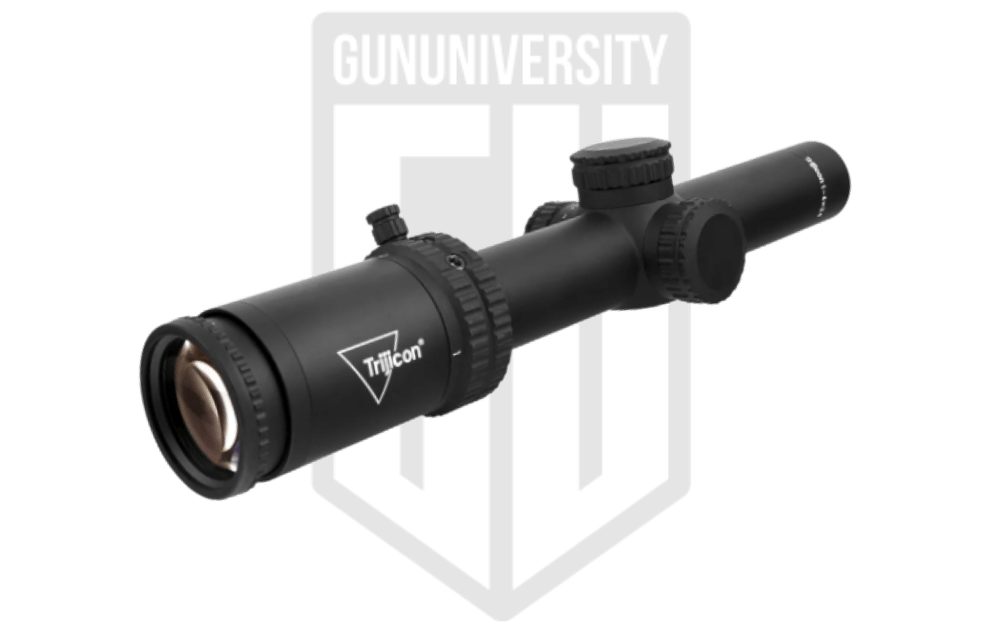
From the moment I laid eyes on Trijicon Credo 1-4X, the glass quality blew me away. It was like switching from standard to high-definition TV. The crispness transformed my view entirely, and the generous eye box felt like a gateway to a sharper reality.
The 1-4x magnification range hits the perfect balance for me. It offers versatility without overwhelming magnification. That BDC reticle? It feels like GPS for my bullets, guiding me for those longer shots. When I zoomed in with the circular illuminated reticle on the 1-6x version, the clarity stayed intact, ensuring my aim remained true no matter the distance.
Aiming with both eyes open is a stroke of genius. Sure, it takes some getting used to, like learning a new dance step. But once I got the hang of it, my situational awareness improved, which is crucial in real-world shooting scenarios.
I do admit it’s not as forgiving as a red dot in different shooting positions, but that’s part of the learning curve. The Credo’s build quality exceeded my expectations. Made from 6061 aircraft-grade aluminum, this scope is rugged and ready for anything.
I ranked the Credo 5th in my Best AR-15 Optics article due to its high price, the learning curve for newcomers, and the finicky illumination in sunlight. But if you often find yourself in low-light situations, the Credo might just steal your heart.
You can read our full Trijicon Credo review here.
Trijicon Credo 1-4X Pros and Cons
- Brilliant clarity
- Versatile reticle
- Bulk free design
- 1-4X limits your effective range slightly
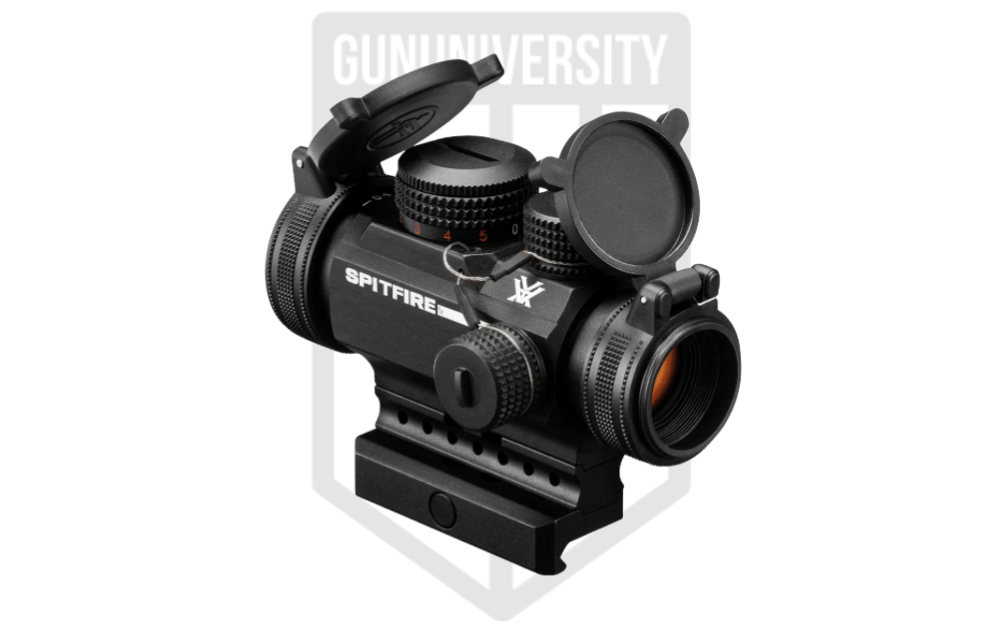
Vortex Spitfire 1X
The Spitfire is a lightweight little optic that’s well suited for home defense or competition use. The little Spitfire is lightweight and does offer a generous eye box and eye relief.
Reader’s Grade
A+
Based on
4 Reviews
Your Grade
Do You Own This Accessory?
Leave A Review
Success Your Grade Has Been
Added To Our Reader’s Score
We use email to verify the accuracy of our reviews. We promise to never spam you.
Vortex Spitfire 1x Specs
-
Magnification
1x -
Objective Lens
300 mm -
Tube Diameter
N/A -
Eye Relief
3.7 inches -
Weight
11.2 ounces
Vortex Spitfire 1x Review
I’ve had the chance to put the Vortex Spitfire 1X through its paces, and it’s a standout reflex sight, especially for those dealing with astigmatism. Placing it sixth in my lineup wasn’t a knock on its quality—it’s more about how it fits my specific preferences.
What really caught my attention is its astigmatism-friendly design. Unlike many red dot sights, the etched reticle gives a crisp sight picture that’s a game-changer for shooters with astigmatism. While I don’t struggle with this myself, my friend who does consistently nails impressive 1.5 MOA 5-shot groups with this optic. That says a lot about its precision.
The clarity is fantastic, whether the reticle is illuminated or not. There’s no bluish tint like I’ve seen in other sights at this price point. When I turn up the brightness, especially in daylight, it really stands out. I’ve pushed the brightness settings without any flickering, which I appreciate.
The Spitfire is built to last, with a durable single-piece chassis. After several range sessions, my zero held firm without any surprises. I prefer CR123 batteries, but the AAA option is practical, and the 3000-hour lifespan on the lowest setting is impressive.
Overall, the Spitfire earns its spot for its astigmatism support, clarity, and solid construction. It’s not just reliable; it’s a must-try for anyone needing a dependable, astigmatism-friendly AR-15 optic
Read our full Spitfire review here.
Vortex Spitfire 1x Pros and Cons
- Affordable
- Versatile, eye-catching reticle
- Easy to use
- Eyebox and eye relief are not as fast as a traditional red dot.
REVIEWS OF OUR BUDGET AR-15 OPTICS
We have compiled the individual reviews of our suggested budget AR-15 optics below.
The pros and cons are listed for each product so you can make an informed decision on which one will work best with your shooting style!
The downside for my favorite optics on the list above is the fact they all come with a high price tag. You might not need an optic to perform to the extreme circumstances of the ACOG, the Aimpoint, or the Razor. You might need something simpler but with a more attractive price tag. Here are a few budget-friendly picks that perform well above their price points.
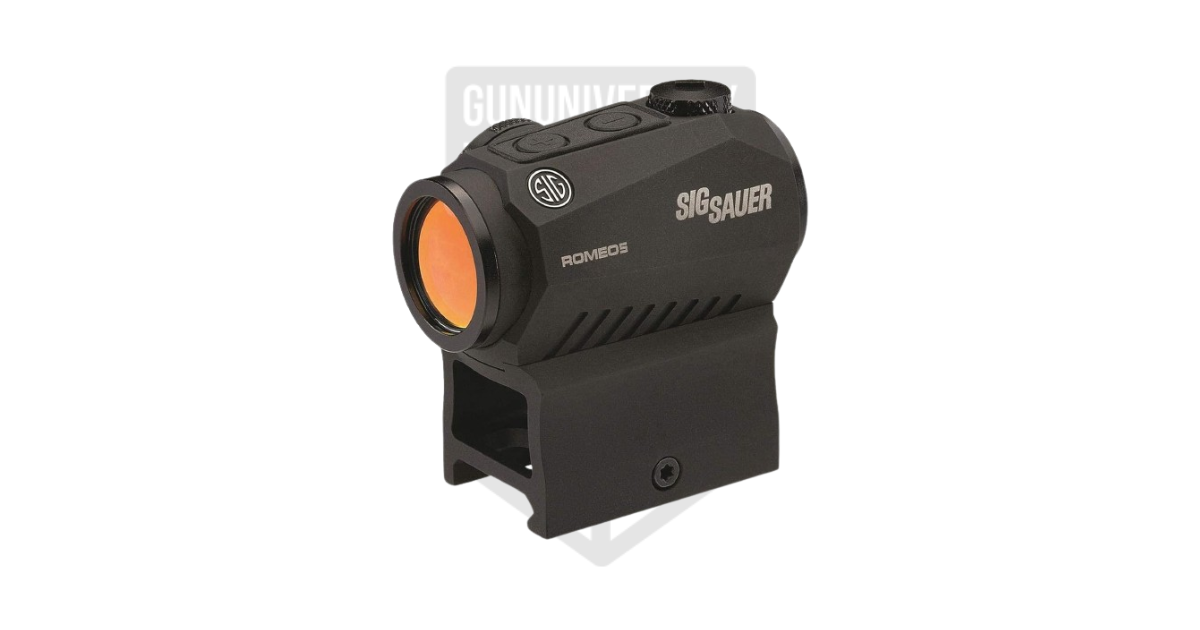
SIG Romeo5
The Romeo5 is remarkably affordable, especially when it comes to durability. The Romeo5 series can take a decent beating and won’t fail, lose zero, and can take a little water exposure.
Reader’s Grade
A+
Based on
1 Reviews
Your Grade
Do You Own This Accessory?
Leave A Review
Success Your Grade Has Been
Added To Our Reader’s Score
We use email to verify the accuracy of our reviews. We promise to never spam you.
SIG Romeo5 Specs
-
Magnification
1x -
Objective Lens
20 mm -
Tube Diameter
N/A -
Eye Relief
Unlimited -
Weight
5.6 ounces
SIG Romeo5 Review
If you go to nearly any forum or social media source and you ask what’s the best budget red dot for an AR-15, you’ll see one optic repeatedly mentioned, the SIG ROMEO5. Yep, the same SIG that produces the famed P226 pistols and the Army’s new M7 rifle makes optics. Specifically, they make what’s easily one of the best budget optics ever created.
Is it fancy? No. Is it packed with features? Kind of. Is it cheap? Yep. It does everything a basic red dot should. It holds zero, creates a bright and fairly crisp reticle, and it can take all the abuse and recoil you can toss at it. The ROMEO5 series are compact red dot, roughly the same size as the Aimpoint T1, which a cost that’s only a fraction of what the Swedes charge. The ROMEO5 series works with magnifiers and even under nightvision.
With that said, the nightvision performance does not compare with higher-end optics. It just barely crosses the threshold of acceptable. However, I don’t think most people shopping for budget optics are looking at something as unbudget-friendly as nightvision.
I’ve used a ROMEO5 as my beater optic for reviews for seven years now. It’s been zeroed and rezeroed countless times and has been used on rifles, subguns, and shotguns. It just can’t stop working. The optic works well in low light, under weapon lights, bright lights, and more. I have no major complaints about the optic when I consider the price point.
Could the reticle be crisper? Yeah, for sure. Could the lenses ditch some of the heavy blue tint? Likely. Yet, for the price point, I’d be hard-pressed to find a better optic. The ROMEO5 remains the easy choice for those looking to save a little green while equipping their rifle with a little red.
Read our full SIG Romeo5 review here.
SIG Romeo5 Pros and Cons
- Affordable
- Lightweight and Compact
- Easy to use
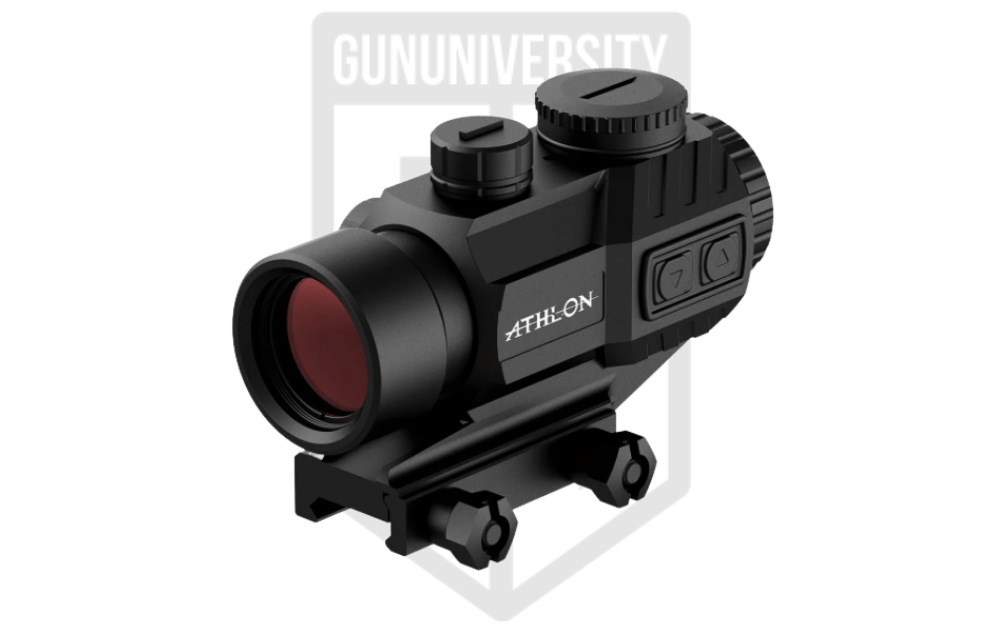
Athlon Optics Midas TSP3
The simple design of the Athlon Optics Midas TSP3 makes shooting at longer ranges with drop compensation easy, and the massive circle reticle is perfect for close range.
Reader’s Grade
TBD
Based on
0 Reviews
Your Grade
Do You Own This Accessory?
Leave A Review
Success Your Grade Has Been
Added To Our Reader’s Score
We use email to verify the accuracy of our reviews. We promise to never spam you.
Athlon Optics Midas TSP3 Specs
-
Magnification
3x -
Objective Lens
30 mm -
Tube Diameter
N/A -
Eye Relief
3.2 inches -
Weight
16 ounces
Athlon Optics Midas TSP3 Review
You know, when I delve into optics, I strive to strike that balance between quality and cost. I get it, expectations must be in line with what you’re investing, especially with optics. The Midas TSP3 by Athlon Optics, nestled snugly in the budget category, surprised me in more ways than one. Sure, it’s not going toe-to-toe with top-tier brands like Vortex or Trijicon, but for its price? It’s a game-changer.
What really blew me away was the glass clarity. After using a bunch of different optics, the clarity of the Midas TSP3 genuinely impressed me. The fully multicoated lenses deliver a clear, vivid picture, making target acquisition super easy, whether I’m shooting in bright daylight or low light. When I took it to a tactical response rifle class, the quick target acquisition from that 1MOA dot and 20MOA circle really made a difference.
It is a bit heavier, thanks to its prism-based design, but I appreciate the durability it brings. It’s shockproof and fog-proof, so it handles tough conditions like a champ. Sure, the adjustment turrets could use more distinct clicks, and not having a “go back to zero” feature might annoy some. But honestly, it holds zero like a pro.
I ranked it second in the budget category among AR-15 optics because, while it may not match the longevity of pro-grade optics, it’s a reliable option for long-range shooting that won’t break the bank.
Check out our complete review on the Midas TSP3.
Athlon Optics Midas TSP3 Pros and Cons
- Versatile prism design
- Excellent reticle
- Low price point
- Smaller than average field of view
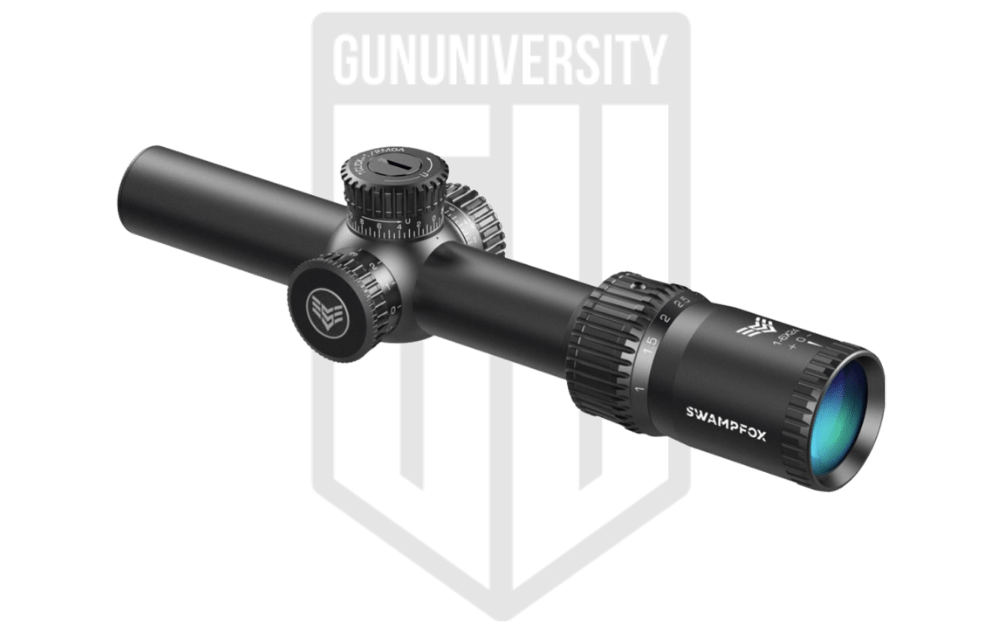
Swampfox Tomahawk
The Tomahawk is an excellent example of a budget grease LPVO that packs pro-grade features. The Tomahawk 1-6X packs clear glass, a Guerilla Dot BDC reticle, a throw lever, fingertip adjustable turrets, and a durable design.
Reader’s Grade
TBD
Based on
0 Reviews
Your Grade
Do You Own This Accessory?
Leave A Review
Success Your Grade Has Been
Added To Our Reader’s Score
We use email to verify the accuracy of our reviews. We promise to never spam you.
Swampfox Tomahawk Specs
-
Magnification
1-6x -
Objective Lens
24 mm -
Tube Diameter
30 mm -
Eye Relief
3.7 inches -
Weight
18.6 ounces
Swampfox Tomahawk Review
My first AR consisted of an Anderson lower and PSA’s cheapest upper circa 2015. To this day, I still have that old rifle that I ‘built.’ I own rifles that are better in every way, most accurate, more reliable, more ergonomic, but I can’t get rid of my old, poor man’s AR. I still even occasionally shoot it, and when I do, it’s with the Swampfox Tomahawk.
The Swampfox Tomahawk was also one of my first LPVOs. It matched the rifle’s budget price point and gave me a little magnification to help me compensate for my lack of shooting skills. The 1-6X magnification got me a lot closer to the target and allowed me to punch those gongs, IPSC torsos, and FBI Q targets well enough that I began to think I was actually pretty good at shooting.
The view through the optic is fairly clear, especially at this price point. There isn’t a lot of haze or noise, but we see chromatic aberration against white targets. At longer ranges, the clarity isn’t going to allow you to read text, but you’ll be able to see your target and make hits. The Tomahawk comes in 1-4X, 1-6X, and 1-8X
For a budget optic, I’d stick to the 1-6X to get the best bang for your buck. A little more magnification is nice, but the downsides of cheaper optics become clearer as magnification increases. I guess you could say the downsides become clearer, while the glass becomes hazier.
Snapping up and behind the optic is easy, and the eyebox is generous. Sadly, the reticle isn’t daylight bright; it’s daylight visible, but won’t stick out when you snap to the target. It’s workable, and its overall size helps. This is an SFP optic, so the reticle remains large at every magnification setting. The downside to that is the fact that the reticle’s MOA or BDC only works at the maximum magnification setting.
Is it a game-changer? No, but it’s a solid budget optic that does its job well.
Read our complete review here.
Swampfox Tomahawk Pros and Cons
- Simple but versatile reticle
- Lightweight design
- Feature-filled
- Reticle could be brighter
Best AR-15 Optics Buying Guide
Here’s all you need to know when buying your Ar-15 an optic.
Purpose – Before you even consider an optic, you need to consider what the actual purpose of your rifle is. An optic can truly change how a weapon handles and performs. Different rifles serve different purposes, and different optics do the same.
- Home Defense – Home defense is all about close-quarters fighting, and in that scenario, the red dot rules. It’s an optic that encourages instinctive shooting, and red dots are ultra-easy to see and utilize. There is no eyebox to contend with, no scope shadow, just a red dot you put on your target and let the symphony of lead begin.
- Hunting – Hunting optics can vary a lot depending on where you are hunting. An LPVO certainly gives you the versatility to hunt over fields, in brush conditions, up and down hills, and beyond. The various magnification levels power through every conceivable humane hunting range. Even something as small as a 1-6X is plenty capable of both reaching to some slightly farther distances and shooting up close.
- Competing – Competition also seems to be the home of the LPVO, at least when it comes to action shooting. However, red dots and magnifiers are a close second. In the USPSA PCC competition, red dots rule, but 1X prisms are also becoming the choice of champions.
- Duty – For duty use, there is no real right choice. Red dots are popular, prisms rule the USMC, but LPVOs seem to be taking over in the duty realm. The Marine Corps is adopting an LPVO, SOCOM adopted two of them, and numerous police forces seem to be using both LPVOs and red dots depending on the mission.
Caliber – The AR 15 comes in numerous calibers these days. The 223 Rem/5.56 might be the most common, but 300 Blackout, 224 Valkyrie, and the various 6.5 and 6.8 loads all have their place. They all also offer different ballistics and different effective max ranges. You can pair your caliber with your optic to maximize effectiveness.
For example, what’s the point of a 224 Valkyrie with a red dot? The round is made for long-range performance, so a standard variable optic or an LPVO makes a good bit more sense. A 300 Blackout might be best served with a low powered prism or a red dot magnifier.
The 5.56 being the versatile minx that it is, can use pretty much any optic and take on nearly any task you choose. However, a 10.5 inch barreled AR 15 isn’t going to give you the 500-yard performance a 20-inch barrel would. So figure out how your round performs from your chosen barrel length and consider those ballistics as well.
Know your caliber, it’s ballistics, and what you intend to use it for. Start there and work your way to the right optic.
The 100 Yard Line – The 100-yard line is a fictional boundary in which I believe separates the need for a magnified optic from a non-magnified optic. Inside of 100 yards, I don’t see a lot of purpose for a magnified optic. If your shooting is going to be inside of 100 yards, go with a non-magnified optic; beyond 100 yards or so, you can start considering magnification.
Optical Clarity – Good glass is a must-have in a high-performance optic, especially in an optic with magnification. The higher the level of magnification, the better glass you need. Good glass often comes with a high price tag and from well-known and well-reputed scope manufacturers. Good glass and high optical clarity ensure your sight picture is crystal clear, and you can easily see the target you are engaging. Better yet, they allow you to see the world around them vividly and in high definition. As a hunter, I’ve seen the difference good glass can make when I’m scoping a deer. Good glass allows me to see the brown deer against the often brown background that is the fall hunting season. Low-quality glass can make that same task a muddy mess.
Durability – Durability is a major concern for me when I choose optics. Modern optics are a combination of glass, electronics, and aluminum tubes. It’s amazing to see the difference in durability between companies using that combination of parts. Some optics are made to go to war and back, and others are barely made for a 22LR.
Durability is one of the big factors in the price of an optic, and when you see the big price attached to something like the Vortex 1-10X or a Nightforce scope, then you have to understand that those optics are made to last. That old phrase ‘You get what you pay for’ applies to optics. In fact, it likely applies to optics more than any other object out there.
Do you need a 2,000-dollar optic? Maybe you do, but maybe you don’t. There is no shame in spending less than 500 dollars on an optic as long as you have a relatively clear expectation of what it can do. For your average shooter, a SIG Romeo5 will likely last the life of the gun, but if you plan to invade Fallujah or walk a beat, then the Aimpoint or EOTech upgrade is well worth it.
At a minimum, you want an optic that is water, shock, and fog proof. Beyond that, you’ll need to do individual research on who uses an optic and how it’s used. Some companies have spotless reputations, like Aimpoint, and that reputation is a good signifier of quality optics.
Warranty – Another big deal breaker to me is a limited warranty. If the warranty lasts a year, you might as well assume that the company doesn’t stand behind their optic. Aimpoint offers a ten-year warranty, some Leupold optics give you a lifetime warranty, and some a lifetime warranty that transfers from owner to owner. Knowing that a company backs their product gives me a sense of comfort when I’m putting down hundreds to thousands of dollars.
Remember, the best AR-15 optics depend on your specific shooting preferences, whether for quick target acquisition at close range or precision shooting at longer distances. Consider factors like magnification range, reticle type, and overall build quality to find the perfect optic for your needs. Now that you know what to look for when buying your scope, here’s how you mount it on your gun.
Mounting your Scope
When you find the right scope for your AR-15, you’ll want to mount it correctly. Don’t stress–here’s a walkthrough based on my experience mounting rifle scopes for precise shooting.
Step 1: Gather Necessary Equipment Before diving in, I ensure I have all the tools required: the rifle, the chosen scope, suitable scope rings or mounts (considering factors like absolute co-witness or riser mounts), specific screwdrivers or torque wrenches, a level for precise adjustments, and the necessary Allen wrenches.
Step 2: Prepare the Rifle Safety first—I securely place the unloaded rifle in a gunsmithing vise or on a stable shooting bench, ensuring the chamber is clear and the rifle is safely positioned for the mounting process.
Step 3: Prepare the Scope and Rings I meticulously separate and position the bottom halves of the scope rings or mounts onto the rifle’s rail or picatinny, mindful of factors like eye relief and magnification ring compatibility.
Step 4: Attach the Bottom Rings With precision in mind, I loosely attach the bottom rings to allow for easy adjustments. This initial stage is critical for achieving an ideal fit before tightening.
Step 5: Place the Scope Carefully positioning the scope into the bottom rings, aligning the eyepiece and objective lens properly, ensures a proper sight picture and accommodates the desired eye relief.
Step 6: Adjust Eye Relief Achieving the optimal eye relief is key for comfort and accuracy. I take time to adjust the scope’s position within the rings to achieve the desired eye relief for a clear sight picture.
Step 7: Level the Scope Maintaining accuracy demands a level scope. Using a reliable bubble level or scope leveling tool, I meticulously ensure the rifle and scope are perfectly aligned.
Step 8: Tighten Bottom Rings Gradually tightening the screws or bolts on the bottom rings while maintaining alignment is crucial. I apply balanced pressure to achieve a snug fit without over-tightening.
Step 9: Install the Top Rings Ensuring stability is paramount when installing the top halves of the rings. Proper alignment and a secure fit guarantee stability, especially for magnified scopes or red dot magnifiers.
Step 10: Tighten Top Rings Similar to the bottom rings, I meticulously tighten the screws or bolts on the top rings, ensuring the scope remains aligned and level for precise shooting.
Step 11: Check Alignment and Adjustments Paying attention to detail, I double-check the alignment and make any necessary adjustments to ensure the reticle is perfectly aligned, utilizing features like bullet drop compensators for enhanced accuracy.
Step 12: Final Tightening I progressively tighten the screws or bolts on the top rings, applying the manufacturer’s recommended torque specifications if available, ensuring a secure and aligned setup.
Step 13: Verify and Test Before calling it a job well done, I conduct a thorough visual inspection, looking for any signs of misalignment or instability. The final test involves taking the rifle to the range for a comprehensive test-fire to confirm accuracy and functionality across various ranges.
This step-by-step process, honed through experience and hands-on practice, ensures a meticulously mounted scope for optimal shooting performance. If you are more of a visual learner, I’ve got you covered. Below we found a video that goes through a step-by-step process in doing this process well and things to consider while mounting your scope.
Shots Fired
Optics are likely one of the biggest upgrades you can make to your rifle. It completely changes how the rifle handles, how it functions, and where it’s most effective. It’s an important choice, and in a world where optics are everywhere, you have more than a few choices. We’ve done some of the legwork for you and hopefully given you the tools to pick your own optics. If you have any other questions, feel free to ask below.
Best AR-15 Optics – FAQs
Are there budget-friendly red dot sights suitable for close-range shooting?
Yes, there are budget red dot options that cater well to close-range shooting. Brands like Primary Arms and Vortex Optics offer quality red dots at competitive prices.
Can I mount optics on an AR-15 using a Picatinny rail?
Absolutely. The Picatinny rail on an AR-15 allows for easy mounting of optics such as scopes, red dot sights, or holographic sights using compatible mounts designed for the Picatinny system.
Which optics are suitable for longer range shooting on an AR-15?
For longer range shooting, magnified optics like low power variable optics (LPVOs) or prism optics come into play. LPVOs offer variable magnification, making them versatile for different shooting distances.
Are there optics with etched reticles and clear glass for enhanced clarity?
Certainly, optics like Vortex Spitfire come equipped with etched reticles and clear glass, ensuring a crisp sight picture for precise shooting.
What considerations are essential for choosing the best AR 15 scope?
Factors like reticle focus, eye relief, and the ability to handle longer range shots are crucial when selecting the best AR-15 scopes. Optics like Vortex Strike Eagle or Primary Arms SLx are well-regarded for these features.
Can prism optics be utilized effectively for both close and longer ranges?
Prism optics, with etched reticles and illuminated options, serve well for both close-range and longer range shots due to their durability and clarity.
Are there budget red dot options with illuminated reticles for close-range shooting?
Certainly, budget red dot sights offer illuminated reticles ideal for close-range shooting without compromising on quality. While they are not the best red dot sights you can get, they will do their job well.

