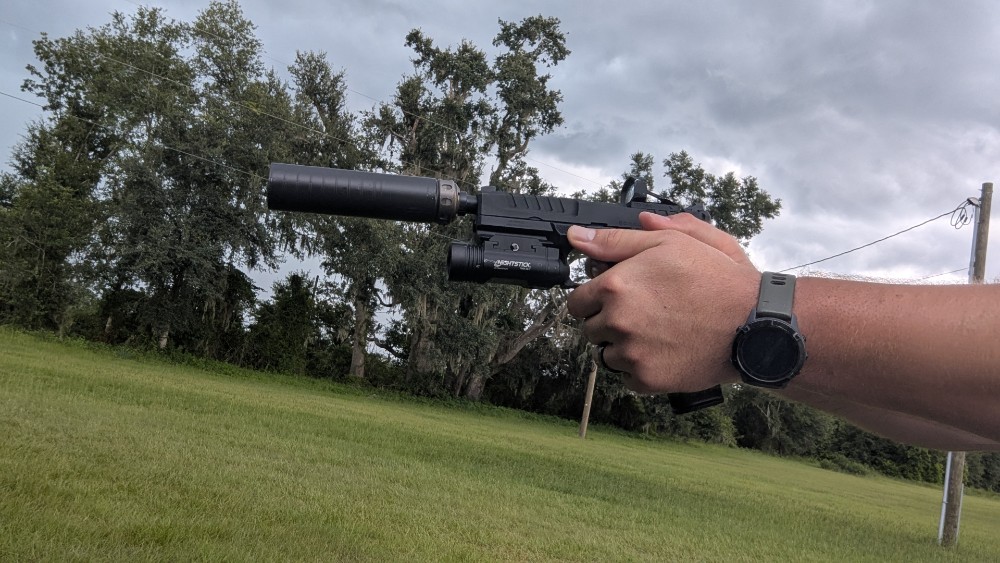


In 1934, the National Firearms Act (NFA) was passed by Congress. The bill, which became law, was a consolation prize for the Franklin Delano Roosevelt (FDR) administration. The primary purpose of licensing and registration of all handguns had been stripped from the bill because of lobbying by the NRA and Second Amendment supporters. One item left on the bill was an absurdly high tax on silencers/suppressors.
The $200 tax was punishingly high. Using the first federal minimum wage adopted a few years later in 1938, it equaled roughly four to five months of full-time wages.
Silencers had never been involved much in crime. No serious reason is included in legislative history for the inclusion of silencers in the NFA. Their ban was part of the hysteria of the time. The new Attorney General, Homer Cummings, conflated guns and crime. The NFA was his grab for power within the FDR administration.
In 1934, when what was left of the National Firearms Act made silencers unaffordable except for the very rich, the law was relatively limited. It only applied to silencers that had crossed state lines. If you made your own silencer, it was not involved in interstate commerce, so the federal law did not apply. It was the middle of the depression, and people were too concerned with having enough to eat and a roof over their heads to be worried about a silly new federal law.
All of that changed over the next 50 years. The Interstate Commerce clause and the National Firearms Act of 1934 were expanded far beyond their original boundaries. Short-barreled rifles came to include pistols with shoulder stocks. Short-barreled shotguns came to include revolvers with shot cartridges and smoothbores. The Interstate Commerce Clause came to include almost everything. Bureaucracies became the dominant force in most people’s lives.
Many states came to mirror federal law about silencers and other items regulated by the National Firearms Act. This served two purposes. It tied state and federal law together so that court challenges had to overcome both state and federal defenses. It provided a way for state and local law officials to prosecute people for what had been made a crime by the National Firearms Act.
By 2000, inflation had eroded the insanely high $200 tax on silencer ownership to the merely extreme one week’s minimum wage. The truth about silencers and their many beneficial uses was being exposed.
By 2020, the fight to restore Second Amendment rights was in full swing in the courts. In 2025, Congress reduced the NFA making and transfer tax on suppressors, short-barreled rifles, short-barreled shotguns, and AOWs to $0, while leaving the federal registration structure in place. In 2026, several lawsuits challenge the constitutionality of the NFA’s inclusion of silencers, short-barreled rifles, and short-barreled shotguns.
If the federal law is removed, state laws that reinforced the NFA create a trap. If a law requires compliance with an NFA rule which no longer exists, hundreds of thousands could become felons overnight, without any action on their part. Fortunately, several states are taking action to prevent this legal disaster.
Texas eliminated its requirement to comply with the federal law on silencers in 2021. Mississippi passed a similar bill in 2023, which is contingent on the state of federal silencer law.
Montana passed a bill eliminating the federal requirement in 2025. Here is the Montana provision:
45-8-336. Possession of silencer. (1) A person commits the offense of possession of a silencer if the person possesses, manufactures, transports, buys, or sells a silencer and has the purpose to use it to commit an offense or knows that another person has such a purpose.
South Dakota eliminated the requirement for federal compliance in 2026. Other states have bills in progress. They are:
Arizona SB1069 in process.
Missouri has a bill in progress, SB273.
Ohio has Senate Bill 214 in process.
The trend is moving in the right direction. Congress has already reduced the NFA tax burden on suppressors to $0, lawsuits are now attacking the remaining registration scheme, and several states are cleaning up laws that made suppressor ownership depend on federal NFA paperwork.
Gun owners should not confuse a $0 tax with full deregulation. Suppressors remain inside the federal NFA framework unless and until Congress or the courts remove them. That is why state-level reform matters. Anti-gun lawmakers built layers of state and federal restrictions over decades. Removing one layer is progress, but the work is not done.
Restoration of rights protected by the Second Amendment is happening, but it all takes time.
The information above is not comprehensive. State laws are changing rapidly. Use the comments to add information about bills and statutes not mentioned in the article.
About Dean Weingarten:
Dean Weingarten has been a peace officer, a military officer, was on the University of Wisconsin Pistol Team for four years, and was first certified to teach firearms safety in 1973. He taught the Arizona concealed carry course for fifteen years until the goal of Constitutional Carry was attained. He has degrees in meteorology and mining engineering, and retired from the Department of Defense after a 30 year career in Army Research, Development, Testing, and Evaluation.

Some of the links on this page are affiliate links, meaning at no additional cost to you, Ammoland will earn a commission if you click through and make a purchase.