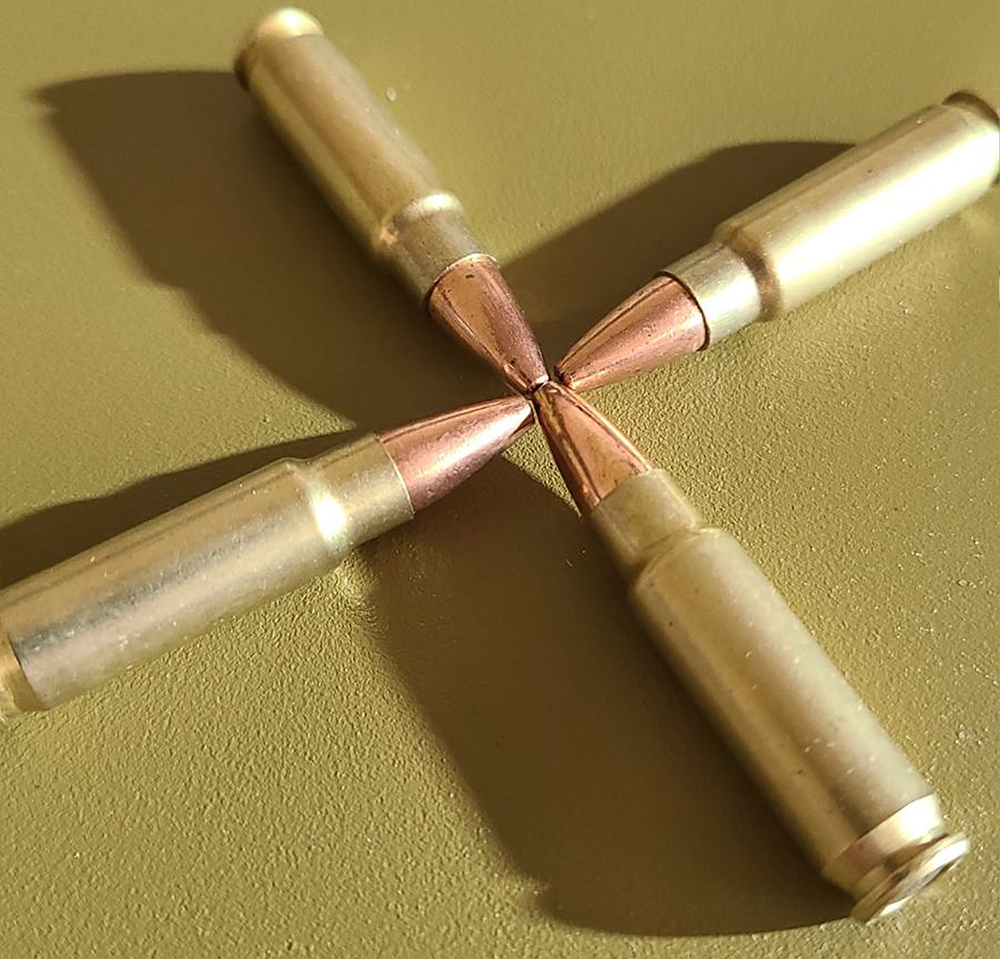

Every firearm is limited by the cartridge it fires. Some cartridges are designed for broad utility, while others are created to solve a very specific problem that demands a different solution. The 5.7x28mm falls firmly into that second category.
In the 1980s, carrying a sidearm chambered in the ubiquitous 9×19mm Parabellum meant you had a reliable standard for personal defense. That confidence began to fade by the late Cold War. As body armor became more common among Soviet troops, NATO saw a clear problem emerge—9mm was no longer enough. Pistols and submachine guns that worked yesterday could fail tomorrow. The problem at hand demanded a different answer, not a better version of the same one.
A Problem 9mm Could Not Solve
The 9mm cartridge became the standard for self-defense handguns for a reason. Since its introduction the 9mm has offered a balance of manageable recoil, practical velocity, and wide versatility. In close quarters against unarmored threats, it fills its role almost perfectly.
Armor changed that equation. As body armor became more common among Soviet units, the limitations of the 9mm came into focus. Standard ball ammunition struggled against modern armor and lacked the velocity needed to defeat it.
Larger rifle cartridges, such as 5.56 NATO and 7.62×51, could penetrate armor, but not everyone on the battlefield carries a rifle. Support troops and rear personnel often operate in tight environments. They move in and out of vehicles, manage equipment, and need compact weapons that stay out of the way until needed. A full-size rifle does not always fit that role.
This created a clear gap. Rifles offered power but lacked portability, while pistols and submachine guns offered portability but lacked effectiveness. With this gap exposed, NATO began outlining a requirement to bridge it.
A New Solution
NATO’s recognition of the problem triggered years of development and debate. Over roughly six years, member nations worked to define what a new cartridge needed to accomplish. The round had to reliably defeat modern body armor while also offering improved accuracy and effective range over the 9x19mm Parabellum.
Alongside the cartridge itself, NATO outlined two supporting platforms. The first was a service pistol designed for easy carry and direct replacement of existing 9mm handguns. The second was a compact, fully automatic weapon built specifically for defensive roles in confined environments.
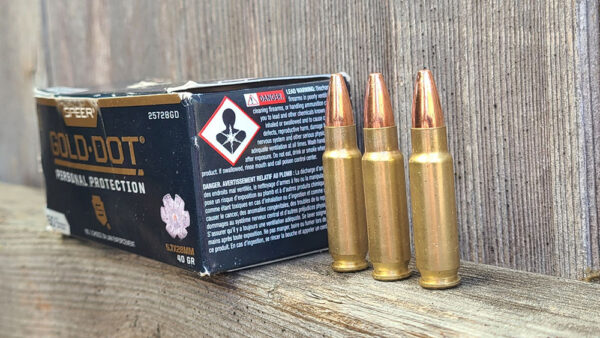
FN Herstal stepped into that challenge and started from a clean slate. Rather than modify existing designs, FN built an entirely new system around the concept. The result was the 5.7x28mm—a small bottlenecked case paired with a .224-caliber projectile, designed from the ground up for high velocity, low recoil, and consistent performance against armor.
The first production version, the SS90, entered development in 1990 and used a lightweight 23-grain polymer-core bullet. FN replaced it in 1994 with the SS190, which introduced a 31-grain projectile with a refined cone-shaped profile. That change improved penetration against body armor while increasing consistency and terminal performance.
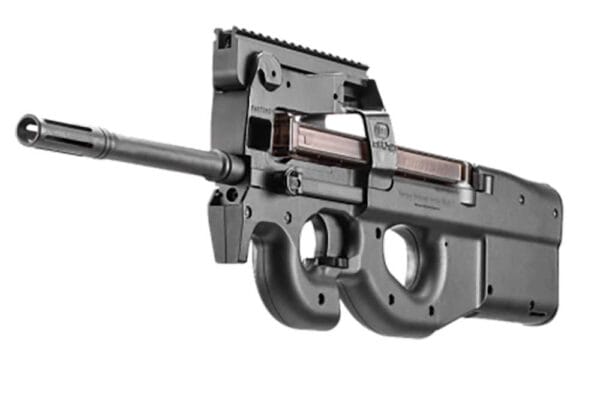
As the cartridge matured, FN developed the weapons intended to fire it. The first was the FN P90, a compact bullpup platform built around the system. Its top-mounted magazine and compact layout delivered high capacity, controllability, and maneuverability in tight environments.
Shortly after, FN introduced the FN Five-seveN in 1998 as the sidearm counterpart. Built around the same cartridge, it extended the same principles directly into a handgun platform with low recoil, high capacity, and lightweight construction.

Why 5.7x28mm Didn’t Replace 9mm
While FN’s system proved capable, it was not the only contender. Heckler & Koch offered a competing approach with the MP7 and 4.6x30mm cartridge. Both systems performed well in NATO trials and demonstrated real potential against armored threats.
NATO generally viewed the 5.7x28mm as the more efficient of the two, but standardization has never been based on performance alone. Logistics, cost, training requirements, and political alignment across member nations all carry equal weight. Even a strong performer must justify replacing an entrenched global supply chain.
By the time trials concluded, the urgency behind the personal defense weapon (PDW) requirement had also faded. The Cold War had ended, and the widespread armored threat that drove the original requirement never fully materialized as expected.
With no immediate pressure to replace existing systems, many nations defaulted to what already worked. The 9x19mm Parabellum remained in service because it was proven, widely supplied, and universally trained.
The 5.7x28mm had proven effective—but it could not replace what was already deeply entrenched.
Live Inventory Price Checker
Why the 5.7x28mm Lives On
NATO’s initial decision not to standardize the 5.7x28mm after early trials did not end its story. Instead, it defined its role.
The cartridge found its lane in specialized applications where its strengths mattered most. Its high velocity, low recoil, and performance in compact platforms made it a practical option for select military and law enforcement units. Agencies operating in close protection roles, including the US Secret Service, recognized its advantages in controlled environments.
The civilian market followed. What began as a niche military concept gained steady interest among shooters who valued its low unique performance profile. With FN’s patent expired, multiple manufacturers, such as Ruger and Smith and Wesson, now produce firearms chambered in 5.7x28mm, from pistols to compact carbines. Ammunition offerings have expanded well beyond early military loads, and in 2021, the cartridge was finally NATO-standardized.
The 5.7x28mm never replaced the 9mm, but that was never its intention in the first place. It filled a different role entirely.
Faster, lighter, and built for a specific problem set, it carved out its own place in modern firearms design and continues to hold it today.
FN Five-Seven MRD Pistol Review – An Overlooked but Great Pistol?
About Ryan Hodges
Ryan is an outdoorsman and firearms enthusiast with over a decade of experience in the industry. He holds a B.A. in History with a concentration in Public History from Roanoke College and was an intern at the Cody Firearms Museum in Cody, Wyoming where he contributed to exhibit development and public education initiatives. He later worked with Taylor’s & Co. in Winchester, Virginia for 9 years, building expertise in historical and reproduction firearms.
An avid hunter and shooter based in Northern Virginia and the West Virginia panhandle, Ryan has a deep appreciation for the intersection of history, firearms, and the natural world. His primary area of focus is 19th-century American firearms, particularly those used during the Civil War and the era of westward expansion. Through his writing, he aims to educate and engage readers by connecting the historical significance of firearms with their enduring legacy in the field today.
Some of the links on this page are affiliate links, meaning at no additional cost to you, Ammoland will earn a commission if you click through and make a purchase.