
Solicitor General D. John Sauer wants the United States at the lectern when the Supreme Court considers whether Cook County and Connecticut may outlaw America’s most popular rifle.
The Trump administration does not want to remain in the spectator seats when the Supreme Court hears its most consequential Second Amendment case in years.
Solicitor General D. John Sauer, on behalf of the United States, asked the Supreme Court for permission to participate in oral arguments in Viramontes v. Cook County and Grant v. Higgins. The consolidated cases ask whether the Second and Fourteenth Amendments protect the right to possess AR-15-platform and similar semiautomatic rifles.
The Justice Department has already filed an amicus brief supporting the gun owners and arguing that categorical AR-15 bans are unconstitutional. Now, the federal government wants ten minutes at the lectern to make that case directly to the justices.
“These cases present the question whether a categorical ban on the possession of AR-15 semiautomatic rifles infringes the right to keep and bear arms guaranteed by the Second Amendment,” Sauer’s motion states. “The United States has filed a brief as amicus curiae supporting petitioners, arguing that such a ban is unconstitutional.”
That is the federal government’s position without the usual evasions: Cook County and Connecticut cannot turn possession of one of America’s most commonly owned rifles into a crime.
DOJ Wants Ten Minutes Before the Justices
The Supreme Court has allotted one hour for the consolidated arguments, which are scheduled for Wednesday, December 2. Sauer proposes dividing that hour as follows:
- 20 minutes for the gun-owner petitioners.
- 10 minutes for the United States.
- 30 minutes for Cook County and Connecticut.
Counsel representing the petitioners in both cases consented to the motion. The filing does not say that the respondents consented. The United States also takes no position on how the respondents should divide their proposed 30 minutes between Cook County and Connecticut.
The Court has not yet granted the request. For now, the motion is pending.
If granted, the arrangement would preserve an even 30-minute division between the two sides while allowing the United States to present its own constitutional argument alongside the petitioners challenging the bans.
Federal Government Claims an Interest in Preserving the Right
The United States says its participation could “materially assist” the Court because the government has an institutional interest in protecting the right to keep and bear arms and ensuring the Second Amendment is interpreted correctly.
“The United States has a substantial interest in the preservation of the right to keep and bear arms and in the proper interpretation of the Second Amendment,” the motion states.
The filing notes that the United States has previously participated in Supreme Court arguments as an amicus in District of Columbia v. Heller, NYSRPA v. City of New York, NYSRPA v. Bruen, and Wolford v. Lopez.
The motion itself is procedural and only three pages long. It does not add to the constitutional analysis contained in DOJ’s previously filed merits brief. Its importance is that the Solicitor General wants the federal government’s opposition to AR-15 bans heard during the argument itself.
That is more than a symbolic request. Supreme Court arguments give the justices an opportunity to test the competing theories, press counsel on the limits of their positions, and expose arguments that cannot survive direct questioning. Ten minutes would give the United States its own opportunity to answer the claims offered by Cook County and Connecticut.
AR-15 Bans Cannot Survive an Honest Reading of the Second Amendment
The United States is not alone, twenty-seven states have urged the justices to strike down the bans. The states in their brief argue that legislatures cannot prohibit an arm commonly possessed for lawful purposes merely because politicians believe citizens do not “need” it.
The factual record makes the anti-gun position impossible to maintain. William English’s 2026 National Firearms Survey estimates that Americans possess approximately 40 million AR-15-type rifles and another 20 million similarly styled semiautomatic rifles. Approximately 26.4 million American adults currently own at least one rifle in those categories.
Those numbers are already before the Court. The petitioners cited the new findings in their merits brief, as AmmoLand detailed in its report on the 60 million AR-style rifles implicated by these cases.
A firearm owned by tens of millions of peaceable Americans cannot honestly be described as “unusual.” Nor may judges rescue that argument by separating “dangerous” from “unusual” and treating the former as an independent excuse to ban a common arm. Heller used a conjunctive historical formulation: “dangerous and unusual.”
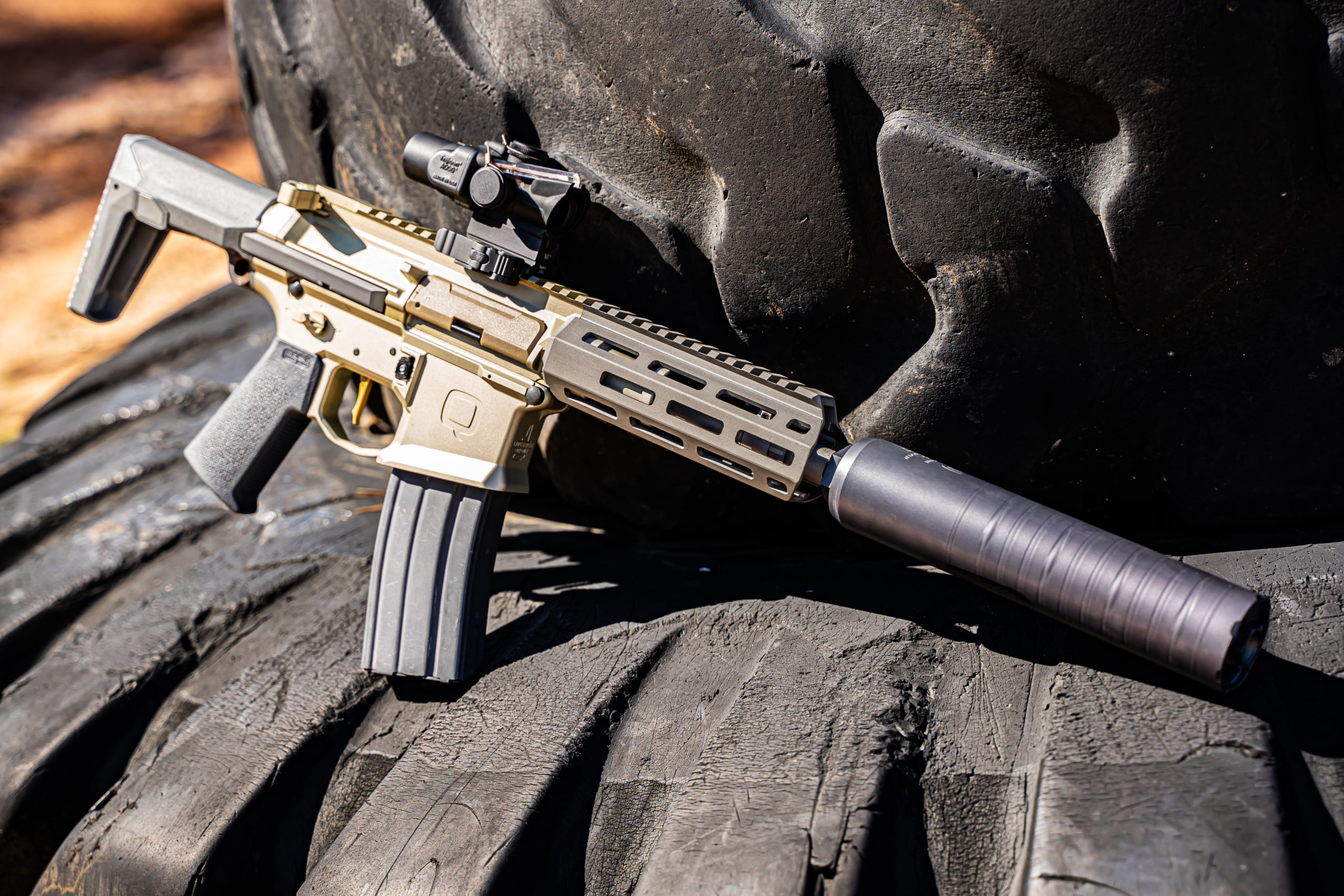
The AR-15 is common. It is used for defense, hunting, competition, training, predator control, and ordinary recreational shooting. Its operating system is semiautomatic: one shot for each function of the trigger. Features targeted by these laws—including adjustable stocks, pistol grips, muzzle devices, and handguards—generally improve fit, control, and safe handling. They do not transform a semiautomatic rifle into a machine gun.
The en banc Third Circuit recently applied the Second Amendment’s text and history and struck down New Jersey’s prohibition on covered semiautomatic rifles. Cook County and Connecticut want the Supreme Court to reach the opposite result by allowing local lawmakers to erase a protected class of arms.
A Seat at the Table for America’s Rifle
The ultimate question is bigger than two anti-gun jurisdictions. The Court’s decision will determine whether the Second Amendment actually restrains government when the firearm at issue is politically disfavored but overwhelmingly chosen by the American people.
“Shall not be infringed” does not mean that a state may prohibit a rifle after millions of citizens buy it. It does not mean that judges may replace the people’s choice of arms with whatever firearm they consider sufficient. And it does not permit lawmakers to outlaw an ordinary semiautomatic rifle by attaching the dishonest “assault weapon” label to it.
The Justice Department has already told the Court that these AR-15 bans are unconstitutional. Sauer’s new motion asks for the opportunity to say it before the justices on December 2.
Supreme Court Brief Makes the Case Against Banning Militia Arms
About Duncan Johnson:
Duncan Johnson is a lifelong firearms enthusiast and unwavering defender of the Second Amendment—where “shall not be infringed” means exactly what it says. A graduate of George Mason University, he enjoys competing in local USPSA and multi-gun competitions whenever he’s not covering the latest in gun rights and firearm policy. Duncan is a regular contributor and editor-in-chief for AmmoLand News and is responsible for AmmoLand’s daily gun-rights reporting and industry coverage.