

The panic around Benson v. United States is no longer limited to Washington, D.C. After the D.C. Court of Appeals struck down the District’s ban on magazines holding more than 10 rounds, anti-gun officials moved fast to contain the damage. D.C. is now asking the full court to rehear the case, while states like New Jersey are already trying to keep the ruling from influencing their own fights over AR-15 and magazine bans. That tells you Benson is bigger than one local case, and the people defending these bans know it.
That is what makes Mark Smith’s video worth watching. His breakdown focuses on D.C.’s desperate attempt to save its law, but the bigger story is what this ruling could mean nationwide. This is not just about one city trying to preserve one gun-control measure. It is about anti-gun jurisdictions trying to stop a pro-Second Amendment ruling from becoming the case that helps bring magazine bans to the U.S. Supreme Court in a serious way.
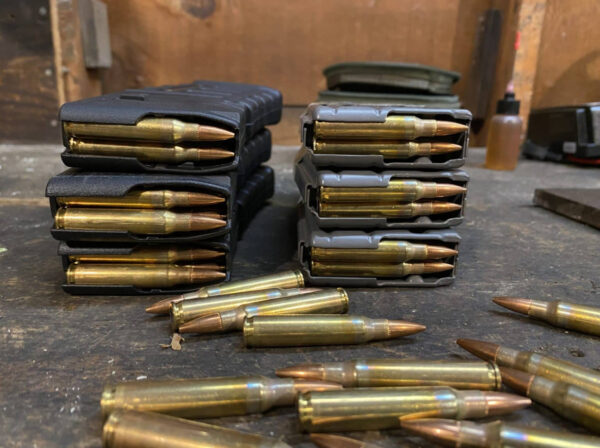
The Benson decision was a major win for gun owners. The D.C. Court of Appeals reversed Tyree Benson’s conviction and held that magazines holding more than 10 rounds are protected “arms” under the Second Amendment, described them as being in “common and ubiquitous use,” and struck down the District’s ban as unconstitutional. The court emphasized that these magazines number in the “hundreds of millions,” make up about half of the magazines in civilian hands, and come standard with many of the most popular firearms sold in America.
That language from the Heller decision is a direct threat to the legal theory behind AR-15 and magazine bans across the country. For years, anti-gun states have tried to treat standard-capacity magazines as if they were some kind of fringe item outside the Second Amendment. Benson cuts straight through that by recognizing what gun owners have been saying all along: these are common, ordinary arms owned by millions of peaceable Americans for lawful purposes.
But what makes Benson especially dangerous to the gun-control lobby is not just the outcome. It is the split in authority that the case created. The D.C. Court of Appeals, the District’s court of last resort, went the opposite direction from other appellate courts that have upheld bans on standard capacity magazines. That kind of conflict matters because the Supreme Court is much more likely to step in when lower courts are openly divided on a major constitutional question.
Live Inventory Price Checker
Lawyers in several pending Supreme Court magazine-ban cases have already filed supplemental briefs pointing to Benson as the kind of conflict the justices usually look for when deciding whether to grant review. One brief told the Court there is now a “square split” on the ultimate question of whether bans on magazines over 10 rounds can survive the Second Amendment. Another argued that Benson “deepens the split of authority” below. In other words, this ruling has already become part of the push to get the Supreme Court to finally take up the issue.
Court records show the District sought to suspend the opinion’s effect almost immediately and then filed for rehearing en banc, asking the full D.C. Court of Appeals to step in and overturn the three-judge panel. The goal is obvious: erase or weaken the ruling before it can become an even stronger vehicle for Supreme Court review. If the panel opinion stands, anti-gun states will have a much harder time pretending there is no real conflict for the justices to resolve.
And D.C. is not alone. As AmmoLand recently reported, New Jersey rushed into the Third Circuit on March 18 with a letter urging the court to reject Benson as a “non-binding outlier.” The state also complained that the ruling remains subject to en banc review and conflicts with other appellate decisions. That reaction says a lot. New Jersey is still trying to defend bans on AR-15s and magazines, and it clearly does not want judges in the Third Circuit taking a hard look at a fresh decision holding that magazines over 10 rounds are protected arms in common use.
That is really the national significance of this case. Benson is not just a local loss for D.C. It is already putting pressure on other states still defending bans on some of the most commonly owned rifles and magazines in America. Once a court starts saying out loud that these magazines are ubiquitous, common, and constitutionally protected, the foundation under magazine bans begins to crack. And when those bans are tied to broader attacks on common semiautomatic rifles, the pressure spreads even further.
The pressure on the Supreme Court is now even harder to ignore because Duncan v. Bonta is already sitting in the conference stage. The justices distributed the case for their March 20, 2026, conference after both sides filed new briefs addressing Benson. The petition has already been relisted multiple times. If the Court was looking for a clean split before stepping in, Benson may be the case that finally forces its hand.
D.C.’s en banc petition is not just about saving one ordinance. It is an effort to stop Benson from becoming a stronger national precedent and to keep the Supreme Court from using this split as a reason to step in. States like New Jersey are trying to do the same thing from the sidelines, hoping other courts will ignore Benson before it gains momentum. That is not the behavior of people confident in the constitutionality of their laws. It is the behavior of officials who know the ground is shifting under them.
If the courts follow Heller and Bruen honestly, that should be the end of AR-15 and magazine bans nationwide. The anti-gun side understands that. That is why they are scrambling now. Benson has created a split, raised the odds of Supreme Court review, and put anti-gun states on notice that their favorite bans may not survive much longer.
New Jersey Scrambles to Save AR-15, Magazine Bans After Benson Ruling
Some of the links on this page are affiliate links, meaning at no additional cost to you, Ammoland will earn a commission if you click through and make a purchase.