

Love them or hate them, mechanical broadheads are here to stay. Unless you are a purist in your hunting gear, I’d say there’s no harm in trying out different broadheads, fixed and mechanical.
Mechanical broadheads have a bad rep on their reliability and I understand where that comes from. Fixed broadheads are easier to use. You won’t have to worry about early blade releases, and there aren’t any moving parts that can go wrong.
Personally, I really like hunting with mechanical broadheads because of two reasons. One is that they are constantly improving and the other is that they have a larger cutting surface than a fixed one.
We have observed that not all broadheads are created equal. So, in order to help you make the right choice if you choose to use one, here’s a list of the best mechanical broadheads out there.
Mechanical Broadheads vs Fixed Blade Broadheads
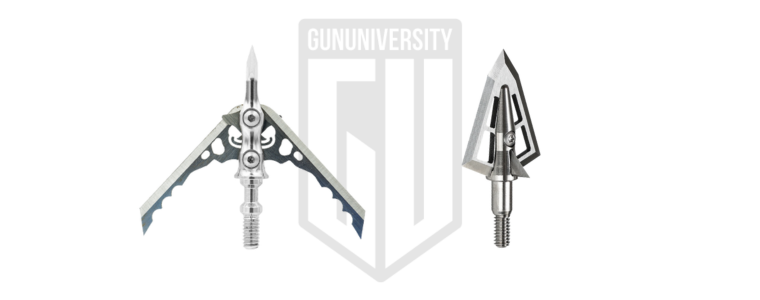
Before we look at the best mechanical broadheads, you should know what fixed and mechanical broadheads are.
- Fixed broadheads are traditional broadheads. They have a number of blades (two, three, or even four) fixed to a ferrule (the center of a broadhead where the blades are attached) or are molded from metal into a particular shape.
- Mechanical broadheads, on the other hand, have retractable blades. These blades are released from the ferrule when the broadhead strikes a target.
Now, mechanical broadheads come in many designs with various blades just like the fixed ones. Some blades open forward and some are rear deploying.
There’s a lot of debate on which is the best broadhead, but that’s for another post. Today, we’ll focus on the best mechanical broadheads you can find. Keep in mind that not every broadhead is suitable for every situation. Use your best judgment to choose the ones that are right for you. Here’s a quick rundown of every mechanical broadhead I’ve picked.
Gun University’s Best Mechanical Broadheads
Best Mechanical Broadheads
Best Mechanical Broadheads Specifications
Below is a table of the specs for each broadhead. Click the name of the item to jump to that review.
Best Mechanical Broadheads
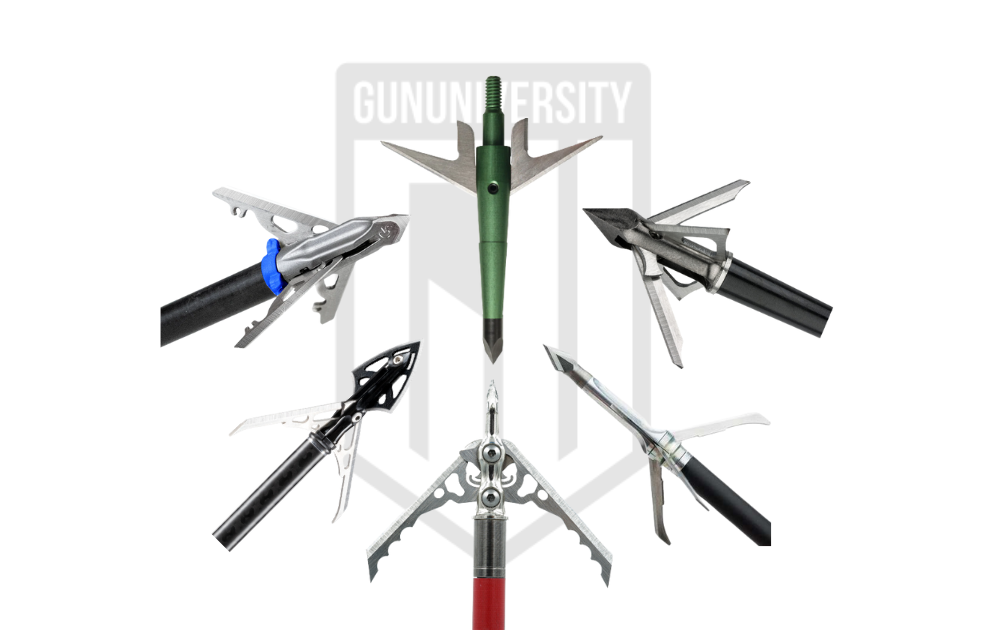
Here is our list for the best mechanical broadheads:
- G5 Deadmeat V2
- Grim Reaper Razorcut SS Whitetail Special
- Muzzy Trocar HB Hybrid
- Rage Hypodermic
- Swhacker 2-inch cut
- Rage Extreme 4-Blade
Best Mechanical Broadheads – Reviews
Here are the detailed reviews of all the broadheads I’ve listed along with a side-by-side spec table on each. Each one of these broadheads has unique features which make them the best fit for their category.
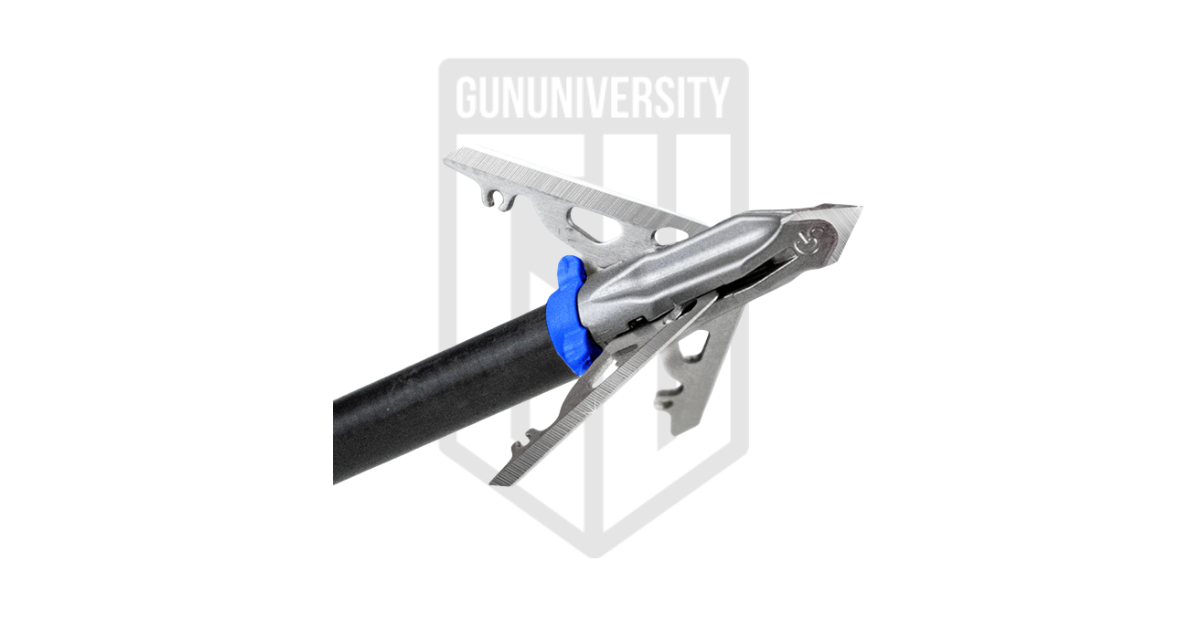
G5 Deadmeat V2
3 blade mechanical broadhead with chisel tip and 1.5 inch cutting diameter.
Our Grade
A
Reviewed by Dave Chesson
Reader’s Grade
TBD
Based on 0 Reviews
Your Grade
Do You Own This Accessory? Leave A Review
Success Your Grade Has Been
Added To Our Reader’s Score
We use email to verify the accuracy of our reviews. We promise to never spam you.
G5 Deadmeat V2 Specs
- Number of Blades 3
- Weight (Grains) 100-125
- Blade Thickness (in) 0.044
- Cutting Diameter (in) 1.5
G5 Deadmeat V2 Review
The G5 Deadmeat V2 is one of my favorite broadheads to hunt with. It is not the best in any of the individual categories, but it is the overall best.
I appreciate the design of the Deadmeat V2. The Deadmeat V2’s tips are chiseled and they fly really well. The broadheads are also fairly heavy at 220 grams. What really sets it apart is the collar that locks the blades in place. This means they don’t come apart when you just jostle or knock it and they don’t deploy too early as well. One of the main problems with mechanical broadheads is the blades deploying too early, so I’m happy that the G5 Deadmeat V2 doesn’t do that.
Now, to test its deployment, I shot the broadhead through a 3/8’’ piece of plywood, and it performed remarkably well. All three blades fully deployed upon impact, though one didn’t open all the way.
It also cuts a wound that’s more than 2 inches wide and gives you a good blood trail to follow. Usually, most broadheads with a large cutting diameter don’t really penetrate well. G5 Deadmeat V2 is definitely an exception to that.
Now, while it’s a fantastic broadhead, there are a few things to look out for. The blades are pretty durable, but after the plywood test, they became dull. So these are not great for practicing (To their credit, G5 offers a practice head with your purchase).
Another thing that I didn’t like was how steep the blade angle was when you fully deploy the broadhead. It’s not a killer for me, but I wish it was more streamlined for better penetration.
G5 Deadmeat V2 Pros and Cons
- Easy-to-use
- Replaceable blades
- Durable design
- Low profile head reduces wind drift, increasing consistent shots
- Metal injection molding (MIM)
G5 Deadmeat V2 Deals
Our Grade
A-
Reviewed by Dave Chesson
Reader’s Grade
TBD
Based on 0 Reviews
Your Grade
Do You Own This Accessory? Leave A Review
Success Your Grade Has Been
Added To Our Reader’s Score
We use email to verify the accuracy of our reviews. We promise to never spam you.
Grim Reaper Razorcut SS Whitetail Special Specs
- Number of Blades 3
- Weight (Grains) 100
- Blade Thickness (in) 0.035
- Cutting Diameter (in) 2.0
Grim Reaper Razorcut SS Whitetail Special Review
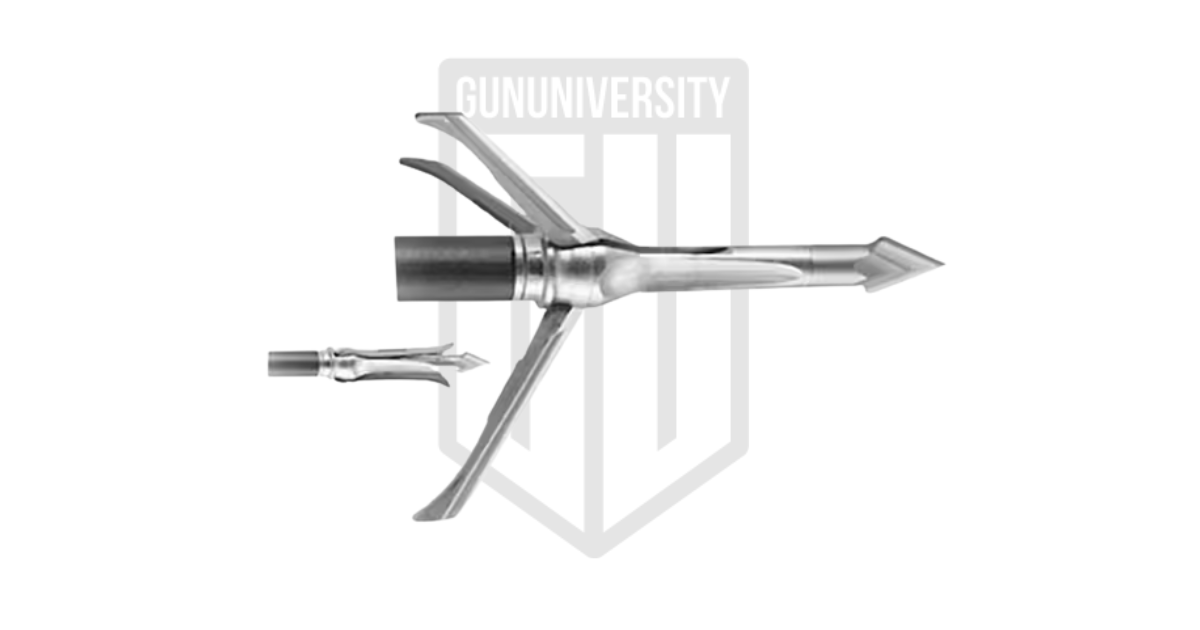
If you are after deer like most hunters in the US, I really don’t think you can do much better than the Grim Reaper Razorcut SS Whitetail Special. It’s a mechanical broadhead especially made for killing deer.
I’ve been shooting with the 100-grain model for the past year and a half and they are definitely my go-to for going deer hunting. With a cutting diameter of 2 inches, they leave enormous holes through their target, and that makes tracking so much easier.
I also am a big fan of the design; the cut-on-contact tip is sharpened to a triangular point, ensuring maximum penetration, and the long ferrule holds 3 wicked blades.
The only problem I’ve had with them is the ferrule. Last year, I shot a whitetail with it and the aluminum ferrule broke after hitting the shoulder bone. It was a bit expensive to replace, but that’s just me nitpicking.
Grim Reaper Razorcut SS Whitetail Special Pros and Cons
- Designed to leave a blood trail
- Flared tip
- Practice head included
Grim Reaper Razorcut SS Whitetail Special Deals
Muzzy Trocar HB Hybrid
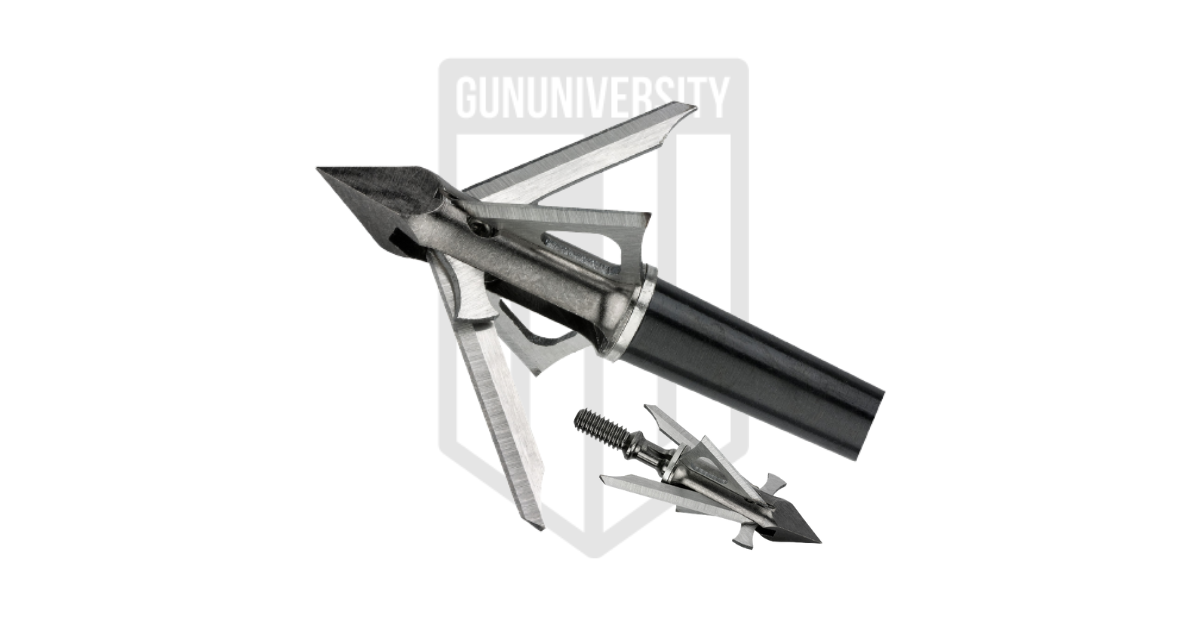
4 blade mechanical and fixed blade hybrid broadhead with chisel tip and 1.625 inch cutting diameter.
Our Grade
A-
Reviewed by Dave Chesson
Reader’s Grade
TBD
Based on 0 Reviews
Your Grade
Do You Own This Accessory? Leave A Review
Success Your Grade Has Been
Added To Our Reader’s Score
We use email to verify the accuracy of our reviews. We promise to never spam you.
Muzzy Trocar HB Hybrid Specs
- Number of Blades 4
- Weight (Grains) 100
- Blade Thickness (in) 0.035
- Cutting Diameter (in) 1.625
Muzzy Trocar HB Hybrid Review
For those of you who have trust issues with the mechanical broadhead’s dependability, my recommendation is to go for a Muzzy Trocar HB Hybrid. Technically, it’s a mechanical broadhead, but it has both types of stainless steel blades; two mechanical ones with a 1.5’’ cutting diameter and two fixed blades with a 1’’ cutting diameter.
Muzzy has a lot of ‘true believers’ and I can definitely see why. The Trocar HB gives you the reliability of a fixed broadhead along with the penetration and accuracy of a mechanical one.
When you shoot the broadhead at an animal, it first causes damage with the fixed blades and the chisel tip. Then, the mechanical blades open on impact to make a massive wound on the animal.
The chisel tip is really great for crushing bone even on bigger game like elk or moose. But one thing you need to look out for is how easily the blades deflect on this one.
Now some might argue with me that the broadhead’s design is needlessly complicated. They are not exactly wrong and replacing blades is a pain, but that’s true of every hybrid broadhead. Another issue is that it’s only available in 100 grains.
But considering it’s a stable and reliable mechanical broadhead that also flies really well and ensures good penetration, I really can’t complain that much.
Muzzy Trocar HB Hybrid Pros and Cons
- Four-bladed structure increases chances of hitting a vital organ
- Hybrid mechanical design
- Trocar tip
- Four blades could affect accuracy
Muzzy Trocar HB Hybrid Deals
Rage Hypodermic NC
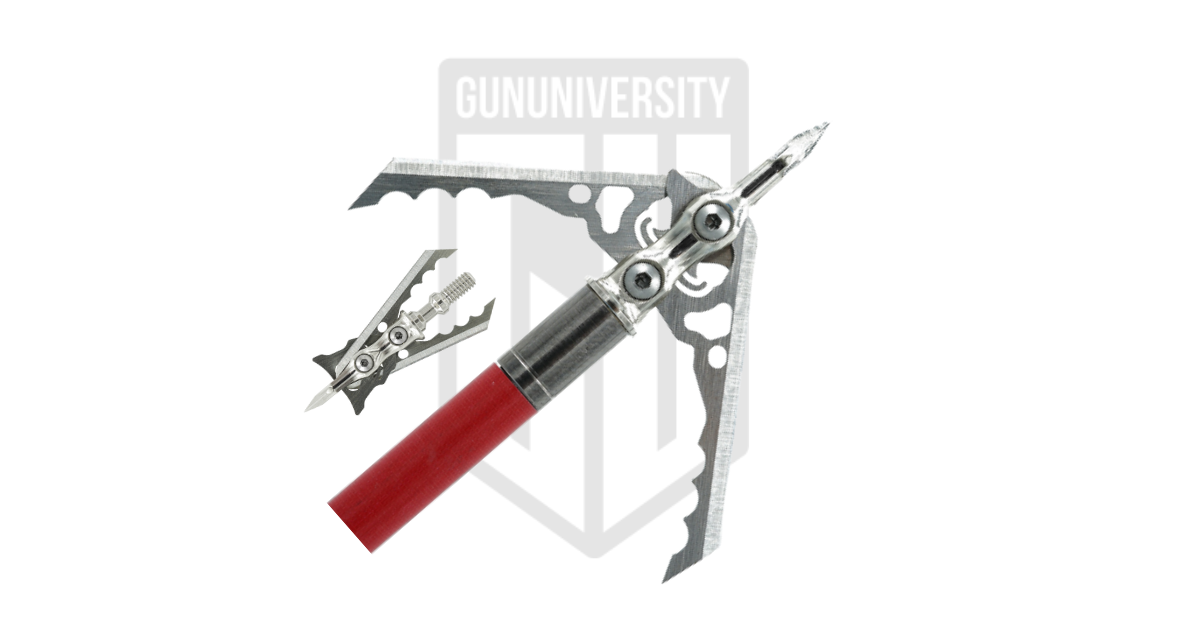
2 blade mechanical broadhead with hypodermic chisel tip and 2 inch cutting diameter.
Our Grade
A-
Reviewed by Dave Chesson
Reader’s Grade
TBD
Based on 0 Reviews
Your Grade
Do You Own This Accessory? Leave A Review
Success Your Grade Has Been
Added To Our Reader’s Score
We use email to verify the accuracy of our reviews. We promise to never spam you.
Rage Hypodermic NC Specs
- Number of Blades 2
- Weight (Grains) 100
- Blade Thickness (in) 0.035
- Cutting Diameter (in) 2.0
Rage Hypodermic NC Review
I’ve always been a fan of Rage broadheads and it’s the same with their Hypodermic model. The design takes a different direction compared to their previous releases, like Rage Standard and Chisel Tip, but I think it was a good choice. The current design is very streamlined, allowing for smoother flight and deeper penetration.
Even though it doesn’t have a chisel tip, the Rage Hypodermic NC’s sharp point can easily crush bone. Combined with its reinforced blades that open on impact, it gives you a lot of penetrating power.
Last season, I took a deer with the Rage Hypodermic NC and it was a clean pass through, leaving a heavy blood trail for me to follow. The deer had barely gone 30 yards before it expired.
The Rage Hypodermic has only 2 blades. I’d say that’s the reason it passes through so cleanly. It has to face less resistance than a 3-bladed or a 4-bladed broadhead and can cut cleanly through muscle sinew to stop the wound from closing up.
But the flip side of having only two blades is, it means you’ll have to be a little more accurate when shooting. So if you are a more experienced hunter, I’d say it’ll be a good fit for you. I don’t want to discourage beginners from picking the Hypodermic, but I recommend waiting until you’ve got some experience under your belt before going with it. It’s not exactly the cheapest broadhead to replace.
Another great thing about it is that it’s not as complicated as the Muzzy Trocar HB Hybrid. You can easily take it apart and put it back together again.
The downside is that the Rage Hypodermic only comes in 100 grains. With a powerful crossbow, this shouldn’t be much of an issue, but if you use traditional bows, I don’t think it’ll work for you.
Rage Hypodermic NC Pros and Cons
- Destructive blades
- Large cutting diameter
- Penetrative tip
Rage Hypodermic NC Deals
Our Grade
B+
Reviewed by Dave Chesson
Reader’s Grade
TBD
Based on 0 Reviews
Your Grade
Do You Own This Accessory? Leave A Review
Success Your Grade Has Been
Added To Our Reader’s Score
We use email to verify the accuracy of our reviews. We promise to never spam you.
Swhacker 2-Inch Cut Specs
- Number of Blades 2
- Weight (Grains) 100
- Blade Thickness (in) 0.032
- Cutting Diameter (in) 2.0
Swhacker 2-Inch Cut Review
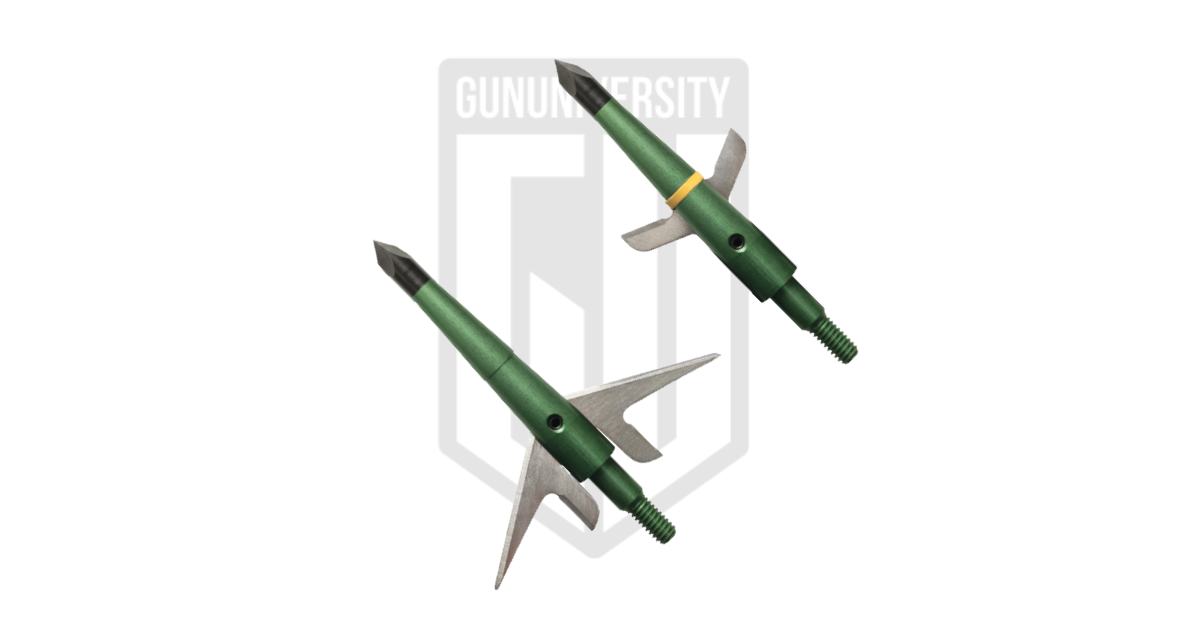
If you are on a budget, my recommendation is to go with the Swhacker 2-Inch Cut. It’s a sleek broadhead that doesn’t sacrifice much performance for the price. The Swhacker 2-Inch Cut comes in a 3 pack for about $30 and offers great value.
The design is very clever. Along with the usual parts, it has a couple of ‘wing blades’. Now, these blades are part of the main blades, but don’t really retract into the ferrule. So how it works is that when you shoot it, its chisel tip and ‘wing blades’ really stick your bolt in the animal. Once the broadhead hits, the main blades deploy, doing a lot of damage.
The main blades are pretty big with a 2’’ cutting diameter, and that means the wound’s going to be massive, giving you a good blood trail. In case the main blades don’t open, the winged blades will still do some damage, but there’s a risk of a bad blood trail.
You can also easily reuse the broadhead several times and the blades are not very hard to replace. They also have the tendency to get stuck in the animal and so far, I’ve never had a pass through shot with them.
Overall, for the price, you are getting a very good value with Swhacker 2-Inch Cut. It’s aerodynamic, reliable, and has good penetration capabilities.
Swhacker 2-Inch Cut Pros and Cons
- High carbon-steel head
- Includes practice head
- Two separate cutting edges
- May not leave a heavy blood trail
Swhacker 2-Inch Cut Deals
Rage Extreme 4-Blade
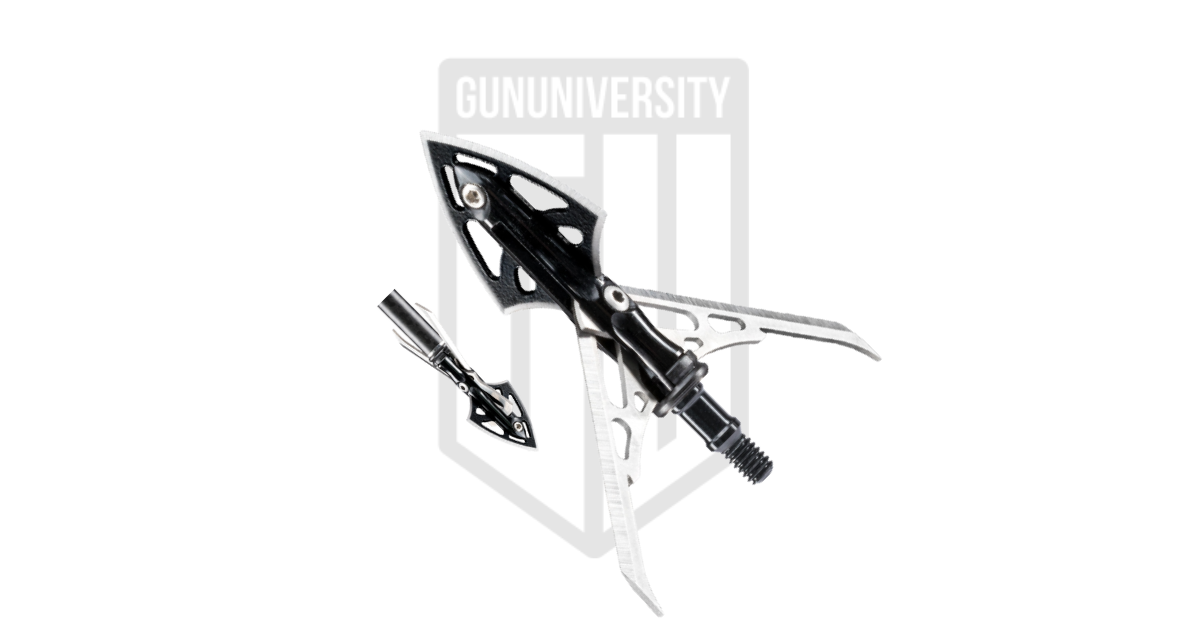
4 blade mechanical and fixed blade hybrid broadhead with blade tip and 2.3 inch cutting diameter.
Our Grade
B+
Reviewed by Dave Chesson
Reader’s Grade
TBD
Based on 0 Reviews
Your Grade
Do You Own This Accessory? Leave A Review
Success Your Grade Has Been
Added To Our Reader’s Score
We use email to verify the accuracy of our reviews. We promise to never spam you.
Rage Extreme 4-Blade Broadhead Specs
- Length (in) 34.25
- Draw Weight (lbs) 30
- Speed (FPS) 6.2
- Weight (lbs) 140
Rage Extreme 4-Blade Broadhead Review
Rage makes the list again. It really is one of my go to brands for great broadheads. If you are starting out, their Extreme 4-Blade is an excellent choice. It’s another hybrid model that has a huge cutting diameter of 2.3” and it’s specifically designed to leave gaping entry and exit wounds in your quarry.
With such a wide diameter, you don’t really need to be very accurate to get a good blood trail or hit the vitals. It’s perfect for beginners. But to use it properly, you are going to need a shock collar that stops your blades from deploying too early. Rage includes an extra one with your purchase, but they can get worn pretty quickly.
Another thing is that it’s only sold in 2 packs and they are not exactly the cheapest in the market.
But if you are starting out, I definitely recommend going for the Rage Extreme 4-Blade Broadhead. It’s not complicated to use, is very forgiving of inaccuracy, and can help you get in the groove with your crossbow.
Rage Extreme 4-Blade Broadhead Pros and Cons
- Hybrid design for fast killing of big game
- Tough aluminum ferrule
- Wide opening cut
- The blade may get deflected or redirected off its trajectory open entry
- Difficult to change blades
Rage Extreme 4-Blade Broadhead Deals
Buyers Guide for Mechanical Broadheads
Buying a good broadhead can be tricky if you are not familiar with them. Here’s what I look for when I buy a mechanical broadhead.
How does a mechanical broadhead work?
Mechanical broadheads have a lot of moving parts. The blades are actually held in the ferrule. This is to help with aerodynamics, since slim and narrow objects fly better. But once it comes in contact with the animal, the impact forces the blades open.
So the idea is that mechanical broadheads can maintain accuracy because of their streamlined shape and still deal a lot of damage.
What to look for when picking a mechanical broadhead?
A lot of hunters have very strong preferences in their broadheads–and for good reason! Hunting gear is all about finding the right fit for you. However, before buying a mechanical broadhead, look at the following features.
Number of blades – If you are used to shooting fixed broadheads, you might think the more blades the better. It’s not exactly the case with mechanical broadheads. If you have a higher number of blades, just like the fixed, you get larger wounds and better blood trails.
But the downside is, since mechanical blades are retractable, there are just too many moving parts that can malfunction. So, as a beginner, I’d say look for a higher blade count, but as you become more experienced and accurate, go for two bladed broadheads. These will help you get a clean pass-through and good flight.
Blade thickness – A thicker blade can easily penetrate your animal and it is less likely to bend as it passes through the vital organs. It also means that it is more durable. A blade between the thickness of 0.020 to 0.0375 inches is what you should look for.
Material – Manufacturers usually opt for stainless steel or aircraft-grade aluminum when making most high-end mechanical broadheads. Other than stainless steel or aluminum, you can also look for one made from high carbon or titanium alloys. They won’t corrode easily.
Cutting diameter – One of the best benefits of mechanical broadheads is their larger cutting diameter. The blades won’t affect the broadhead flight since they are retracted. So definitely look for a larger cutting diameter when you get your broadhead.
The tip – You can either go with a cut-on-contact or chisel tip. A cut-on-contact broadhead has a bladed tip, while the chisel tip broadhead has a thick pointed hammer-like tip with the blades located behind it. If you are using a high-poundage bow, a chisel tip would be a good choice for it can crush through bone. But for a low-poundage bow, a cut-on-contact tip can help you create larger wounds.
Deployment – Your broadhead can be rear deploying or from deploying. A front deploying broadhead’s blades are tucked very close to it and when they enter the animal, they kind of unfurl like a flower, causing damage. On the other hand, the blades of a rear deploying broadhead are inside the broadhead and deploy on impact with the animal. This is a spec that doesn’t affect the hunt as much, but some people say that rear deploying broadheads are more reliable.
Weight in grains – Broadhead weight adds to your arrow weight and the general advice is to go for lighter broadheads for lighter arrows and heavier ones for heavier arrows. Lighter arrows fly faster, but have less penetrative power than heavier arrows. 100 grains is the most common weight you’ll be seeing and unless you are hunting very large game, that should be plenty!
Conclusion
A good broadhead can help you hunt with more confidence, but finding the one that works for you can take time. So don’t be afraid to try out different models until you’ve found the right one. After all, all the reviews in the world can’t stand in for firsthand experience.
I hope this article helps you approach broadheads with a little more perspective on what to look for. Good luck.
If you need help sorting out the right bolt for your broadhead, check out our best types of crossbow bolts article.
Mechanical Broadhead FAQs
The Rage Hypodermic NC’s hypodermic model is my choice for the most accurate broadhead. It’s very streamlined, has two wicked blades, and penetrates deeply.
The Grim Reaper Razorcut SS Whitetail Special’s cut-on-contact tip is sharpened to a point and ensures maximum penetration. Another advantage is that it doesn’t deflect your angled shots.
The Swhacker 2-Inch Cut is very efficient and also is the best value you will get for the money. You can easily get a three pack for under $50.
The number one mechanical broadhead would be the G5 Deadmeat V2. It’s easy to use, very durable, and creates massive entry and exit wounds. It’s a good fit for almost any hunter.
The Rage Extreme 4-Blade Broadhead has a devastating 2.3” cutting diameter, leaving massive entry and exit wounds in its quarries.
Source link

