

Estimated reading time: 16 minutes
The Mauser Karabiner 98k is not some dusty museum prop that only matters to collectors. It is a hard-kicking, history-soaked bolt gun that still shows exactly why the Mauser action became the gold standard for combat rifles and hunting rifles alike.
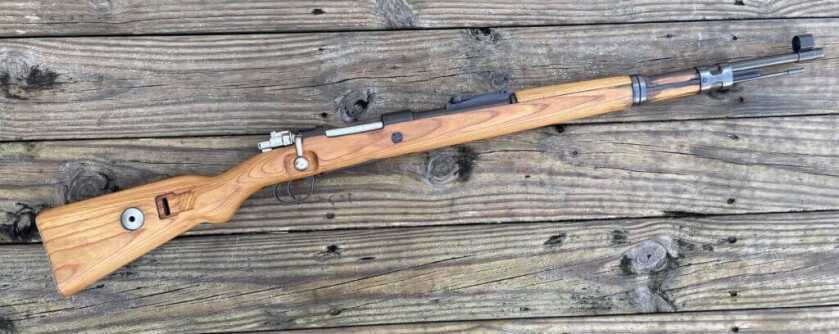
Why the Mauser Karabiner 98k Still Belongs on Your Bucket List
If you hang out at shooting ranges or gun shops for any amount of time, then you have heard the name Mauser. You may have family or friends who collect Mauser rifles, not just the 98k, but the legion of other Mausers. While you get extra bucket list points for shooting a lot of different Mausers, real master combat rifle experience is personified in the Karabiner 98k, since it is the last of the great bolt-action battle rifles. This is the rifle that the Nazi German Army used in WWII. You owe yourself some quality trigger time behind it to really understand the definition of a battle rifle in the mid 20th century.
The Mauser 98k earns its reputation honestly. It is heavy, simple, rugged, and soaked in history. That combination alone makes it worth a trip to the range, even before you start talking about controlled feed, 8mm Mauser, or just how much shoulder this thing can eat through in one box of ammo.

Mauser 98k History: Nazi Germany’s Service Rifle
To really understand the importance of the Karabiner 98k, you need to understand Germany during World War I. The German military had upgraded its service rifle to the Gewehr 98, which was adopted by the German Army in 1898, hence the 98 in the model name. The German Army used the Gewehr 98 effectively during WWI, and at the time wit as considered an excellent combat bolt-action rifle. The Gewehr 98 featured a 29-inch barrel, used a 5-round stripper clip, and was chambered in 7.92x57mm Mauser cartridge, also known as the 8mm Mauser or 8x57mm. Total length was 49 inche,s and it weighed nearly nine pounds. As Germany rebuilt after WWI, the Mauser rifle was adopted to better suit the needs of a modern combat soldier.
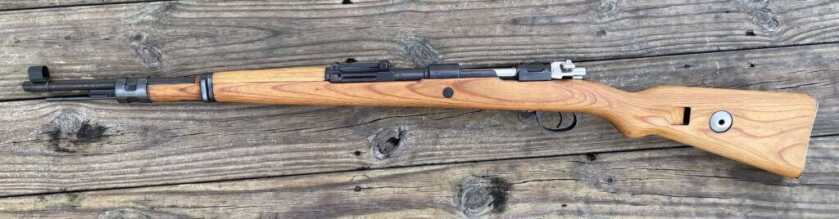
A long rifle is a liability for the modern combat soldier at the time, who was transported in trucks and who fought not only in open fields like in WWI but in urban warfare. The 98k addressed the evolving needs of the modern combat soldier.

The 98k was adopted by the German Army in 1935 and was similar to the Gewehr 98, but featured a shorter 23-inch barrel and improved sights. It was nearly 47 inches long and weighed about 8.5 pounds. In hand, the 98k is a hefty weapon. It features a wood stock and handguard, is equipped with iron sights, though some K98k rifles were adapted for sniper use with mounted optics. The 98k was chambered in 8mm Mauser, which is similar in length and power to the .30-’06 Springfield, which we used in the M1 Garand during WWII, as well as the .303 British and 7.62x54rmm Russian calibers.
The 98k has an internal box magazine that holds five rounds. The magazine is charged by a stripper clip. The manual safety has three positions: safe with the trigger blocked and the bolt locked, safe that allows the bolt to be cycled and the trigger blocked, and fire.
Why Mauser’s Controlled Feed Action Still Matters
The controlled feed action in the Mauser is an iconic and key feature of the identity of Mauser rifles. The design is simple. A claw extractor on the bolt grips the rim of the cartridge before the cartridge is stripped from the magazine into the chamber.
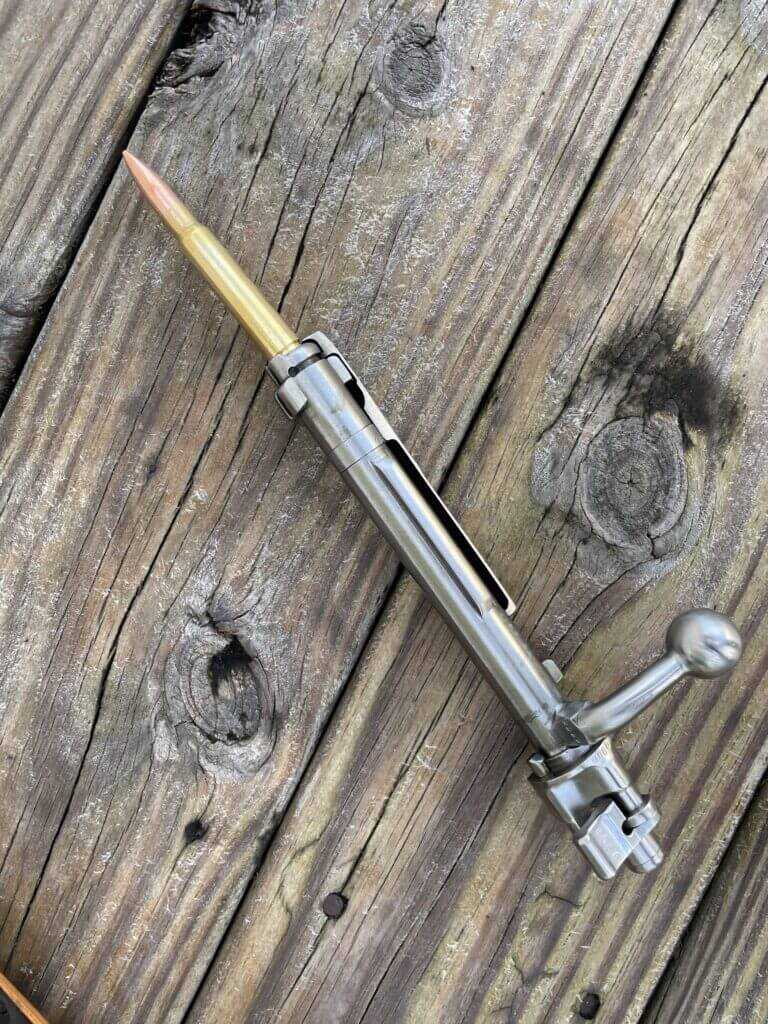
Nearly every other new bolt-action design since has been a push-feed action. A push feed action has a small extractor and snaps onto the cartridge rim after the cartridge is fully seated in the chamber. The control round feed of the Mauser is highly reliable even in adverse conditions since it reduces the chance of a double feed. Dangerous game hunters swore by the Mauser’s control feed action since they needed a reliable rifle, especially when the game you are hunting wants to eat you for supper or stomp you into a puddle os sticky goo.
Mauser has not been the only manufacturer of control feed actions; the Winchester Model 70 originally and through 1964 used a control feed action. Then changed to push feed, and since 1992 reverted back to a control feed action. The Ruger M77, Kimber 84, and others also used a controlled feed action.
WWII Mauser 98k Manufacturers and Factory Codes
The K98k rifle was manufactured by eight different companies in Germany during the war. Receivers were stamped with a factory code indicating date and manufacturer.
Nearly 14.6 million 98k rifles were manufactured, and since so many rifles were needed, Mauser was not the only manufacturer of the rifle. Receivers were stamped with a numerical factory code indicating the date and location of manufacture. In 1937, the numeric code was changed to letter codes.
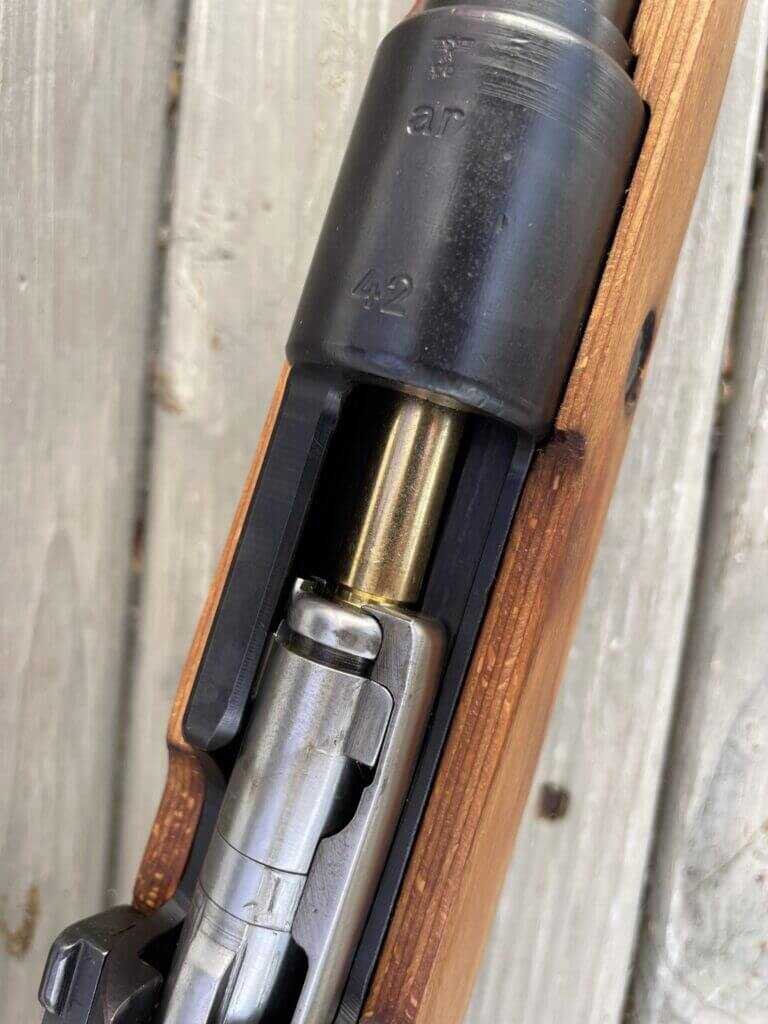
Mauser facilities in Oberndorf had factory codes of 42, svw45, byf, and the plant in Borigwalde used 243 and ar codes. Other manufacturers included Erfurter Maschinen- und Werkzeugfabrik, known as ERMA, Sauer & Sohn, Berlin-Lübecker Maschinenfabrik, Gustloff Werke, Steyr-Daimler-Puch, and Waffenwerke Brünn.
Mauser Military Rifle History, the Short Version
Paul and Wilhelm Mauser had started development on a new type of combat rifle in the early 1870s and proceeded to completely change the definition of a combat rifle. It all started in 1871. Mauser’s first rifle was the Gewehr 1871, which was adopted by the German Empire in 1871, shortly after the Franco-Prussian War. The Gewehr 1871 was a single-shot, bolt-action rifle chambered in an 11mm black powder cartridge, and served as the standard service rifle until 1888. That was the start of the Mauser lock on combat rifles that would last about 74 years until the end of WWII.
Nearly every country in Europe and South America lined up to get Mauser rifles. Countries arming their military with Mauser rifles included Argentina, Austria, Belgium, Czechoslovakia, El Salvador, Estonia, Israel, Japan, Latvia, Poland, Portugal, Romania, and Saudi Arabia, just to name a few.
Mauser military rifle design spanned black powder to smokeless powder and blunt nose bullets to Spitzer style bullets. The rifles evolved from a single shot to an internal box magazine.
That long legacy is why the 98k still matters. It did not appear out of nowhere. It was the culmination of decades of refinement, and when you run the bolt on one, that lineage is obvious. There is a reason so many later sporting rifles borrowed the blueprint.
Range Time With the Mauser 98k: Recoil, Accuracy, and Old-School Charm
Part of the Mauser experience is shooting the numerous calibers developed and produced by Mauser. The 98k was chambered in 7.92×57mm Mauser, which looks and sounds a lot like a grammar school math problem. Many times, the caliber is also referred to as the 8mm Mauser or 8×57mm, which is easier to wrap your head around. The caliber is easy to acquire. A 20-round box costs anywhere from $40 to $60 dollars, depending on the bullet style and brand. There are still some who hunt with the caliber, and Mauser hunting rifles are another subject in themselves. I acquired some PPU rounds loaded with a 198-grain FMJ bullet.
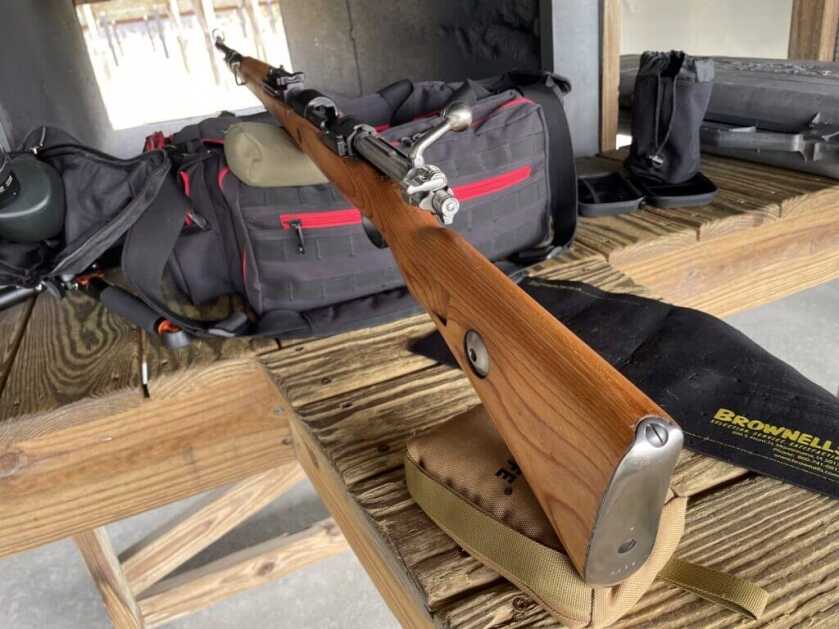
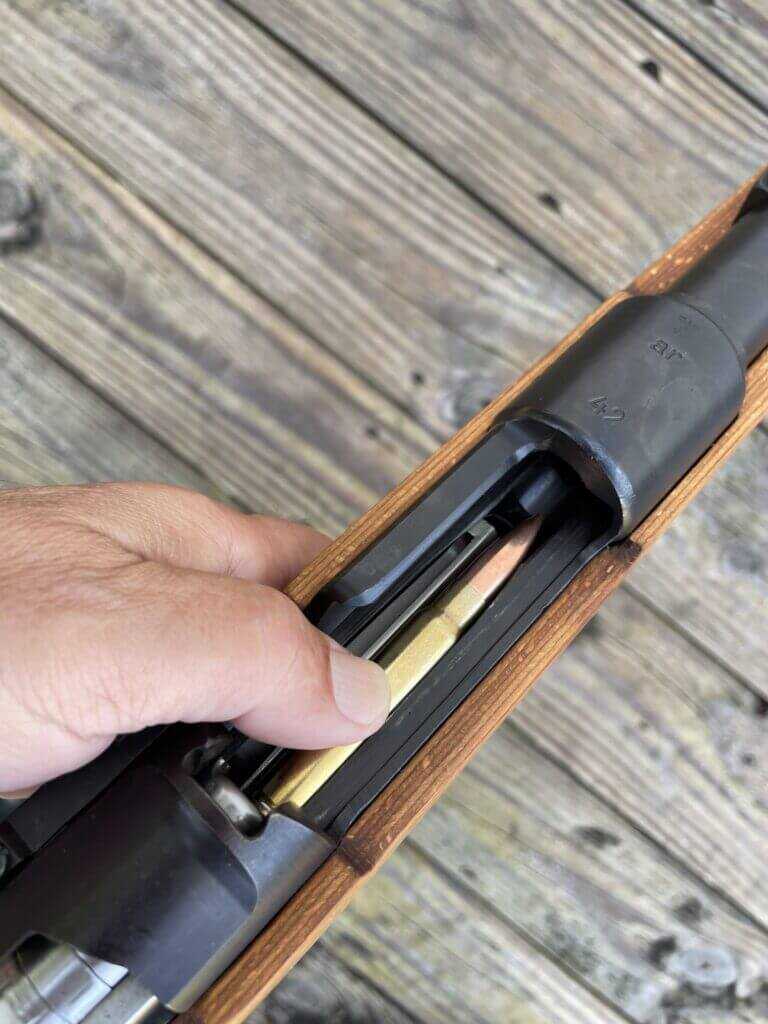
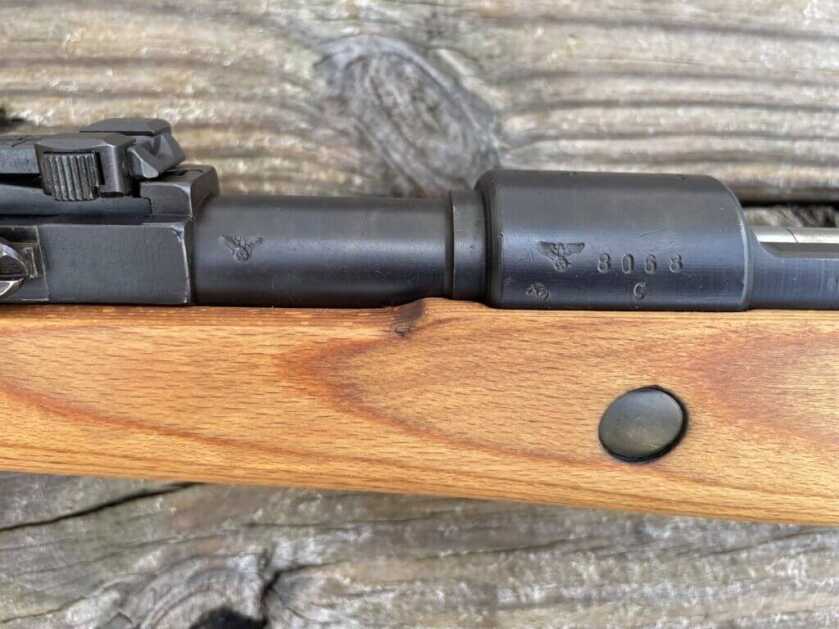
My Mauser is a refinished 98k with matching serials, which adds more value from a collecting standpoint. The rifle looks in great shape. According to the breech stamp, this rifle was manufactured by Mauser at their Borigwalde facility in 1942. There are numerous Nazi cartouches on the metal.
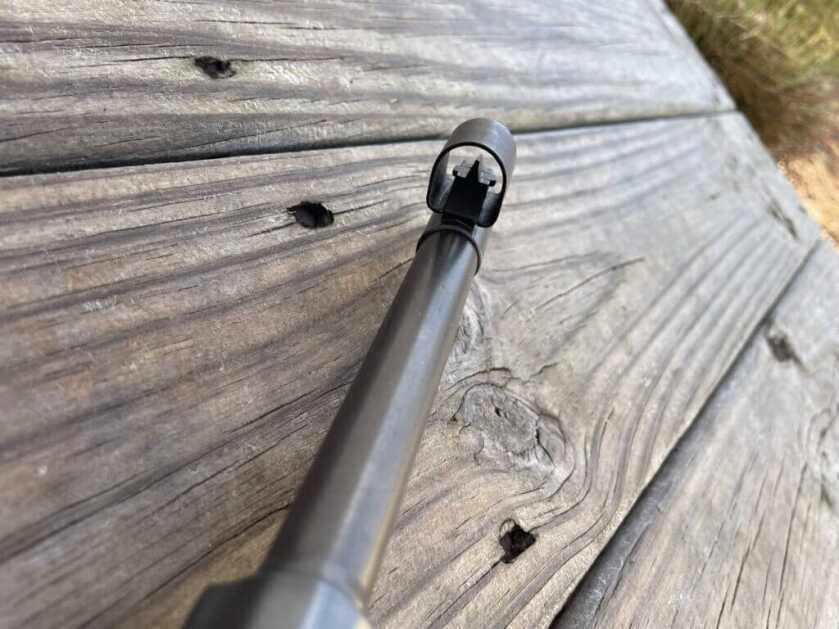
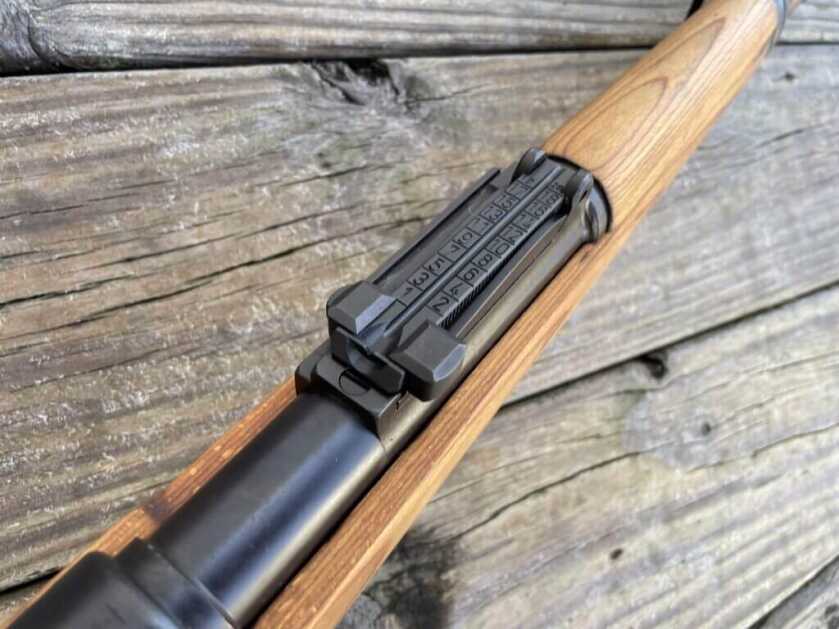
While the outside looks very good, the bore looks like this particular Mauser had a few rounds through it. I wasn’t expecting stellar accuracy. Plus, shooting iron sights increases the challenge. The rear sight is marked to increase elevation for distant shots. The rear sight itself is a V-shaped notch with the rear of the sight milled out to reduce glare. The front sight is a hooded post with the shooter-facing side serrated to reduce glare from the sun.
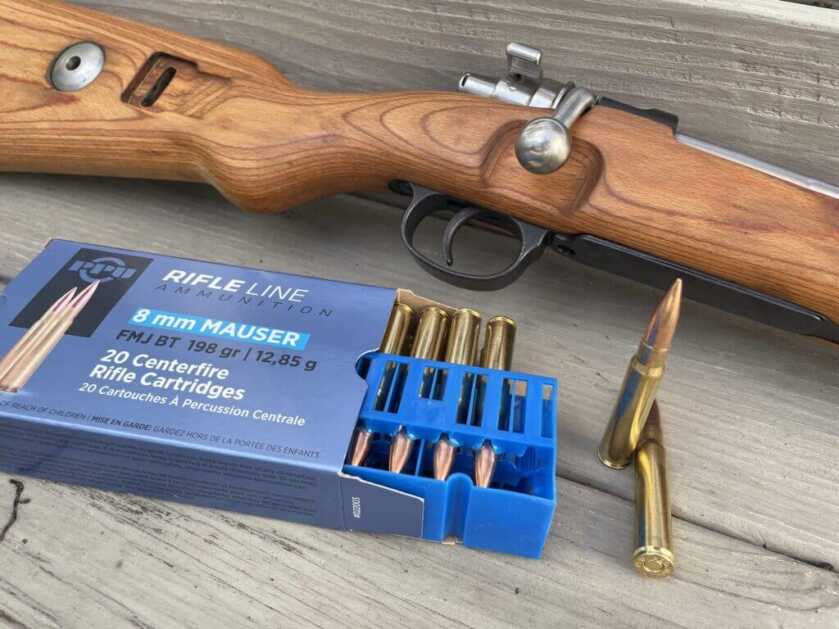
I had no stripper clips, but rounds can be loaded into the magazine individually by pushing them down on the magazine follower. As a side note, the Mauser bolt can’t be closed on an empty magazine. This is built into the design to alert the user that the rifle needs to be loaded. By loading or simply pressing down on the follower, the bolt will close. Compared to bolt-action hunting rifles, the Mauser was slick to manipulate. The bolt was loose, and I suspect this is due to age and use, and by design. The looseness in the acton allowed the bolt to operate even if debris was in the action. Whereas an action with tight tolerance is more likely to jam if dirt, snow, sand, or mud is introduced.
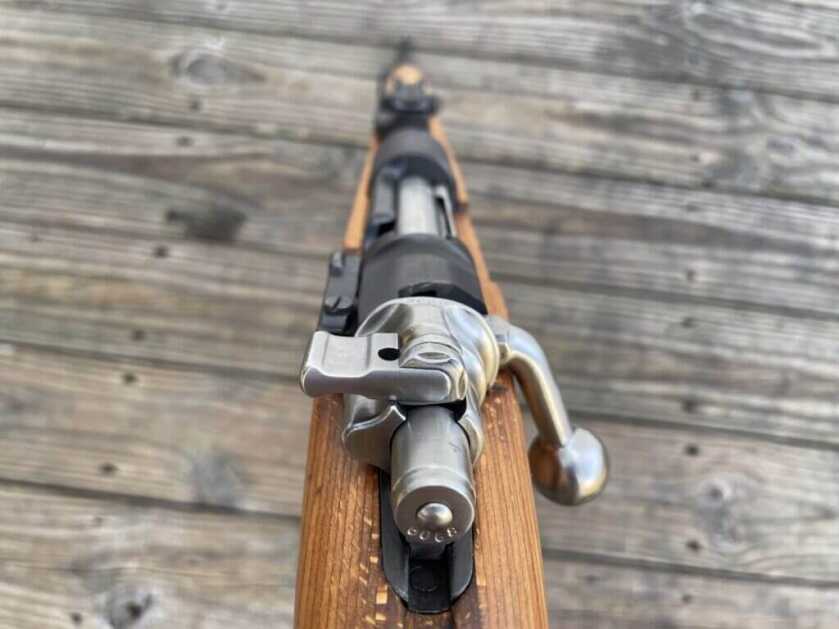
The stock grip is thick, and the butt plate is a curved piece of steel. Recoil was tolerable, but after a box of 20 rounds, my shoulder bore the brunt of the 8mm Mauser round.
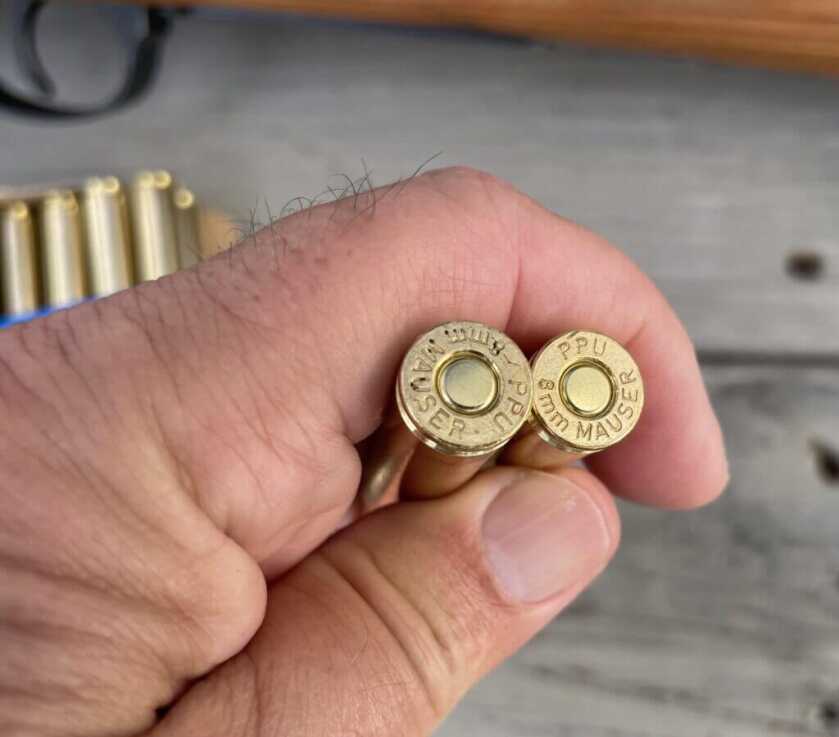
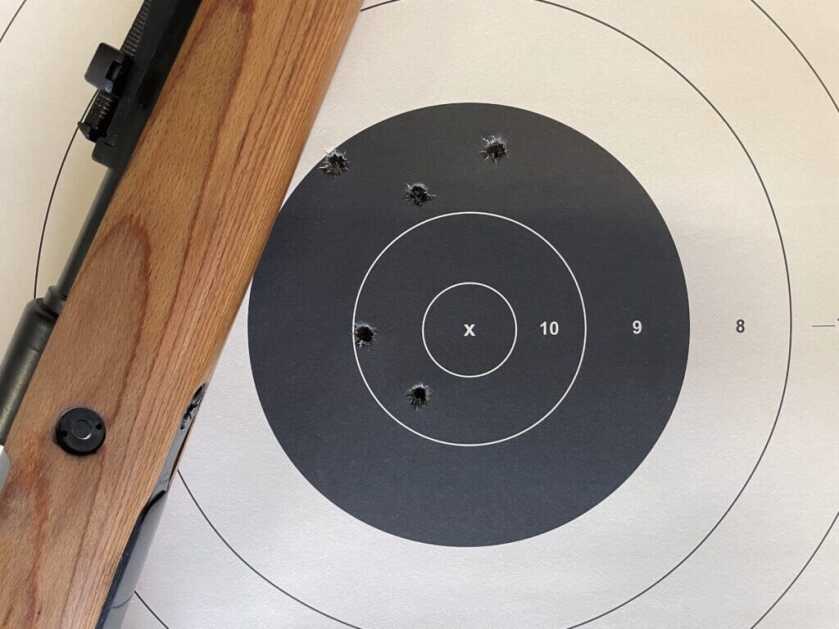
Starting off at 50 yards, a 100-yard military target (NRA-SR-1) with a 6-3/8 inch black bullseye. Once I got my dope, my best five shots were in the black; two inside the 10 ring and three inside the 9 ring. I thought that was good shooting considering the use the rifle has had and using iron sights. At 100 yards, I was humbled. Two shots in the 9 ring, one in the 7 ring, and two in the 6 ring. The group measured an honest 4 inches, and I suppose I should be happy with those results. Muzzle velocity averaged 2420 fps with 2575 ft-lbs. of energy. As a comparison, a .30-06 Springfield loaded with a 180-grain bullet has a muzzle velocity of about 2700 fps and muzzle energy of 2912 ft-lb.
The two-stage trigger on the 98k had a significant amount of take-up in stage one, and stage two broke with a grittiness that made the hair on the back of my neck stand up. I took about 8 pounds of pressure to fire the rifle. In all transparency, the two stages and heavy trigger were designed to reduce a stress induced shot in combat.
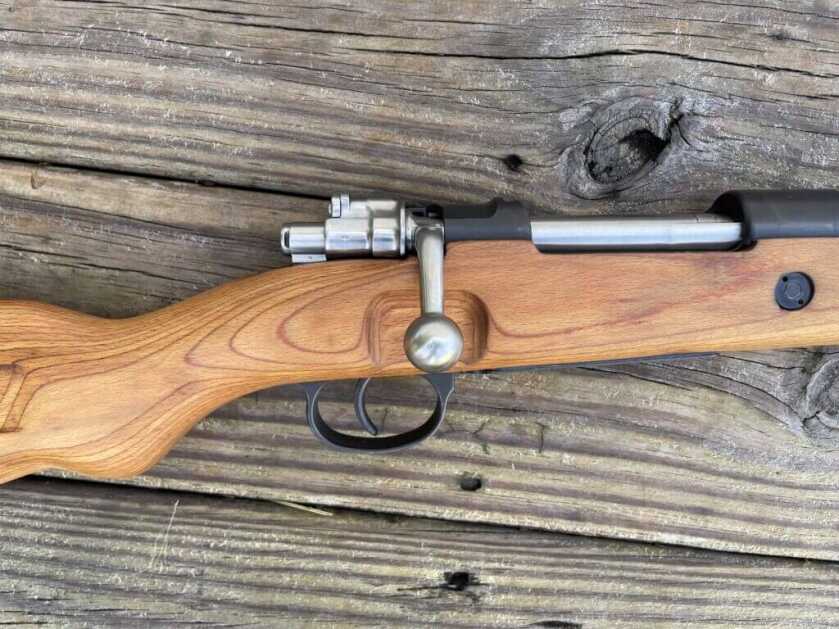
That is the charm of the 98k. It is not trying to be slick, soft, or modern. It just works, and it works with enough authority to remind you that battle rifles from this era were built for hard use, not comfort. There is a lot of romance in these old guns, but there is also a healthy amount of steel, recoil, and reality.
Mauser Karabiner 98k Specifications
| Action | Bolt |
|---|---|
| Caliber | 7.92×57mm Mauser (8mm Mauser) |
| Finish | Blue |
| Stock | Smooth wood |
| Front Sight | Serrated hooded post |
| Rear Sight | Adjustable v-notch |
| Barrel Length | 23.6 in. |
| Overall Length | 43.7 in. |
| Weight | 8.2 lb. |
Pros and Cons: The Honest Mauser 98k Take
- Pros: Legendary controlled feed action, serious WWII history, smooth bolt operation, strong 8mm Mauser performance, genuine collector appeal.
- Cons: Heavy recoil over a long session, gritty two-stage trigger, iron sights demand work, and good matching examples can get expensive fast.
Conclusion: Why the Mauser 98k Still Feels Like the Last Great Bolt-Action Combat Rifle
Mauser’s legacy lives on with 98k representing the benchmark in bolt-action combat rifle design. The design is simple, strong, and safe. The 98 actually had two lives. The military version and a commercial version. While both use the same action, both are distinct and have their own story. Consider this the Cliff Notes on the Mauser 98k. You really haven’t experienced bolt-action military rifles until you shoot a 98k.
Collecting Mausers: Contract Rifles, Matching Serials, and Value
Many countries contracted with Mauser to build rifles for their military forces, and these are known as contract Mausers. The contract Mauser was stamped with the crest of the country on the action bridge. On some of these rifles, the crest has been removed, which lowers the collectable value of the Mauser. Top dollar collectable Mauser will also have matching serial numbers. This doesn’t, however, change the shooting ability of these old rifles. Here is a short list of some of the more common Mauser military rifles.
Argentinian Mauser: The Mauser 1891 or Mauser Modelo Argentino 1891 was made in both rifle and carbine length variants.
Belgium Mauser: Fabrique Nationale de Herstal, a firearms manufacturer in Belgium, made the M98 series.
Brazilian Mauser: The Model 1908 was similar to the Mauser Gewehr, but chambered in 7x57mm Mauser, also known as 7mm Mauser. The Model 1908 rifles were imported from Germany and made by either Mauser or DWM (Deutsche Waffen und Munitionsfabriken). The Brazilian Mauser Model 1908/34 was similar to the Model 1908 rifle but was manufactured in Brazil.
Chile Mauser: The Mauser Model 1895 was adopted by Chile’s armed forces and renamed the Mauser Chileno Modelo 1895. It was manufactured in Germany by DWM and Ludwig Loewe Company from 1895 to 1900 and chambered in 7x57mm Mauser.
Hungarian Mauser: The Hungarian Army during WWII helped Germany with rifle production by modifying the Hungarian 35M rifle and rechambering it in 7.92x57mm. The rifle was renamed the G98/40.
Persian Mauser: Persia, now called Iran, contracted orders of long rifle and short rifle Mausers from Czechoslovakia gun manufacturer BRNO between 1931 and 1938. These Mausers are referred to as Persian Mauser Model 98/29.
Polish Mauser: The wz. 29/40 was very similar to the 98k and manufactured at the FB Radom factory in Poland for the German Army during WWII.
Prussian Mauser: The Prussian State Arsenal at Spandau manufactured the Gewehr 98.
Spanish Mauser: The Spanish Model 1943 Mauser Short Rifle, or the M43, was manufactured by Fabrica de Armas La Coruna and is a variant of the German 98k Mauser. The Mauser Model 1893 is commonly referred to as the Spanish Mauser. The Spanish Mauser was chambered in 7x57mm and used a 5-round internal magazine. Though the model is called the Spanish Mauser, it was adopted by other countries in other calibers.
Swedish Mauser: Generally speaking, Swedish Mausers are rifles based on the Mauser Model 1893 and chambered in 6.5x55mm Swedish, also referred to as 6.5 Swede. Mauser manufactures these rifles as well as Carl Gustafs and Husqvarna Vapenfabriks, two firearm manufacturers located in Sweden.
Turkish Mauser: The country of Turkey and the Ottoman Empire itself started equipping its troops with Mauser rifles as early as 1887. Generally speaking, all the Mauser rifles used by Turkey from 1887 through after WWII are considered Turkish Mausers. One of the more common Turkish Mausers is the Turkish M1938. This model was manufactured by Mauser, and approximately 201,100 of the M1893 rifles were delivered to the Ottoman Empire. Most of these rifles were never issued to troops.
Yugoslavian Mauser: After WWII, Yugoslavia refurbished German-made 98k rifles left over or captured from German troops and called the rifles Zastava M98/48. Original German markings were removed from the action and replaced by the Yugoslav Crest. Zastava was the Yugoslavian arsenal that refurbished the rifles.

Robert A. Sadowski is an American writer and journalist.
He has written about firearms and 2A issues for decades, and has trained with some of the country’s finest firearm instructors in handguns, rifles/carbines, shotguns and long-range shooting. He has also had the opportunity to interview numerous individuals deeply involved in protecting our 2nd Amendment.
He a is a frequent contributor to numerous gun-enthusiast publications, a few of which include:
- TheArmorylife.com
- TheTruthAboutGuns.com
- GunsAmerica.com
- GunBroker.com
- Gun-Tests.com
- Shooting Illustrated
- SHOT Business
- Gun Digest
Sadowski is also the author of numerous gun books, including: “9MM — Guide to America’s Most Popular Caliber” and “Book Of Glock,” both of which were #1 new releases on Amazon. He also wrote the popular DIY gun book series: Shooter’s Bible Guide to Firearms Assembly, Disassembly, and Cleaning Volume 1 and Volume 2. Other gun books authored by Sadowski include “50 Guns That Changed the World,” and edited “The M16A1 Rifle: Operation and Preventive Maintenance”originally published by the U.S. Department of the Army. He also edits the annual “Gun Trader’s Guide” to firearm values.
Sadowski is also the Treasurer/Secretary of the GLOCK Collectors Association, a non-profit organization with the mission to educate and preserve: Educate the public on the models, variations, and commemoratives built by GLOCK, as well as provide members with information on GLOCK serial numbers, importation, and other facts unique to GLOCK pistols.

