
A letter filed in a case challenging Hawaii’s restrictive gun laws attacks the state’s credibility after its attorney attempted to downplay the attorney general’s role in rewriting gun laws now under constitutional challenge.
The lawsuit, Yukutake v. Lopez, challenges two provisions of Hawaii’s firearm code. The first imposed a narrow window for handgun purchase permits, effectively forcing applicants to complete the process within a short and often impractical timeframe. The original timeframe was ten days, later expanded to 30 days, a change that attorneys AmmoLand spoke to believed was designed to moot this case.
The second required gun owners to bring newly acquired firearms to law enforcement for in-person inspection and registration within just a few days. Hawaii claimed this law was to prevent the spread of “ghost guns,” but anyone with an unserialized firearm in violation of the state’s law would most likely not show up to a police station with an illegal gun. With Hawaii’s history of anti-gun actions, gun owners think this was put in place to cause an undue burden to residents.
Five years ago, a federal district court struck down both of Hawaii’s anti-gun provisions, finding they imposed unconstitutional burdens on Americans’ right to keep and bear arms. The judge issued a permanent injunction, siding with the plaintiffs and recognizing that procedural hurdles can serve as barriers to the exercise of a fundamental human right. Hawaii appealed to the Ninth Circuit.
The Ninth Circuit, known for being anti-gun, affirmed the district court’s 2025 ruling, describing Hawaii’s permit timeline as “impermissibly abusive” and agreeing that the in-person inspection requirement violated the Second Amendment-protected rights of Hawaiians. The case was then remanded to the district court due to subsequent changes in state law surrounding the provisions.
Before the district court could rehear the case, the Ninth Circuit took it en banc in July of 2025, meaning the full bench would hear it. Hawaii now claims those changes to the law should end the litigation altogether. Hawaii has used this tactic before to avoid court losses.
In one such case, Teter v. Lopez, Hawaii changed its law to moot the legal challenge. Teter was another case argued by Beck and Stephen Stamboulieh against the Aloha State. Teter challenged the state’s ban on butterfly knives. The change in the law made it impossible for the attorneys to collect nearly half a million in attorneys’ fees. Judge Lawrence VanDyke said that Hawaii should pay its attorneys well for avoiding what should have been an easy payout.
“Whether intentionally or not, Hawaii has played the ‘panel-erasure game’ here like a champ, ridding itself of adverse panel precedent, sidestepping the risk of losing on the merits before the en banc court, and now dodging a fee award,” VanDyke wrote in the opinion. “Whatever Hawaii is paying its own counsel, it should double it. But as clever as Hawaii’s strategy was, it never would have worked unless our en banc court played along. None of this gamesmanship would have been rewarded if we, as the en banc court, had simply vacated the ministerial order vacating the panel opinion. But we did not. In the Ninth Circuit, at least when it comes to the Second Amendment, if you’re litigating against the government, even when you’re winning, you’re losing.”
On Thursday, attorney Alan Beck, who represents plaintiffs Todd Yukutake and David Kikukawa, filed a letter with the U.S. Court of Appeals for the Ninth Circuit. Mr. Beck directly calls out claims made by Hawaii’s lawyer during oral arguments that took place just two days earlier. He points to contradictions between the state’s courtroom statements and its real-world actions.
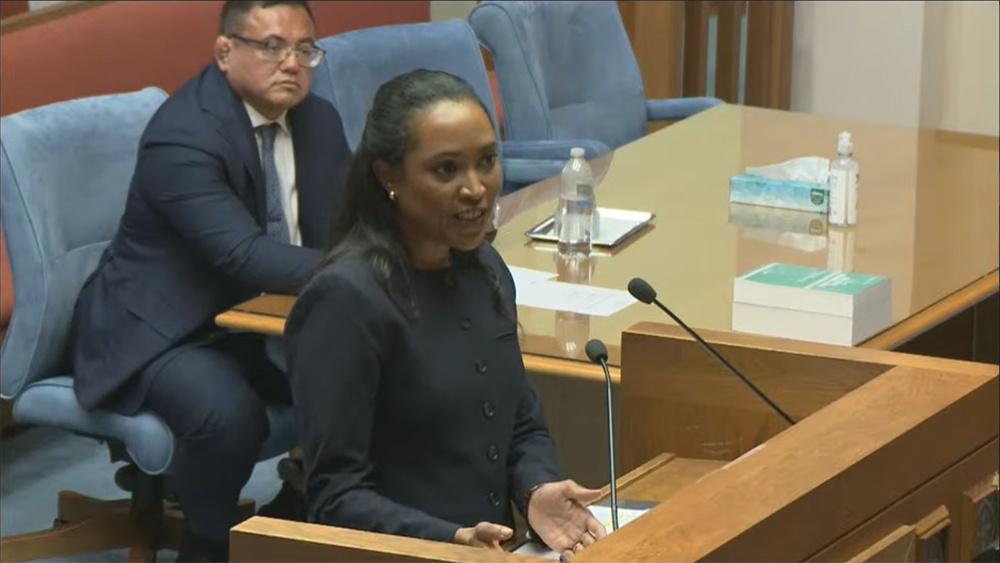
During oral arguments last Wednesday, Hawaii’s attorney told the court that the Attorney General’s office does not control the legislature and could not explain why lawmakers amended the statutes at issue when asked by the court why the law was changed. The statements were designed to distance the state’s legal defense from the changes to the law. These exact changes are what the AG is now using to try to moot the case.
“The Attorney General did not change the law here; the legislature changed the law, and these are different branches of government. We don’t control one another, and we are separate from one another,” the lawyer for Hawaii said. “I cannot say what it was that prompted the legislature to make a change or whether there will ever be a change again.”
Did she lied?
The AG was the driving factor of passing this law, it was a direct attempt to circumvent the courts ruling.
Todd Yukutake v. Anne E. Lopez (21-16756)
Court of Appeals for the Ninth Circuit – 03/24/2026 pic.twitter.com/oqP3SIHRyi— Hawaii Firearms Coalition (HIFICO) (@hificoorg) March 25, 2026
Beck disputes Hawaii’s lawyers’ claims, and he has strong evidence that these claims were false. According to his letter, a deputy attorney general previously testified before lawmakers in support of legislation explicitly aimed at addressing the same federal court ruling that struck down Hawaii’s gun restrictions. That testimony directly undermines the state’s suggestion that it had no role or even insight into why the laws were changed. Hawaii’s attorney knowingly or unknowingly misled the court about the AG’s influence over the legislature.
“It’s important for the court to have an accurate record of the legislative history of the laws before it,” Beck told AmmoLand. “This letter demonstrates that the Hawaii Attorney Generals office lobbied for the current amendments to the law.”
Hawaii is asking the court to dismiss the case on mootness grounds, arguing that because the challenged laws have been amended, there is no longer a “live controversy.” The Supreme Court and Circuit Courts (FBI v. Fikre, City of Mesquite v. Aladdin’s Castle, Inc., Heyer v. United States Bureau of Prisons) have long been skeptical of attempts by governments to avoid judicial review through last-minute changes to laws, especially when those changes are calculated to preserve the core of the original restrictions. One judge during oral arguments called out Hawaii for using this tactic in the past in cases such as Teter.
Ever since the Supreme Court’s Bruen decision, the question has been whether states like Hawaii can sidestep adverse rulings by quietly changing laws while continuing to defend similar restrictions in court.
Other states have used similar tactics to avoid accountability. When New York City was sued over its restrictions on transporting guns into and out of the City (New York State Rifle & Pistol Association v. City of New York), it fought all the way to the Supreme Court. Once the plaintiffs filed for a writ of certiorari, the Big Apple amended its law. The court ruled the case moot.
Hawaii has since responded to the letter, stating that, under the separation of powers, the legislation is attributable solely to the legislature, not the Executive Branch. They argued that the Deputy Attorney General’s testimony in support of the bill, nor the inclusion of the Governor’s legislative package, means that the Executive branch had anything to do with the changes. Hawaii seems to be playing a “it wasn’t me” game.
Hawaii isn’t using a new tactic, but the state seems to use it more than anyone else. Whether the Ninth Circuit moots the case depends on several things. The biggest being whether it finds for Hawaii and moots the case because of its disdain for the Second Amendment, or if it decides enough is enough and puts an end to Hawaii’s dirty tricks.
Hawaii’s Desperate Ninth Circuit Plea to Bring Back Judicial Scrutiny in Gun Rights Case
About John Crump
Mr. Crump is an NRA instructor and a constitutional activist. John has written about firearms, interviewed people from all walks of life, and on the Constitution. John lives in Northern Virginia with his wife and sons, follow him on X at @crumpyss, or at www.crumpy.com.