

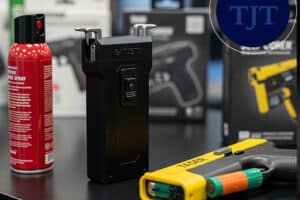
New Jersey enforces some of the tightest weapon laws nationwide, shaping how self-defense is handled. While guns fall under control, so do common objects most people view as safe. Legal elsewhere, those same items may bring prosecution upon entering this state.
Under New Jersey law, pepper spray, stun guns, and tasers fall into different regulatory categories despite serving similar purposes. While widely used for self-defense, access to these devices is subject to strict conditions tied to user eligibility. Surprisingly, not everyone qualifies to carry them, regardless of intent. Legal allowances also shape where and how someone may hold or transport such tools. For example, even the capacity of a pepper spray unit affects its legality. Specifics like these often catch users off guard.
Take someone from Pennsylvania, for example, having bought a protection item lawfully there. They might cross into New Jersey without realizing it is illegal. Crossing into New Jersey changes everything, even if the object stays the same. Intent offers no shield against prosecution, either. In New Jersey, individuals are detained for carrying objects they thought qualified as lawful protection.
Before you carry anything meant for protection, knowing the law matters. The three most common devices are pepper spray, stun guns, and tasers. While each works differently, none exist outside legal boundaries. There are rules as to how they can be held, used, or even bought. One might assume personal safety items are always allowed; reality proves otherwise. Intent does not guarantee permission. Some rely on them daily, others never use them, but owning these items can cause serious legal trouble.
Pepper Spray Laws in New Jersey: What Is Legal and What Is Not
Found in state code N.J.S.A. 2C:39-6(i), pepper spray regulations tend to be more detailed than most expect. Though permitted under New Jersey law, its use isn’t free from tight boundaries. A short list of allowed self-defense items includes pepper spray, but specifics matter greatly here and assumptions can lead to trouble.
To begin, the gadget should fit in a pocket and carry no more than three-quarters of an ounce of chemical spray. Several pepper sprays available through retailers or websites contain one ounce or higher volumes, going beyond what New Jersey regulations allow. A container just barely above the permitted level still risks triggering criminal penalties.
Designed not to harm, they work by irritating the eyes, forcing tears, leaving someone briefly confused. Incapacitation lasts only a short time, nothing more. Lasting damage crosses into illegal territory. The law draws the line at permanent effects, so anything beyond momentary distress does not qualify.
At age eighteen or older, someone might carry the spray provided they lack specific criminal records blocking eligibility. Pepper spray can be used in situations where safety is at stake. In New Jersey, turning it into a weapon without cause crosses legal lines that could lead straight to assault charges.
Given these restrictions, users should carefully consider both capacity and purpose when choosing a spray container. A can exceeding three-quarters of an ounce might result in legal trouble, despite lawful acquisition out of state. Under New Jersey law, such possession is a disorderly persons offense. You can review our dedicated page on Mace charges in New Jersey for more detail on how these cases are charged and prosecuted.
Who Is Banned From Owning Self-Defense Tools in New Jersey?
If you have been convicted of aggravated assault, homicide, robbery, or sexual assault, you are prohibited from having any type of weapon. Convictions for arson, making criminal threats, extortion, or unlawful possession of a firearm also fall under this regulation. An arrest for domestic violence or being under a TRO (Temporary Restraining Order) can order the alleged abuser to refrain from owning firearms and stun guns. N.J. Stat. Ann. § 2C:25-28(j) (2024). For a full breakdown of who is legally barred from possessing weapons in New Jersey, see our page on Certain Persons Not to Possess Weapons in NJ.
Stun Guns and Tasers in NJ: Legal Status After the 2017 Federal Ruling
It might surprise some to learn that New Jersey’s stance on stun guns and Tasers isn’t straightforward. While pepper spray follows well-defined laws, regulations for electronic self-defense tools float in uncertain territory. Though officially restricted, enforcement often depends on context, making real-world application unpredictable. Because court rulings shape much of the current understanding, past decisions heavily influence how these devices are treated today. Still, confusion remains widespread among residents unsure about what exactly is permitted.
A person found with a stun gun in New Jersey could face charges under current law, specifically N.J.S.A. 2C:39-3(h), which classifies such ownership as a fourth-degree offense. Although the rule seems strict, it suggests that individuals cannot legally keep these tools at home or carry them. Despite how clear it reads, enforcement may differ from what the text implies. Still, according to written policy, civilians are not allowed to have electronic weapons.
Still, the regulation lost force in 2017 when a federal decision found New Jersey’s complete restriction on stun guns clashed with the Second Amendment. It turned out that constitutional protection extends to electric self-defense tools. Because of this, sweeping bans can no longer be imposed by the state. Following such reasoning, authorities must allow these devices under the current interpretation.
Even after the court’s decision, the law remained in the books. Because of that, people get mixed signals — on paper, having the substance seems illegal, yet it cannot actually be punished under current rulings.
Most adults can own a stun gun or taser, provided they lack certain criminal records. Constitutionally speaking, such ownership often falls within legal rights. In everyday reality, a person’s ability to carry one usually hinges on their background meeting specific criteria.
Still present in legal codes, the old law creates ongoing uncertainty. Officers might act according to its wording, unaware judicial rulings have invalidated it. This gap between active statutes and court decisions can lead to misunderstandings when police interact with individuals. Even though courts cannot uphold the ban under Second Amendment rights, keeping the outdated law on record may leave people unclear about their legal standing when possessing electronic protection tools in New Jersey.
Items often seen as harmless elsewhere may be classified differently here. While other places allow wider leeway, local statutes cast a long net when defining what counts as a weapon. Everyday objects meant for protection sometimes land on prohibited lists. Laws reach beyond guns, pulling in things like knives, stun devices, or keychain alarms if designed for defense. What seems practical to one person could look dangerous under these rules. Even intentions matter less than how an item is categorized by statute.
New Jersey classifies what others call self-defense gear as actual weapons. Things like mace, electric stun devices, tasers, extendable rods, or similar gadgets fit into this category by law. When something lands on the list of prohibited weapons and devices in New Jersey, having it becomes heavily restricted. What shapes New Jersey’s laws is a clear preference: control takes priority over personal access to weapons. From knives to certain devices, most tools meant for defense fall under bans, only allowed when the statute says so directly.
Whether someone meant harm matters just as much as the circumstances. Often, judges examine the reason behind having an object, along with the way it was held or brought. An ordinary item may seem innocent in daily life, yet become a prohibited tool when used aggressively. Prosecutors’ views on purpose shape whether everyday items count as weapons.
Across state borders, regulations shift in ways that might surprise travelers. In Pennsylvania, more options exist for personal defense than what is allowed nearby. For a side-by-side look at how these states compare, see our page on New Jersey vs. Pennsylvania gun laws. Devices permitted in Delaware often face tight controls just across the river. While New York restricts certain items too, its approach does not mirror New Jersey’s exactly. Moving between these places means learning new limits without warning.
Crossing into New Jersey might change what counts as allowed under law. People often think legality at home means safety elsewhere. What works legally in another state fails here without warning. Anyone using tools meant for protection needs to know how rules shift across regions. Ignoring local limits risks severe consequences quickly. Our page on out-of-state guns in New Jersey covers this issue in more detail.
N.J.S.A. 2C:39-1: How New Jersey Defines a Weapon
New Jersey’s criminal law spells out what counts as a weapon. Designed to cover more than expected, it goes beyond guns. Anything able to inflict severe harm fits the category. Objects carried with intent to use against others may qualify too, regardless of their usual purpose. Because of this wide view, common safety items often meet the definition. Their inclusion means rules elsewhere in the code can apply to them. For the full statutory breakdown, see our page on the definitions of weapons in NJ under 2C:39-1.
N.J.S.A. 2C:39-3: Prohibited Weapons and Devices in New Jersey
Even though some tools face broad restrictions in New Jersey, the law singles out particular objects deemed unlawful to own. Knives of specific kinds appear on this list, along with switchblades, gravity knives, metal knuckles, plus other named devices. At one time, electric defense gadgets like stun guns and tasers fell under these rules too, treated as fourth-degree offenses if held. Federal judges eventually decided that banning stun guns entirely violates constitutional rights. Despite that outcome, outdated wording remains within the legal text, leaving uncertainty around whether such devices are truly permitted. See our full page on prohibited weapons and devices in New Jersey for a complete overview. Related items like knives under NJ law are also covered in detail on our site.
N.J.S.A. 2C:39-5: Unlawful Possession of a Weapon in New Jersey
Illegal possession of weapons occurs when someone holds a firearm or similar object without meeting set conditions. This rule supports numerous prosecutions across New Jersey involving arms. For self-defense items, consequences may follow simply from ownership, provided the tool counts as a weapon under code. Only narrow exceptions offer shelter, one being miniature pepper spray units allowed by specific provisions in state regulation. Our page on unlawful possession of a weapon under N.J.S.A. 2C:39-5 explains the degrees of this offense and how charges are typically prosecuted.
Penalties for Illegal Possession of Self-Defense Weapons in New Jersey
A person caught breaking New Jersey rules about self-defense tools might face serious criminal consequences. How harsh the penalty becomes usually hinges on which item was used, along with the situation around its carrying or deployment.
A violation involving pepper spray often counts as a disorderly persons offense. Carrying a container larger than 0.75 ounces may trigger such charges. Meeting certain legal conditions is required to possess the item lawfully. Jail time of up to half a year could follow a conviction. Fines reaching $1,000 are also possible under state rules. The charge does not count as a felony, but can show up on a background check.
When cases involve stun guns or tasers, severity often rises if the charge leans on existing law within the criminal code. Depending on N.J.S.A. 2C:39-3(h), simply having one puts the act in the category of a fourth-degree crime. In New Jersey, such an offense might lead to imprisonment reaching 18 months along with financial penalties as high as $10,000. Following conviction, individuals carry a lasting mark on their legal history.
When someone uses a self-defense tool amid an incident seen as unjustified it can mean trouble. Suppose an individual sprays pepper spray in a clash that authorities view as unprovoked — suddenly, what seemed an instance of self-defense could look aggressive instead. Charges like simple or aggravated assault could follow under those conditions.
Often, one event leads to several legal charges at once. A person might be accused of having a weapon while also dealing with claims like fighting, causing disturbances, or entering without permission, each tied to the circumstances of the event.
Facing time behind bars is just one part of a weapons conviction. Lasting outcomes often follow long after court ends. Job prospects might shrink when a record appears on applications. Licensing for certain careers could be denied without appeal. Housing requests sometimes fail due to past legal issues. Future ownership of guns may no longer be allowed under state rules. Background screenings reveal everything. Legal possession rights, once lost, are rarely restored. For a complete breakdown by offense type, visit our page on penalties for gun and weapons charges in New Jersey.
Caught with a self-defense tool, someone might feel shocked, even when thinking it was allowed. Usually, this happens by chance: during a regular vehicle stop, at a checkpoint, or while walking through a monitored area. Staying calm matters most when an officer is present. Arguing on the spot about whether something was legal rarely helps. Talking back might feel natural, yet it tends to escalate things quickly. If the arrest seems wrong, that feeling does not change what happens next. Pushing against the process could bring more trouble than expected. Facing extra charges becomes likely once tension rises.
The first priority is to remain calm and cooperative. Do not argue with the officer or attempt to debate the legality of the item at the scene. Even if you believe the arrest is a mistake, resisting or becoming confrontational can make the situation worse and may lead to additional charges.
It is also very important not to make statements about the device or the circumstances without an attorney present. People often try to explain why they had the item or how they purchased it legally, but those statements can later be used against them in court. You have the right to remain silent, and it is generally best to exercise that right until you have spoken with a lawyer.
You should also avoid consenting to searches of your vehicle, bag, or other property. Officers sometimes ask for permission to search even when they may not have legal grounds to do so. Politely declining consent preserves your legal rights and allows your attorney to review whether the search was lawful. For more on how consent searches work in NJ weapons cases, see our page on fighting a consent search in NJ gun cases.
Once you are brought to a police station following an arrest, you go through booking. Fingerprinting happens at that stage, along with photos being taken. Charges get logged into official records during this time. There is an arraignment hearing where the charges are presented, bail or pre-trial confinement is decided, and the accused enters their plea of guilty, not guilty, or no contest. This is not the time to discuss your case and claim innocence. Although some appear without counsel, being represented by a lawyer at this point strengthens one’s ability to respond well to allegations. Our page on steps in the process of a weapons criminal case walks through what to expect at each stage.
Defense Strategies for Self-Defense Weapon Charges in New Jersey
A person accused of unlawful possession of a self-defense tool in New Jersey might have multiple legal paths forward. Looking closely at how officers acted during the arrest often reveals key details. The way law enforcement gathered information could support challenges later. What the state plans to present as proof becomes central to building a response. Each choice in court rests on specifics uncovered early.
Challenging any search is a key part of the defense strategy. Protection against unjustified search and seizure comes from the Fourth Amendment. When authorities examine a car, luggage, or belongings without proper authorization, the defense could use that as a key component to the case. Should judges rule the inspection violated constitutional limits, then the seized object along with associated materials could disappear from trial proceedings, possibly undermining the state’s argument. More on this approach is available on our page covering search warrants in NJ gun cases.
A possible approach could be showing the individual didn’t realize their actions broke the law. Sometimes people buy items in other states or through websites where laws differ from those in New Jersey. One might obtain a self-defense tool without knowing its size goes beyond the allowed 0.75 ounce amount. It’s also common not to recognize that certain items are classified as weapons under local statutes. Even though ignorance does not erase responsibility entirely, it sometimes affects how discussions unfold during review processes. This kind of detail can influence decisions made at later stages.
When someone truly relied on a tool for protection, their legal team might highlight sincere intent to stay safe. Under New Jersey rules, people can act when danger feels close and real. If the evidence shows the object stopped a threat about to happen, it could shape how charges involving physical confrontation are viewed. Our page on defenses to NJ gun charges covers the full range of legal strategies available.
When someone has never been convicted before, alternatives to trial might exist. Though guilt is alleged, participation in Pre-Trial Intervention, known as PTI, can offer a path away from a formal record. Instead of proceeding to sentencing, eligible people handle oversight and meet specific judicial requirements. Upon finishing everything without issue, the case often gets dropped entirely.
Getting an agreement with the prosecutor might lower the severity of charges. Sometimes, what begins as a fourth-degree indictable crime becomes something less serious, like a disorderly persons offense, and gets processed in local court instead. That lesser charge could even shift into a municipal code issue, meaning fines or other consequences apply without leaving a mark as a formal criminal record under state rules. Our page on plea negotiations in NJ gun cases explains how this process typically works.
Ownership might not be clear even if the object was nearby. When others shared the space — car, home, or sidewalk — it can be impossible to identify the true owner. A weak link in control or awareness opens room for doubt. That gap alone could unravel a key part of their case.
Pre-Trial Intervention (PTI) for Self-Defense Weapons Charges in NJ
Not everyone charged with a crime follows the usual court path. Some enter Pre-Trial Intervention, known as PTI. This option usually applies when someone faces charges and it is their first offense. Instead of jail or fines, the emphasis shifts toward personal growth through structured support. Outcomes aim at accountability while steering individuals away from future offenses.
Not meeting the requirements means serious setbacks. Participants plead guilty to the offense, but having successfully completed the program, the conviction is removed from their criminal record. Instead of going through the traditional court process, the defendant enters a period of supervised monitoring. If all conditions are satisfied, the charges are dismissed at the end of the program. This means the person does not receive a criminal conviction and avoids many of the long-term consequences associated with a criminal record.
If accepted into the program, participants must comply with a set of conditions imposed by the court and probation department. These conditions typically include a period of probationary supervision, and possible community service. Random drug and alcohol testing is frequently applied during PTI, as well as having no more criminal charges. In weapons-related cases, the court may also require forfeiture of the device involved in the charge.
Most PTI programs take 12 to 36 months. Once someone finishes PTI and their charges are dropped, they might qualify to erase the arrest. Half a year following program completion, filing for an expungement gives them a chance at a clean slate where most background checks will not show the incident. For more on how PTI works in weapons cases, including real case outcomes, visit our page on Pre-Trial Intervention in NJ gun cases. You can also explore our expungement page to understand how clearing your record can restore certain rights.

Checking the canister’s size comes first when making a purchase. In New Jersey, legal pepper spray must contain less than three-quarters of an ounce. Products found through big retailers or on the internet often go beyond that allowance. Look closely at the details provided by sellers to be certain about volume.
Most stores selling outdoor gear carry pepper sprays meeting New Jersey regulations. Usually visible on shelves, these items let buyers check labels right away. Seeing the container firsthand helps avoid mistakes with capacity limits. Before walking out, shoppers verify details like volume directly. That way, exceeding permitted amounts becomes less likely by accident.
All self-defense tools must be accessible. Practice builds comfort with the tool. Since muscle memory matters, experts often suggest using a dummy version to learn handling, reach, and activation timing. Getting familiar ahead of time reduces fumbles when it counts. A calm response under pressure usually comes from prior repetition. Also, storing the device at the bottom of a backpack or purse is of little use when needed.
Participating in self-defense courses not only teaches you physical defense. They also provide tips on how to avoid being a target. Training sessions focused on self-protection often cover how to spot risks early and break away fast. Be aware of your surroundings. Don’t use earbuds or text while you are out and about, even during the day. Stick to well-lit paths, skipping empty streets at night, thinking ahead about travel routes that are more densely populated. It isn’t about living in fear; it is about protecting yourself by having a plan.
Can I legally carry pepper spray in New Jersey?
Yes, but only under specific conditions. You must be 18 or older, have no disqualifying criminal convictions, and carry a canister that contains no more than three-quarters of an ounce of chemical spray. The device must also be designed to cause only temporary irritation, not permanent injury. Using it without justification can result in assault charges regardless of your intent.
What happens if I’m caught with an oversized pepper spray canister?
Carrying a pepper spray container that exceeds the 0.75-ounce legal limit is a disorderly persons offense under New Jersey law. A conviction can result in up to six months in jail and fines of up to $1,000. Even if you purchased the canister legally in another state, that does not protect you once you cross into New Jersey.
Are stun guns legal in New Jersey?
It depends on who you ask. The written statute, N.J.S.A. 2C:39-3(h), still classifies stun gun possession as a fourth-degree crime. However, a 2017 federal court ruling found that New Jersey’s blanket ban on stun guns violates the Second Amendment, meaning the state cannot enforce a total prohibition. Most adults without disqualifying criminal records fall within constitutional protections, but the outdated law remains on the books, which can create confusion during police encounters.
Can I use pepper spray to break up a fight?
No. Under New Jersey law, pepper spray is only permitted for genuine self-defense situations where you face a real and immediate threat. Using it to intervene in a fight between other people, or in any situation that authorities determine was not a legitimate act of self-defense, can result in assault charges. Intent alone does not protect you — the circumstances must support a lawful use of force claim.
What if police don’t know stun guns are constitutionally protected?
This is a real risk. Because the old prohibition under N.J.S.A. 2C:39-3(h) was never formally removed from the books, some officers may act on the written statute without being aware that courts have struck down enforcement of a total ban. If this happens, remain calm, do not argue at the scene, and contact an attorney immediately. A lawyer can raise the constitutional defense and challenge the arrest at the appropriate stage of the proceedings.
Can I buy pepper spray online and have it shipped to NJ?
You can, but you must verify that the product meets New Jersey’s legal requirements before purchasing. Many canisters sold online contain more than 0.75 ounces, which exceeds the legal limit in this state. Purchasing a product lawfully from an out-of-state retailer does not make it legal to possess in New Jersey if it fails to meet local standards. Always check the volume listed on the product before ordering.
Are there legal alternatives to pepper spray for self-defense in NJ?
New Jersey’s laws are among the most restrictive in the country when it comes to personal defense tools. Stun guns and tasers exist in a legal gray area following the 2017 federal ruling, but carrying them still carries risk given the unresolved statutory language. Beyond compliant pepper spray, most other common self-defense devices — extendable batons, brass knuckles, and similar items — are prohibited outright. Situational awareness, self-defense training, and staying in well-lit populated areas are practical steps that carry no legal risk.
What size pepper spray is legal in New Jersey?
New Jersey law limits pepper spray canisters to no more than three-quarters of an ounce, or 0.75 oz. Any container exceeding that amount is considered illegal to possess, regardless of where it was purchased or how it is being used. When shopping, check the net weight listed on the label carefully, as many standard retail canisters exceed this threshold.
Anyone considering carrying a self-defense item should be aware of New Jersey’s regulations. While permitted under certain conditions, their approval hinges on compliance with specific state limits. Confusion often arises around stun guns and tasers due to shifting legal status. Despite a federal decision striking down the total prohibition as invalid, remnants of the old law remain listed in criminal statutes. Because of this overlap, individuals may face uncertainty when stopped by officers. Clarity matters especially since outdated laws can still influence real-world interactions.
One thing stands clear: handling any defensive tool legally in New Jersey means understanding its exact regulations. Crossing state lines can turn an allowed item into a violation overnight. It is normal to feel unsure about these regulations, yet getting them wrong will not stop prosecutors from moving forward. A small mistake, like having a pepper spray container just above the allowed capacity, might still lead to being taken into custody.
A person facing charges for having a self-defense tool in New Jersey should get legal advice without delay. When arrested, details matter. Constitutional concerns could arise depending on where and how the item was found. A trained advocate may challenge whether evidence was gathered fairly. Early involvement by counsel often shapes how cases unfold later. Protection of freedom begins with careful steps at the start.
Because timing often matters, reaching out early could shape the direction of your defense strategy. While every situation differs, speaking with a lawyer soon after charges appear tends to open more paths forward. How things unfold at the start frequently influences outcomes later on.
If you or someone you know is facing charges, call (201) 614-2474 and take the first step in resolving your case.

