

The defender in our determined-mindset piece won his fight in two seconds.
He had to. The carjacker gave him no longer than that. But the reason he was able to win in two seconds is that someone had taught him, somewhere along the way, what to do. He had practiced. He had drilled. He had thought through this exact kind of scenario. Those two seconds were the visible tip of years of quiet preparation.
That preparation is discipline.
Discipline is the dimension of mindset that doesn’t show up in a single moment. It shows up in the long, unsexy work that built whatever skill set you bring to the moment when you need it. It’s the part of the defensive mindset you do when nobody is watching and nothing external is forcing you to. And done well over years, it’s the part that makes every other dimension of mindset actually work.
What Discipline Actually Means
In the pillar article on the six components of a concealed carry mindset, I described discipline as the ongoing commitment to improvement. The willingness to keep training, keep learning, keep stretching your skill set, year after year, when nothing in particular is forcing you to.

That last part is what makes it discipline, not just learning. A new carrier in their permit class is learning because someone is making them. A police officer in their annual qualifier is training because the department requires it. A military shooter is training because their job requires it. A disciplined armed citizen is training because they decided to.
That decision (to keep working at this when nothing external is pushing you) is the heart of it.
Here’s what it looks like in practice. A disciplined gun owner can tell you, off the top of their head, three to five courses they want to take next, and why. They can name two or three trainers they want to train with, and what those trainers are known for. They have a list of books they’re working through. They can tell you, specifically, which of their defensive skills they’re weakest at right now and what they’re doing about it.
More importantly, they aren’t just aware of all that. They’re acting on it. They’re enrolled in a future class. They’re in the middle of a book. They’re doing structured practice this month that addresses their weakest areas first.
If you can’t answer those questions about yourself, that’s useful information. It doesn’t mean you’ve failed. It means you have a clear next step.
The other dimensions in this series describe what you do or who you are in a moment of crisis. Discipline is about who you are when there’s no crisis. It’s the part of mindset that operates in the long stretches of normal life, where most failures are invisible until the day they aren’t.
What Most People Get Wrong
Mistaking Carrying for Training
A lot of armed citizens conflate the act of carrying a firearm with the work of being prepared to use one. Those are not the same thing. Carrying is a logistical task. Training is a skill-development task. You can do one without the other. Most people do.
Treating the Permit Class as the Finish Line
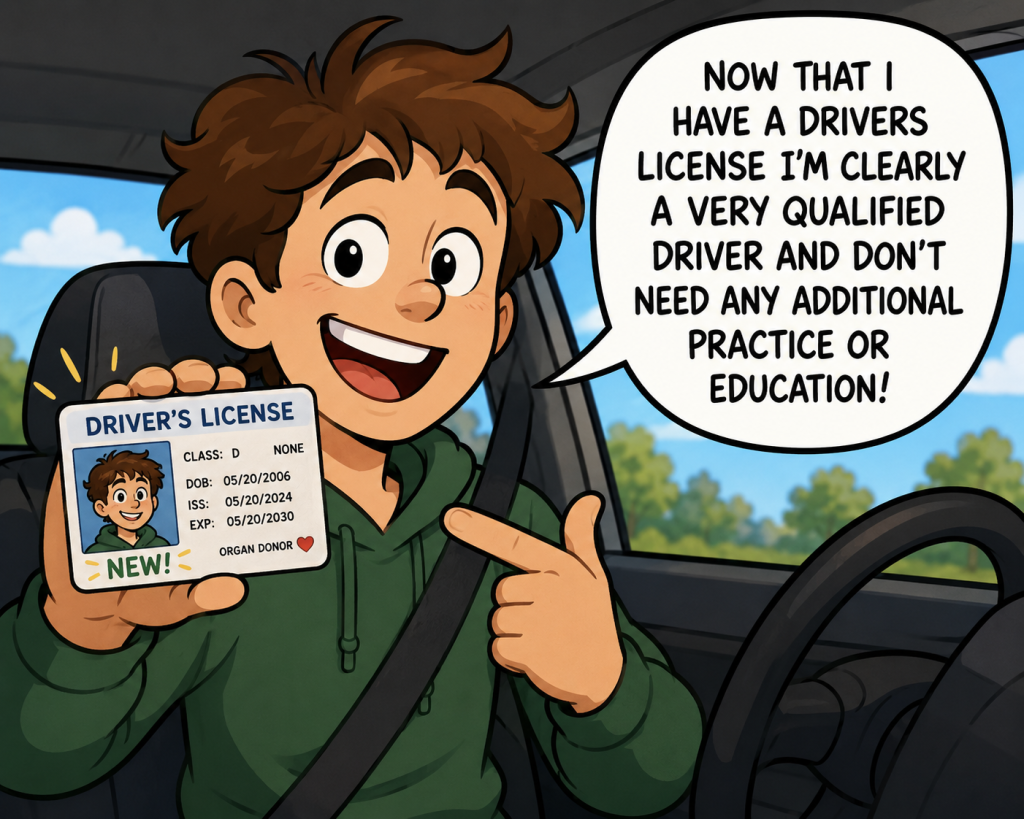
The permit class is the introduction. It’s where you learn the legal framework, the basics of safe handling, and the minimum skills required to qualify. None of that is sufficient. All of it is necessary. Treating the permit class as the goal is like getting your driver’s license and then never improving as a driver. You’re legal, but legal is the floor, not the ceiling.
Only Practicing What You’re Already Good At
This one is everywhere on the range. People show up, set up at seven yards, and shoot the drills they already shoot well. They feel good about themselves. They leave. They have not gotten better. Disciplined practice is uncomfortable on purpose. It targets the things you are bad at, not the things you are already good at.
Confusing Activity with Improvement
There’s a difference between consuming gun content for entertainment and consuming it for education. The disciplined armed citizen does the second. They watch a class debrief because they want to learn something specific. They read a magazine article because it covers a technique they want to study. They listen to a podcast on the drive home because the host is breaking down a recent DGU and there are lessons in it. That kind of consumption feeds an actual training plan.
The trap is consuming the same content for entertainment and then calling it training. Scrolling YouTube to watch people shoot is not the same as studying a drill you intend to practice. Buying another holster is not the same as wearing the one you already have for a thousand draws. Going to a gun show is not the same as showing up to a class. Discipline is the work that produces measurable improvement. Be honest about which side of that line your activities are on.
Behaviors of a Disciplined Mindset
What does this actually look like in practice? A few behaviors I’d point to:
- Subscribes to quality podcasts, YouTube channels, or magazines. Picks a small number of high-signal sources and stays current with them. Not for entertainment. For ongoing input on technique, gear, legal developments, and lessons from real-world incidents.
- Trains and practices as often as possible, and knows the difference. Training is instruction, usually under a qualified teacher, that pushes you into new skills or corrects bad ones. Practice is the structured repetition that takes those skills from “I learned it” to “I own it.” Both are necessary. Neither replaces the other.
- Measures skills against recognized performance standards. Drills with published par times and scoring. Bill Drill. FAST. El Presidente. Whatever your community of practice uses. You don’t get better by feeling like you got better. You get better by measuring, and the only way to know if you’re improving is to compare today’s score to last quarter’s.
- Cross-trains beyond shooting. A defensive firearm is not the whole answer to personal safety. A disciplined armed citizen also works on strength and conditioning, hand-to-hand skill, medical and trauma care, situational awareness, survival skills, and broader emergency preparedness. The fight isn’t always at gun distance. Sometimes you bleed before you can get to a firearm. Sometimes the threat isn’t a person at all.
- Studies self-defense law seriously. Knows the law of their state. Knows how use-of-force decisions are evaluated. Knows what to do and what not to do in the minutes and hours after a defensive incident. The legal half of a defensive shooting is the half most carriers never study, and it’s the half that often decides whether they go home or to prison.
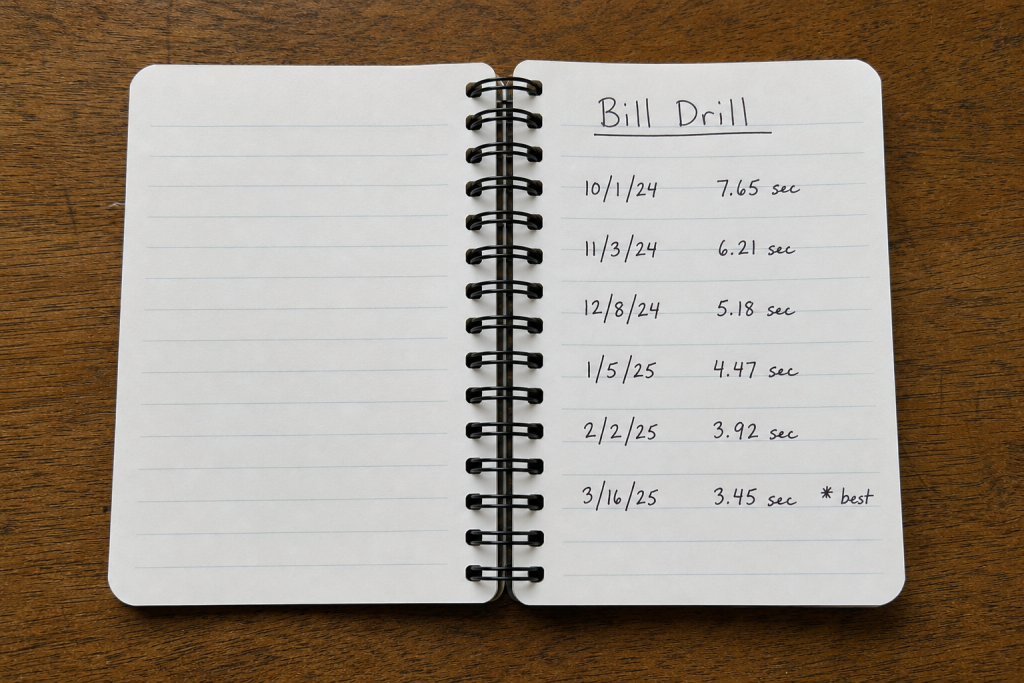
Image generated with AI for educational purposes.
How to Build It
A few specific things that work:
- Make a written training plan. One page. Six months out. What you’re going to work on, what classes you’re taking, what books you’re reading, what standards you’re testing against. The act of writing it changes the relationship. Vague intentions die. Written plans get executed.
- Pick a standard and test against it quarterly. Bill Drill, FAST, the FBI Q course, the Hackathorn Standards, whatever fits your gear and your goals. Run it cold. Record the time and the score. Run it again next quarter. The number is the truth. Your feelings about your skill level are not.
- Build a course queue. List the three to five classes you most want to take this year and next. Put dollar amounts next to them. Pick the first one. Schedule it. Pay for it. Then do the next one. The carriers who never train are also, almost always, the carriers who never queued up a class.
- Cross-train deliberately. Pick one non-shooting skill area to invest in this year. Strength and conditioning if you’re out of shape. A practical martial art if you can’t move well under load. A Stop the Bleed course if you’ve never taken one. Discipline is breadth, not just depth.
- Take a serious self-defense law course. I worked with a top-100 nationwide firearms criminal defense attorney to build our American Gun Law course specifically to cover the legal terrain most concealed carriers never bother to study. The shooting is one slice of a defensive incident. The aftermath is the other slice. Be prepared for both.
The Takeaway
Most carriers stop improving the day they get their permit. Not all of them. The ones who don’t are the ones who have built a disciplined mindset around the idea that this work is never finished.
The defender in our determined-mindset piece won his fight in two seconds because he had thought through what he would do years before. He could think through it because someone had taught him. He could execute it because he had practiced. None of that was an accident. It was a return on years of disciplined investment.
The good news is that discipline is the most accessible dimension of mindset in this series. It doesn’t require courage you don’t have. It doesn’t require situations you can’t engineer. It just requires that you decide, this week, to take the next step. Schedule the class. Order the book. Run the drill cold. Audit your weak skills honestly.
Do that once and the next step gets easier. Do it for a year and you will not be the same carrier you are today.
This is the fifth piece in a six-part series walking through each component of a strong concealed carry mindset, drawn from the original pillar article on developing a defensive mindset. Previously: The Defensive-Only Mindset, The Avoidance Mindset, The Awareness Mindset, and The Determined Mindset. Next up: Diligence. The daily practice of being ready before you ever need to be.

