

The Department of Justice (DOJ) and the Bureau of Alcohol, Tobacco, Firearms and Explosives (ATF) have notified lawyers in multiple high-profile lawsuits that the agency will now move forward with a new rule defining firearm frames and receivers. This marks the latest reversal in a saga that began under the Biden administration and has continued under President Trump’s directives for regulatory review.
According to sources close to the litigation who spoke with Ammoland News on condition of anonymity, pressure from gun rights groups, industry stakeholders, and members of the highest levels of government, as well as internal deliberations, forced the DOJ to change its position once again.
Just days ago, following an initial request for a 90-day stay in proceedings to draft revisions, the government had signaled it would retain the existing Biden-era rule intact. Now, the DOJ has informed plaintiffs’ counsel in cases including VanDerStok v. Bondi and Defense Distributed v. Bondi that a new rule is forthcoming, and it has asked the courts to continue the stays while the rulemaking process unfolds.
The rule in question builds directly on the framework outlined in ATF Final Rule 2021R-05F, “Definition of ‘Frame or Receiver’ and Identification of Firearms,” finalized on April 26, 2022. The new rule massively expanded the 1968 Gun Control Act by redefining what counts as a “frame or receiver.” Now it doesn’t just cover fully finished parts. It also includes partially complete, disassembled, or even non-functional pieces that can be “readily” turned into a working firearm. It also classifies certain weapon parts kits, those containing an unfinished frame or receiver, along with other components, as regulated firearms if they are designed to be assembled into a functional gun.
Under the rule, sellers of these items must obtain federal firearms licenses (FFLs), serialize the parts, conduct National Instant Criminal Background Check System (NICS) checks, and maintain detailed records.
The ATF justified the original measure by insinuating that there was a sharp rise in “ghost guns” used in crimes. The Biden ATF claimed that these privately made firearms (PMFs) were recovered by law enforcement. They claimed that recovered guns jumped from roughly 1,600 in 2017 to over 19,000 in 2021. Anti-gun organizations like Everytown for Gun Safety hailed the new rule as a critical step in closing “loopholes” exploited by criminals and prohibited persons.
Critics, however, argued from the start that the rule was an act of executive overreach. They said it twisted Congress’s original intent and turned a longstanding American tradition, hobbyists privately making their own firearms, into a federal crime. Groups such as the Firearms Policy Coalition (FPC), the Second Amendment Foundation (SAF), Gun Owners of America (GOA), and manufacturers like Polymer80 and JSD Supply warned that it would burden law-abiding citizens who build firearms at home, a right that is protected by the Second Amendment.
The battle is several years old. In VanDerStok v. Garland (later renamed VanDerStok v. Bondi after the change in administration), plaintiffs Jennifer VanDerStok, Michael Andren, and Tactical Machining sued in the Northern District of Texas. U.S. District Judge Reed O’Connor struck down the rule nationwide in 2022. The Fifth Circuit upheld his decision, ruling that the Gun Control Act applies only to complete firearms and finished frames or receivers, not to kits or partially machined parts.
The Supreme Court weighed in decisively on March 26, 2025, in Bondi v. VanDerStok. In a 7-2 ruling authored by Justice Neil Gorsuch, the Court reversed the Fifth Circuit on the facial challenge, finding that the rule was not inconsistent with the statute’s plain meaning. SCOTUS said terms like “weapon,” “frame,” and “receiver” could reasonably extend to unfinished items intended for that purpose. The ATF claimed these 80% kits could be assembled in as little as 20 minutes. The decision was narrow, however, preserving as-applied challenges and remanding the case for further proceedings. Second Amendment stalwarts Justices Clarence Thomas and Samuel Alito dissented.
In a parallel case, Defense Distributed v. Bondi, the organization founded by Cody Wilson, known for its work on 3D-printed firearms and the “G80” kit, brought stronger constitutional challenges. They argue that the rule violates the Second Amendment and the Due Process Clause, claiming it interferes with a centuries-old American tradition of private arms manufacturing.
Following President Trump’s February 7, 2025, executive order (EO) directing a comprehensive review of Biden-era ATF regulations, the DOJ initially sought 90-day stays in both cases in early April 2026. Court filings explicitly referenced plans to promulgate a revised rule that could resolve or moot some claims. A joint status report in VanDerStok highlighted the anticipated new regulation.
Then came the pivot reported on April 9: lawyers were told that no new rule would be issued and that the Biden-era framework would remain in place. Gun rights advocates reacted with outrage. The FPC and SAF labeled it “a betrayal of the review process.”
GOA posted on X (formerly Twitter): “Trump’s Department of Justice has decided to ADOPT Biden’s anti-gun rule that heavily restricts homemade firearms. This is in stark contrast to the White House, which just called this Biden rule an ‘attack’ on gun owners that ‘undermine[s] the Second Amendment.’”
The DOJ has now reversed course once again. According to sources familiar with the discussions, “intense pressure” from Second Amendment groups, industry leaders, and even some voices inside the administration prompted the latest shift. The new rule, according to insiders, will mirror the core structure of the 2022 regulation, with targeted adjustments intended to address overbreadth concerns, particularly by distinguishing between certain metal and polymer components.
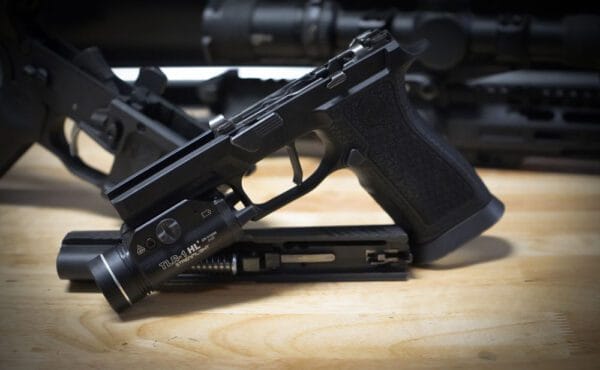
Polymer frames, like those once made by the now-defunct Polymer80, will still be heavily regulated as “readily” completable firearms. However, certain metal products, such as JSD Supply’s MUP-1 and some Sig Sauer P320 or P365-style kits, could be sold and transferred commercially without serialization or FFL requirements, as long as they don’t meet the new “readily” standard. The term “readily” continues to hinge on factors like time, tools, expertise, instructions, jigs, and templates required for completion. The ATF seems to take a holistic approach when determining if something is “readily convertible.”
Proponents of this nuanced approach say it aims to balance public safety goals against the rights of hobbyists and small businesses while avoiding the legal and political pitfalls of a full rewrite. The DOJ has requested that the stays remain in place to allow time for notice-and-comment rulemaking, potentially mooting portions of the ongoing litigation.
GOA and SAF have been echoing FPC’s calls for full repeal or congressional intervention, warning that partial measures could still ensnare millions of law-abiding Americans.
The uncertainty has been expensive for the firearms industry. Makers of 80% lowers, parts kits, and build-your-own components have been rushing to update their websites, compliance systems, and stock. Small businesses are staring down new burdens like buying serialization equipment and keeping detailed records, which could raise prices or push some outfits out of business altogether. Hobbyists are worried that even doing a bit of light machining on unfinished parts could now bring them unwanted federal scrutiny.
The rule’s vagueness, especially the “readily convertible” test, has led to inconsistent enforcement and raised fears of arbitrary application. The ATF points to tracing difficulties with privately made firearms, but critics argue that the overwhelming majority of these builds are done by law-abiding citizens exercising their Second Amendment rights, not criminals.
As the cases continue in the Northern District of Texas under extended stays, people following the litigation expect more motions for preliminary injunctions, this time focusing on as-applied challenges and constitutional arguments under the Bruen standard. Given that the Supreme Court left the door open for these kinds of claims, the new rule could very well face its own wave of lawsuits.
The Trump administration, which campaigned heavily on reducing government overreach, now finds itself caught in internal debates and outside pressure over Second Amendment issues. Whether the upcoming rule will actually roll things back or just amount to another procedural delay is still unclear.
Spanberger Signs Virginia Ghost Gun Ban With No Grandfather Clause
About John Crump
Mr. Crump is an NRA instructor and a constitutional activist. John has written about firearms, interviewed people from all walks of life, and on the Constitution. John lives in Northern Virginia with his wife and sons, follow him on X at @crumpyss, or at www.crumpy.com.