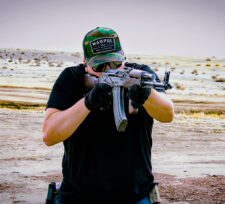


Gun owners put considerable thought into protecting their families. We choose firearms, buy ammunition, practice at the range, and keep medical supplies ready. Food, water, backup power, and evacuation gear round out a full emergency plan.
Respiratory protection deserves a place in that preparation. A stocked pantry and a dependable rifle serve important purposes, but neither filters the air you breathe.
The death of an employee at Russia’s Irkutsk Anti-Plague Research Institute has renewed attention to biological preparedness. The incident provides a reason to review your equipment, understand its capabilities, and make sure your family knows how to use it.
What Happened at Russia’s Anti-Plague Institute?
An employee at the institute died after developing pneumonia of unknown origin. Reports described nearly 200 people under medical observation, while the U.S. State Department and CDC said they were monitoring the situation.
As of October 5, plague had not been confirmed. Russian authorities said testing found no microorganisms associated with the employee’s work and reported no detected laboratory accidents involving pathogenic microorganisms. The cause of the illness remained unresolved.
Pneumonic plague spreads between people through respiratory droplets during close, sustained contact. CDC distinguishes that transmission from diseases such as measles, which spread through airborne particles. Plague is treatable with antibiotics, and early treatment is critical.
The preparedness lesson extends beyond this developing story: choose equipment before an emergency forces you to make hurried decisions.
Live Inventory Price Checker
ParticleMax P3 Filters for Biological Preparedness
For particulate and biological hazards, MIRA Safety offers the ParticleMax P3 Filter.
MIRA lists the filter as P3-certified under EN 143, with standard 40mm NATO threading, a weight of approximately 100 grams, and a 20-year shelf life under its specified storage conditions. The company markets ParticleMax for filtering biological particles, including airborne bacterial and viral hazards.
The lightweight design and long storage life make it a practical product to consider for an emergency kit. Keep filters in their original packaging, follow the storage instructions, and check the expiration date marked on each unit. The 20-year shelf life applies to storage—not continuous use.
ParticleMax is a particulate filter. It does not contain activated carbon and does not filter gases. That distinction matters when building a preparedness setup: the filter must match the hazard.
Choosing a Full-Face Respirator
MIRA’s CM-I01 full-face respirator accepts standard 40mm NATO filters, including ParticleMax. Its features include a panoramic visor and an adjustable five-point head harness. Filters are sold separately.
The CM-6M full-face respirator adds an integrated hydration system, speech diaphragm, and dual filter ports that allow left- or right-side filter placement.
MIRA currently states that the U.S.-assembled CM-6M has not received NIOSH or CE certification. Check the exact version and its certification when purchasing.
The facepiece and filter function together. A compatible connection is only part of that equation; the respirator also needs to seal properly against the wearer’s face.
Learn Your Equipment Before an Emergency
Buying a respirator without learning to use it leaves the same gap as buying a defensive firearm without practicing.
NIOSH explains that fit testing establishes whether a particular respirator model and size provide an adequate seal. Facial hair crossing the sealing surface can compromise that seal. A user seal check does not replace a fit test.
Read the instructions. Practice putting the respirator on and adjusting the harness. Learn the cleaning procedures, storage requirements, and filter replacement guidance. Every adult in the household should understand their own equipment.
Preparation should reveal problems while you still have time to fix them.
Respiratory Preparedness Must Include Children
A family emergency plan needs equipment suited to the people using it. An adult respirator cannot be assumed to fit a child.
MIRA’s children’s respiratory protection line includes the MD-1 children’s mask. Review the product’s sizing, age guidance, filter compatibility, and operating instructions before purchasing.
NIOSH notes that respirators are generally designed for adults and may not have been tested for broad use in children. Poor fit and incorrect use reduce their benefit. Infants need separate planning; an adult or older child’s facepiece is not an appropriate substitute.
Include who will help each child, where equipment will be stored, and how the household will evacuate.
Make Respiratory Protection Part of Your Plan
Protecting your family starts with taking responsibility before trouble arrives. Respiratory preparedness follows the same approach gun owners already apply to defensive firearms and emergency medical gear: choose suitable equipment, understand its limits, and practice.
Review your survival and preparedness supplies and identify what is missing. Respiratory equipment belongs alongside food, water, medical supplies, and an evacuation plan. Suspected infectious exposure also requires prompt medical attention; a respirator does not treat an infection.
The time to learn whether your equipment fits and works for your household is before you need it.
About Duncan Johnson:
Duncan Johnson is a lifelong firearms enthusiast and unwavering defender of the Second Amendment—where “shall not be infringed” means exactly what it says. A graduate of George Mason University, he enjoys competing in local USPSA and multi-gun competitions whenever he’s not covering the latest in gun rights and firearm policy. Duncan is a regular contributor and editor-in-chief for AmmoLand News and is responsible for AmmoLand’s daily gun-rights reporting and industry coverage.