
The Ninth Circuit just handed gun control lawyers another gift, and it came from exactly the kind of case Second Amendment advocates should dread.
In United States v. João Ricardo DeBorba, the court upheld a stack of federal gun convictions against a man who was unlawfully in the United States, had claimed U.S. citizenship on firearm-related paperwork, was subject to domestic violence no-contact orders, and was caught with firearms, ammunition, and an unregistered suppressor.
Bad cases still make law, and this one may do real damage. The most dangerous part of the ruling is not simply that DeBorba lost. Given the facts, that outcome was hardly surprising. The problem is that the Ninth Circuit went out of its way to say that suppressors, also called silencers, are not “arms” protected by the plain text of the Second Amendment.
The court treated suppressors as optional firearm accessories and said they are not covered because they are not necessary to the ordinary operation of a firearm. In other words, because a gun can technically fire without a suppressor, the court says a suppressor falls outside the Second Amendment.
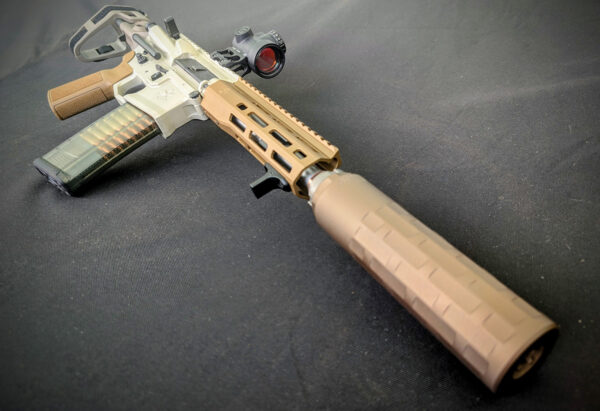
A suppressor is not some decorative range toy. It protects hearing, reduces blast, improves communication, helps training, and makes shooting safer for the shooter and those nearby. Hunters use them. Instructors use them. Competitive shooters use them. Ordinary Americans use them. In much of the civilized world, suppressors are treated as basic safety equipment, not criminal contraband.
The Second Amendment does not protect only a stripped-down firearm in its most primitive form. It protects the right to keep and bear arms in a way that is useful, effective, and practical. Optics help a shooter hit what he is aiming at. Magazines feed the firearm. Lights help identify a threat. Suppressors help protect hearing and allow safer training and defensive use.
Constitutional attorney and AmmoLand contributor Mark W. Smith of The Four Boxes Diner hammered that point in his video breakdown of the decision. Smith argued that the court ignored the broader meaning of “arms” under Bruen, where an arm includes an instrument that facilitates armed self-defense. As Smith put it, the key is not whether an item is absolutely necessary, but whether it helps facilitate the protected right.
You do not lose constitutional protection for a tool just because you could technically function without it. A sling may not be needed for a rifle to fire, but it helps carry and control the rifle. A scope may not be needed to ignite a cartridge, but it helps the shooter see and aim. A suppressor may not be needed to make the gun go bang, but it absolutely helps the shooter use the firearm more safely and effectively.
The Ninth Circuit’s reasoning gives anti-gun courts a dangerous opening. Once judges decide that only the bare mechanical parts of a firearm count as “arms,” everything else becomes fair game for prohibition. That is how the right gets hollowed out piece by piece.
Smith’s second major point is just as important: this entire mess came from an awful defendant.
DeBorba entered the United States in 1999 on a tourist visa. According to the court, that visa expired in 2000, and he never regained legal status. He later applied for a Washington concealed pistol license and indicated he was a U.S. citizen. He also submitted ATF paperwork involving firearms and checked that he was a U.S. citizen. The court record also involved multiple domestic violence no-contact orders. Including one with a finding that he represented a credible threat to the physical safety of the protected person.
Then federal agents found firearms, ammunition, and a box marked “Tick Suppressor.”
This is the kind of case hostile courts love. It allows judges to write broad anti-gun language while pointing to an unsympathetic defendant. Law-abiding gun owners are then forced to live with the precedent.
Smith’s argument is that illegal immigration and poor enforcement can create legal disasters for American gun owners. When someone unlawfully in the country remains here for decades, lies about citizenship, gets tangled up in criminal cases, and then raises Second Amendment claims, the result can be ugly precedent that reaches far beyond that one defendant. That is what happened here.
The Ninth Circuit should have stopped at the “people” question. Smith argued that DeBorba, as an illegal alien, should not have been treated as part of “the people” protected by the Second Amendment. If the court had taken that route, it would not have needed to reach the broader suppressor issue at all.
.apc-product-compare-list td.apc-product-image {
max-width: 149px;
}
.apc-product-compare-list img {
max-width: 100%;
}
.apc-product-compare-list td.apc-product-name {
max-width: 35%;
}
.apc-product-compare {
max-width: 100% !important;
margin-top: 20px;
margin-bottom: 20px;
}
table.apc-product-compare-list {
width: 100%;
text-align: center;
}
.apc-product-name a {
text-decoration: none;
font-weight: 500;
font-size: 20px;
}
.apc-product-brand a {
text-decoration: none;
font-weight: 700;
font-size: 22px;
}
.apc-product-price>span {
white-space: nowrap;
}
span.apc-sale-price {
display: block;
color: #FD7F03;
font-size: 19px;
font-weight: 700;
text-decoration: inherit;
}
span.apc-original-price {
font-size: 15px;
font-weight: 400;
text-decoration: line-through;
color: #848484;
}
.apc-product-compare-list td {
padding: 5px;
vertical-align: middle;
}
.apc-product-url .apc-arrow-right {
border: solid black;
border-width: 0 5px 5px 0;
display: inline-block;
padding: 10px;
transform: rotate(-45deg);
-webkit-transform: rotate(-45deg);
border-color: #FD7F03;
}
Live Inventory Price Checker
|
|
Huxwrx Flow 45 M Multi-Caliber Suppressor W/ Booster Assembly |
Bereli |
|
|
|
|
Huxwrx Flow 762 Ti Rifle Suppressor – FDE |
Palmetto State Armory |
|
|
|
|
HUXWRX Flow 7.62 TI Suppressor with Muzzle Device – Black. |
Primary Arms |
|
|
|
|
Huxwrx Flow 556k Suppressor W/ Flash Hider, 5.56/17hmr/5.7, Black (BLEM) |
Bereli |
|
|

Instead, the court reached it and produced language that anti-gun lawyers will now cite against lawful suppressor owners.
That timing matters because of Sanchez v. Bonta, the separate Ninth Circuit case challenging California’s total ban on suppressors. Smith warned that Sanchez involved the much cleaner question of whether suppressors are protected arms and whether California can ban them outright. He noted that the case had already been argued before the Ninth Circuit and praised the pro-Second Amendment lawyering, pointing to Cooper & Kirk and attorney Pete Patterson. But before that better vehicle could produce a ruling, DeBorba gave the Ninth Circuit a bad-facts criminal case in which to declare that suppressors are not Second Amendment arms. As Smith warned, DeBorba may now be used to “foreclose the excellent arguments made in the Sanchez case.”
It would be so aggravating if the Sanchez panel went through the trouble to get Sanchez new counsel, A-list 2A lawyers volunteer, we redo briefing, the panel hears detailed arguments, and the ruling is pending…
…just to be superseded by some shitty criminal case (argued… https://t.co/U6EP0RPD0X
— Kostas Moros (@MorosKostas) June 4, 2026
Gun owners are not just fighting statutes. They are fighting precedent. Every bad opinion becomes another brick in the wall that anti-gun judges build around the Second Amendment. When bad defendants bring broad constitutional arguments, courts hostile to gun rights rarely miss the chance to turn those cases into weapons against the rest of us.
Suppressors facilitate lawful firearm use, training, self-defense, and hearing protection. Treating them as constitutionally meaningless “accessories” is not faithful to the Second Amendment. It is judicial gamesmanship.
The Ninth Circuit’s DeBorba decision is a warning. Immigration enforcement, criminal law, and Second Amendment litigation do not exist in separate boxes. When the wrong defendant brings the wrong case in the wrong court, law-abiding gun owners can end up paying the price.
Bruen’s Text-and-History Test Spreads Beyond the Second Amendment
About Duncan Johnson:
Duncan Johnson is a lifelong firearms enthusiast and unwavering defender of the Second Amendment—where “shall not be infringed” means exactly what it says. A graduate of George Mason University, he enjoys competing in local USPSA and multi-gun competitions whenever he’s not covering the latest in gun rights and firearm policy. Duncan is a regular contributor to AmmoLand News and serves as part of the editorial team responsible for AmmoLand’s daily gun-rights reporting and industry coverage.