
Attorneys representing the plaintiffs in a federal lawsuit challenging the constitutionality of the National Firearms Act (NFA) have filed a motion for summary judgment in the U.S. District Court for the Eastern District of Kentucky, Covington Division, one of three legal actions now in progress seeking to undo registration requirements for short-barreled rifles (SBRs) and suppressors (“silencers”).
The case is known as Roberts v. ATF, and it is supported by the Second Amendment Foundation (SAF), which is involved as a plaintiff in a separate legal action known as Brown v. ATF. There is also a third case supported by SAF, known as Jensen v. ATF.
All three legal actions are grounded in the aftermath of President Donald Trump’s “Big Beautiful Bill,” passed last summer, which eliminated the $200 tax on certain classes of firearms, including SBRs and suppressors.
According to SAF founder and Executive Vice President Alan Gottlieb, “We have the best opportunity in almost a century to end the registration scheme for silencers and short-barreled rifles under the NFA.”
Gottlieb said SAF has seized the moment—a “once-in-a-lifetime opportunity” in his words—to support three separate cases challenging the NFA all at the same time. He expressed confidence that SAF and other plaintiffs will prevail.
The cast of characters includes quite a lineup.
- In the Brown case, filed in Missouri, plaintiffs, in addition to SAF, are Chris Brown, for whom the case is named, plus Allen Mayville, Prime Protection STL, the National Rifle Association, American Suppressor Association, and the Firearms Policy Coalition.
- In the Jensen case, filed in Texas, plaintiffs are John Jensen, for whom the case is named, plus the Citizens Committee for the Right to Keep and Bear Arms, FPC Action Foundation, Hot Shots Custom, the Texas State Rifle Association, plus citizens Jeremy Neusch and David Lynn Smith.
- The Roberts case involves T.J. Roberts, Jews for the Preservation of Firearms Ownership (JPFO), the American Suppressor Association Foundation, Buckeye Firearms Association, Center for Human Liberty, Meridian Ordnance, and Zachary Cockrell. JPFO is a project of the Second Amendment Foundation.
At stake in all of these cases is the chance to erase a registration requirement dating back to the 1930s, when the National Firearms Act was passed. Because the $200 tax was eliminated by Trump’s legislation last year, the requirement should be null because the tax justifying registration no longer exists.
Attorney Bill Sack, SAF director of Legal Operations, said in a prepared statement, “As we’ve stated in each of our three National Firearms Act challenges, Congress lacks the authority to continue requiring the registration of protected arms under the NFA. The Court has everything they need to put this case to bed and end this infringement on the rights of Americans nationwide.”
Back in August 2025, when SAF and its partners filed the Brown case, SAF Executive Director Adam Kraut explained the principle behind each lawsuit.
“The National Firearms Act’s registration scheme only exists to ensure that the tax on NFA firearms was paid,” Kraut said. “With Congress removing the tax on silencers, short-barreled firearms, and ‘any other weapons,’ the continued inclusion of these items in the NFA serves no purpose, except continuing to retain an impermissible hurdle to the exercise of one’s constitutional right to keep and bear arms. We look forward to relegating this unconstitutional law to the history books.”
The motion for summary judgment in the Roberts case is just the latest strategic step in the process. With cases in three separate circuits, it should be impossible for the Supreme Court to ignore, should these cases advance to that level.
In February, the NRA noted in a statement about the Roberts case, “The complaint also asserts that the NFA’s registration regime for suppressors and short-barreled rifles violates the Second Amendment. The Supreme Court has established that any regulation on arms-bearing conduct must be consistent with our nation’s historical tradition of firearm regulation. And, the complaint argues, there is no tradition that supports the NFA’s registration regime for protected arms such as suppressors and short-barreled rifles.”
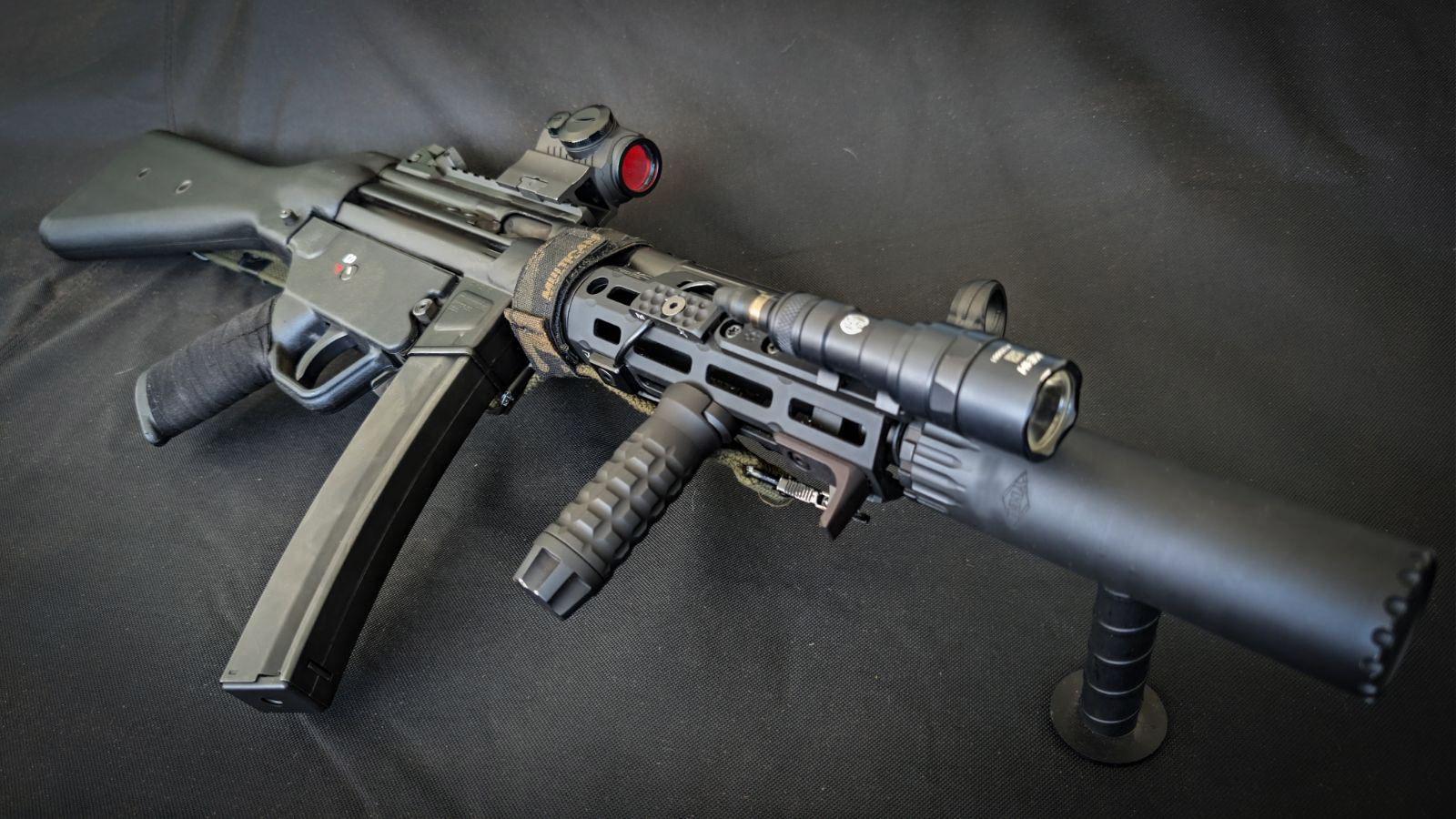
Under federal law, a rifle with a barrel shorter than 16 inches, or certain firearms made from rifles with an overall length under 26 inches, is treated as a short-barreled rifle and remains subject to the NFA’s registration regime. Plaintiffs argue that SBRs are protected arms commonly possessed for lawful purposes and that the government cannot keep a tax-enforcement registration scheme in place after Congress reduced the relevant tax to zero.
Last August, Knox Williams, president and executive director of the American Suppressor Association, noted, “The National Firearms Act has been a weight around the neck of law-abiding gun owners for nearly a century. With the elimination of the excise tax on suppressors, short-barreled rifles, short-barreled shotguns, and AOWs through the One Big Beautiful Bill, our lawsuit challenges the NFA as an unconstitutional registry of now untaxed firearms. Common sense and the law are on our side, and we look forward to fighting on behalf of all Americans in Federal Court.”
Likewise, NRA’s John Cummerford stated, “Congress took a major step by eliminating the NFA tax on suppressors and short-barreled firearms through the OBBB, and we’re proud to work alongside other leading Second Amendment organizations to finish the job.”
FPC President Brandon Combs called the NFA a “tyrannical abomination.” He said the law violates the Second Amendment and asserted, “Congress never had the lawful authority to pass it in the first place.”
Any case, or all three cases combined, successfully challenging the constitutionality of the NFA would literally set the gun control movement on its ears, and dramatically change the legal landscape where the Second Amendment is concerned. This is what makes these cases so important, and why both sides in the gun rights v. gun control battle are watching them closely.
Eleventh Circuit Says Machine Guns Are Not Protected by the Second Amendment
About Dave Workman
Dave Workman is a senior editor at TheGunMag.com and Liberty Park Press, author of multiple books on the Right to Keep & Bear Arms, and formerly an NRA-certified firearms instructor.