
A new NSSF-backed lawsuit, Black v. Hook, is challenging Virginia’s SB749/HB217, the sweeping ban on so-called “assault firearms” and magazines capable of holding more than 15 rounds. The complaint was filed in Fauquier County Circuit Court on behalf of Virginia gun owners, a gun shop, a firearms manufacturer, and a magazine manufacturer.
According to NSSF, the plaintiffs have filed an emergency motion for a preliminary injunction asking the court to block enforcement before the law takes effect on July 1, 2026. The plaintiffs requested a hearing by June 19, giving the court only a narrow window to stop Virginia from enforcing one of the most aggressive gun-control laws in the country.
Gov. Abigail Spanberger signed SB749 into law on May 14, 2026. Her office described it as legislation prohibiting the future sale and manufacture of “assault firearms” and the sale of magazines holding more than 15 rounds.
The lawsuit names Scott C. Hook, the Commonwealth’s Attorney for Fauquier County, as the defendant in his official capacity. If the law takes effect, county prosecutors would be responsible for bringing criminal cases against ordinary Virginians, gun shops, and manufacturers who violate the new restrictions.
The plaintiffs include Eric Black, Britton Condon, Clark’s Gun Shop Inc. d/b/a Clark Brothers, Optimus Arms, LLC, and Hexmag USA, LLC. This is a strong plaintiff lineup that includes individual gun owners and Virginia businesses directly harmed by the ban. Clark Brothers sells firearms to law-abiding Virginians. Optimus Arms manufactures firearms. Hexmag manufactures magazines. The law does not just affect what Virginians can buy. It tells gun shops, firearm makers, and magazine manufacturers what they cannot sell, transfer, import, or, in the case of covered firearms, manufacture for the Virginia market after July 1.
Black v. Hook is not the only legal fight now aimed at Virginia’s gun ban.
AmmoLand previously reported that GOA, GOF, VCDL, the VCDL Foundation, AmmoLand contributor John Crump, and other plaintiffs filed a separate state-court challenge (Crump v. Katz) in Lancaster County, followed by an emergency motion for a temporary restraining order and preliminary injunction to stop the law before July 1. SAF, NRA, and FPC have also filed a federal lawsuit, McDonald v. Katz, challenging the same SB749 ban on common semiautomatic firearms and magazines over 15 rounds.
Virginia Democrats have turned the Commonwealth into a major Second Amendment battleground, with gun owners, gun-rights groups, retailers, manufacturers, and the firearms industry now attacking this unconstitutional scheme from multiple directions.
SB749 bans the importation, sale, manufacture, purchase, or transfer of firearms that Virginia Democrats have labeled “assault firearms.” It also bans the importation, sale, barter, transfer, or purchase of magazines capable of holding more than 15 rounds, while grandfathering magazines lawfully purchased and possessed before July 1, 2026. Violations can be charged as Class 1 misdemeanors, carrying up to one year in jail and a $2,500 fine.
The complaint’s central point is simple: Virginia is banning common arms.
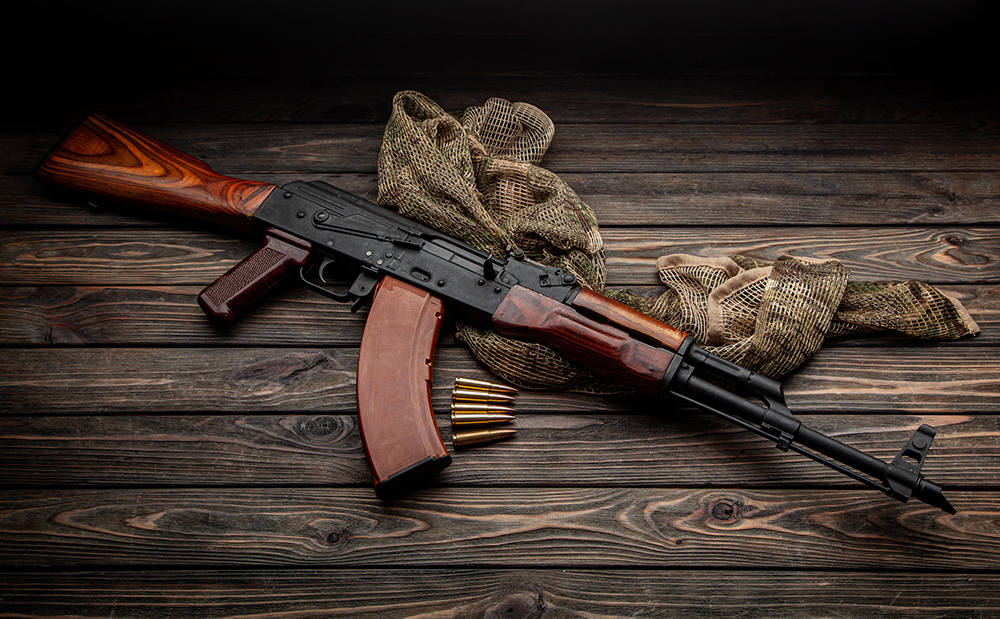
The lawsuit argues that the firearms covered by SB749 are not unusual. They include AR-15-style rifles, common semiautomatic pistols, and semiautomatic shotguns used for self-defense, hunting, competition, training, and recreation. The complaint repeatedly relies on Heller, Bruen, and Caetano. Plaintiffs argue that arms commonly possessed by law-abiding Americans for lawful purposes are protected by the Second Amendment.
Virginia’s law treats normal features found on modern firearms as evidence of criminality. A pistol grip. A threaded barrel. A collapsible stock. An arm brace. A detachable magazine. These features often make firearms safer, more controllable, more accurate, or more usable for smaller shooters, disabled shooters, and ordinary people who want a firearm that fits them.
The plaintiffs will not let Virginia hide behind scary political labels. They argue that the banned features are often functional, safety-related, or accessibility-related. In plain English, Virginia is criminalizing design features that help lawful owners use their firearms responsibly.
The magazine-ban argument is just as important. The complaint rejects the idea that magazines are some optional accessory outside the Second Amendment. For many modern firearms, magazines are part of how the firearm operates. A rifle or pistol designed around detachable magazines is not meaningfully protected if the state can ban the magazines needed to feed it.
NSSF’s update reinforces that point with hard numbers. NSSF says there are more than 32 million Modern Sporting Rifles in circulation in America and nearly 1 billion detachable magazines in private possession, with hundreds of millions holding more than 15 rounds. Those numbers are devastating to Virginia’s position. The state is not targeting fringe items. It is targeting what Americans already own.
SB749 uses a broad and complicated definition of “assault firearm,” tied to feature tests and open-ended language that could leave gun owners, retailers, and manufacturers guessing. When a bad guess can mean criminal prosecution, that is not a minor drafting problem. It is a constitutional problem.
The plaintiffs’ emergency motion argues they will suffer irreparable harm if the law is allowed to take effect while the case proceeds. That harm is obvious. Individual plaintiffs lose access to commonly owned firearms and standard capacity magazines. Retailers lose lawful sales. Manufacturers lose customers and markets. Virginians lose the ability to buy arms and magazines that remain legal and ordinary in much of the country.
This is exactly why the court should act before July 1. The state should not be allowed to enforce an unconstitutional gun ban. The Second Amendment is not a government suggestion. It is a constitutional limit on government power.
Virginia’s politicians made the decision to target peaceable citizens, gun shops, manufacturers, and the firearms and magazines millions of Americans own for lawful purposes.
DOJ Is Finally Fighting Hardware Bans. Now SCOTUS Needs To Step In.
About Duncan Johnson:
Duncan Johnson is a lifelong firearms enthusiast and unwavering defender of the Second Amendment—where “shall not be infringed” means exactly what it says. A graduate of George Mason University, he enjoys competing in local USPSA and multi-gun competitions whenever he’s not covering the latest in gun rights and firearm policy. Duncan is a regular contributor to AmmoLand News and serves as part of the editorial team responsible for AmmoLand’s daily gun-rights reporting and industry coverage.