

This post is based on a paper that was presented at the 2026 Firearms Law Works-In-Progress Conference. The Conference is held each year on a home-and-away basis between the Duke University Center for Firearms Law and University of Wyoming Firearms Research Center. This post appears on both the CFL’s Second Thoughts blog and the FRC’s Forum. This guest post does not necessarily reflect the views of the Duke Center for Firearms Law.
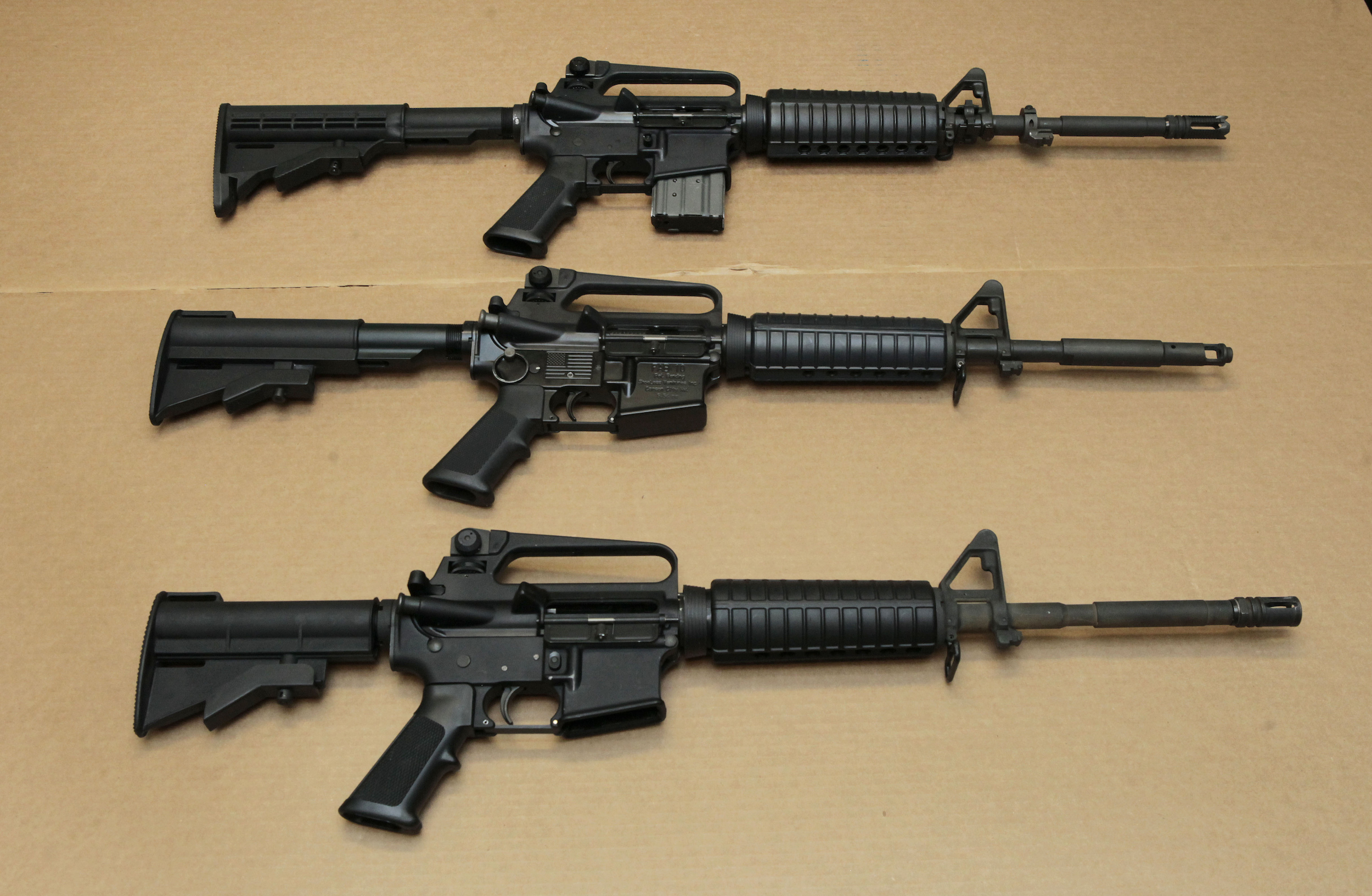
“Is the AR-15 assault-type rifle—defined as a military derived weapon that in civilian circulation fires in a semi-automatic fashion, meaning that it discharges one round with each pull of the trigger, and that possesses certain military features, including most importantly the ability to receive large capacity magazines—an “unusual” gun? Or unusually “dangerous”? These are questions that, thanks to the Supreme Court, have no clear or obvious answer, at least as of this writing. On June 30, the Supreme Court agreed to hear challenges to assault weapons laws from Connecticut and Cook County, Illinois. Rulings on those cases may offer clarification.
Considerable effort has been expended to address a question very similar to this: namely, whether assault weapons are in “common use” in America today. Again, thanks to the Supreme Court, this undeniably amorphous and subjective question has become central to court determinations of whether civilian possession and use of assault weapons and other weapons is or is not protected under the Second Amendment’s right to bear arms.
The Supreme Court also directs us to examine history not merely to ask what history tells us, but to use it to inform judgments about the constitutionality of modern gun laws. Indeed, the words “history” or “historical” appear over 200 times in the court’s 2022 decision in New York State Rifle & Pistol Ass’n v. Bruen. I have explored a variety of old weapons laws that imposed an array of restrictions on certain unusual or dangerous types or categories of weapons, precisely on the grounds that they posed a threat to public safety and good order, or were of little use for conventional gun-related activities. The old types of “unusual” weapons and related technologies considered dangerous include trap guns, punt/pivot/swivel guns, gun serialization, and switchblades.
All of these examples provide substantial evidence that the government’s enduring and pre-eminent purpose of protecting “the public peace” was manifest in historic weapons restrictions—restrictions that were in turn essential to the development of the American political system. Even as the nation’s developmental process accelerated, weapons restrictions as tools of public policy represented a developmental consistency, a through line, from the country’s earliest days to the present. The types of old weapons or technologies include the following:
Trap guns were devices or contraptions rigged in such a way as to fire when the owner was not present to operate the gun. Typically, trap guns could be set to fire remotely by rigging the firearm with a string or wire that discharged it when tripped. Thus, the “technology” at play was extremely simple involving materials—string and wire—that were and are abundant, cheap and, by themselves, beyond regulation. The earliest such anti-trap gun law that I encountered was from Massachusetts in 1670. From then to the start of the twentieth century, at least 27 states enacted anti-trap gun laws.
Punt guns, pivot guns, and swivel guns were related types of large firearms that also included what might be considered small cannons. Punt guns were loosely defined as large-bore muzzle-loaded shotguns. These were used mostly (and nefariously) for hunting, as a single discharge could kill hundreds of various types of game or waterfowl. Their use in hunting aside, their obviously destructive capabilities combined with their threat to public safety spurred regulation. From the 1700s to the early 1900s, at least 27 states enacted 46 laws that punished the possession, firing, or use of these types of weapons.
I also examine the history of firearm serialization, which connects with the modern policy debate over so-called ghost guns, defined as firearms without identifying serial numbers that would otherwise allow the guns to be traced by law enforcement after a crime. The historical narrative here is that the very idea of meaningful serialization of firearms is a relatively recent phenomenon. Guns made in America in the 1700s might have had a maker’s mark or similar embellishment, but there was no reason, methodology, or imperative to develop and implement a comprehensive firearms numbering system. Even if the idea or will for such a scheme were promoted at the time, it would have been nearly impossible to implement a comprehensive numbering system for nationwide firearms numbering in this agrarian, pre-industrial society where transportation and communications were slow, record-keeping was primitive, decentralized, and unsophisticated, and guns made within the U.S. were, for part of this time, mostly made by hand by local artisans, one at a time, and as a majority of firearms in the country were imported. This illustrates why no meaningful historical search for gun law analogs could or should occur without considering and analyzing the development of the American nation-state from a small, agrarian, pre-industrial society into a large, urban, technologically advanced, continental, industrial giant. Thus, the first national law calling for some gun serialization was enacted in the 1930s.
Finally, I examine regulations pertaining to switchblades, defined as “a pocketknife having the blade spring-operated so that pressure on a release catch causes it to fly open.” Here again, this type of knife was only developed in the late nineteenth century to then become commercially available in the early twentieth century. As is true of many other kinds of weapons, technological advances and more reliable materials facilitated the mass production of switchblades. As switchblades began to circulate more widely in American society, and subsequently became identified with criminality and related behavioral problems in the mid-twentieth century, these developments in turn prompted a wave of anti-switchblade laws. In 1958, Congress enacted the Anti-Switchblade Act. By that year, at least 20 states had enacted similar laws. Most of the rest of the states followed suit. Restrictions on switchblades also harken to ubiquitous historical restrictions on so-called “fighting knives” (most famously the Bowie knife) enacted in every state in the country from the eighteenth century to the start of the twentieth century. Historic Bowie knife regulations received extensive analysis in the 2026 Seventh Circuit Court of Appeals decision in Barnett v. Raoul upholding Illinois’s restrictions on assault weapons and large capacity magazines.
To summarize, weapons considered “unusual” and that were also typically in “common use” have long been subject to restriction. The degree to which they were regulated was unconnected with their commonality or technological sophistication. The fundamental variable leading to government regulation was the extent to which they were identified as threats to public safety, extending to both direct criminality and to larger threats to public safety and good order. The prospect of unanticipated harm—as seen, for example, with the rise and spreading use of trap guns, or concerns about juveniles easily obtaining switchblades—was the government’s animating concern. Similar regulatory efforts have been directed at numerous other products, from fireworks and explosives to sulfuric acid (used in plumbing to clear clogged pipes, for example). The overarching goal was and is to protect the lives, health, and safety of the nation’s citizens, and to preserve “the public peace.”

