

The Cold War Is Over. The Argument Isn’t. Two rifles, decades of arguments, and plenty of bad information. Here’s where the AK and AR actually stand today.
There are firearm arguments, and then there is AK vs. AR. Few rifle debates have survived this long, inspired this much loyalty, or produced this many questionable internet claims.
The two platforms came out of roughly the same era and armed opposite sides of the Cold War. Since then, both have spread around the world and developed devoted followings here in the United States. They’re both gas-operated, magazine-fed rifles built around intermediate cartridges, but that’s about where the similarities stop.
The old stereotypes don’t help much anymore. The AK isn’t some wildly inaccurate relic that only survives because you can bury it in mud. The AR isn’t a fragile rifle that quits working the second it gets dirty. Modern examples of both platforms are considerably more capable than those tired arguments suggest.
So, forget the memes for a minute. We’re putting the AK vs AR debate where it belongs: caliber, operating systems, accuracy, ergonomics, modularity, reliability, optics, suppressor use, and what each platform actually gives today’s shooter.

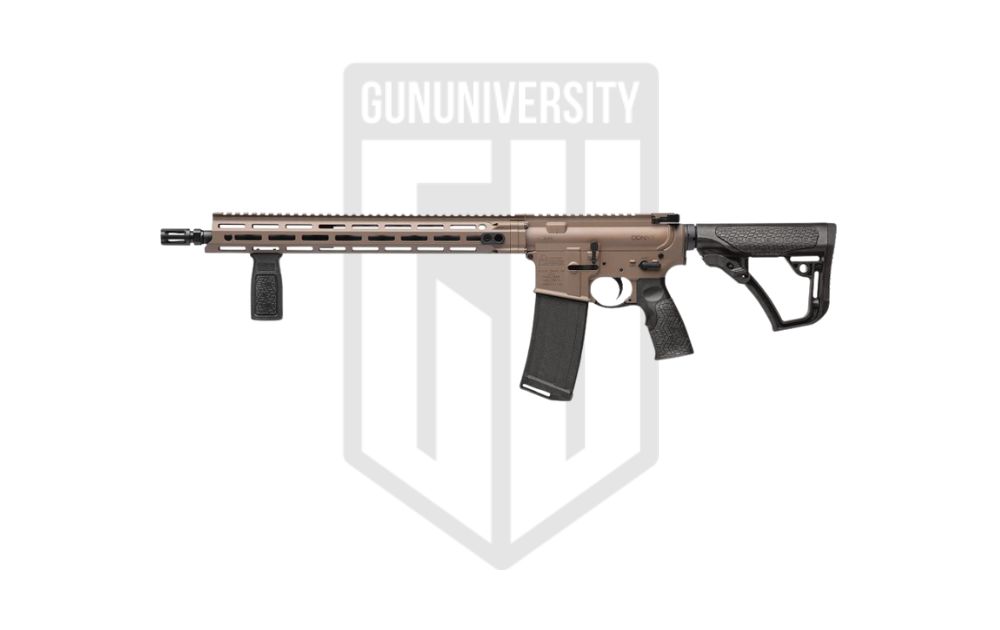
Below I’ll be covering a few topics that relate to these two rifle types, they are;
- Caliber
- Gas Systems
- The AK’s Long Stroke Gas Piston System
- The AR’s Direct Impingement
- Accuracy
- Modularity
- Ergonomics
- Reliability
- Optics
- Suppressor Use
- It’s All About Options

Caliber
I wanted to get a few easy ones out of the way. Caliber can be tough to judge a rifle on. Different calibers have different strengths and different weaknesses. As such, there isn’t always a way to say one caliber is better than the other. Calibers can be better at certain tasks, not necessarily better in general. Plus, in 2022, what exactly is the AR’s caliber? What exactly is an AK’s caliber?
ARs were designed in 5.56, but you can get one in 300 Blackout, 7.62X39, 5.45X39, and a ton of other calibers. The same goes for the AK, it might have come in 5.45 and 7.62×39, but you can certainly get one in 5.56 or 300 Blackout. The caliber debate really should focus on use rather than some overall winner.
In some roles, the 5.56 excels. In some roles, the 7.62x39mm is tough to beat. For a short-barreled rifle, I might choose the 7.62x39mm. If I wanted to maximize the range, the 5.56. If I wanted to suppress it, I’d probably go with 300 Blackout. Different roles have different needs, and that needs to be acknowledged.
However, if we just looked at the two cartridges these rifles originally came in we can discuss some of the more important differences. The AR originally came in 5.56 and the AK in 7.62×39. These cartridges are the two that each platform most commonly chambers.
The 5.56 round has some profound benefits. It has lower recoil and is better beyond 200 meters than the AK cartridge. The 5.56 uses high velocity to be effective. With its higher velocity, it’s likely to yaw inside a soft target, doing an extreme amount of damage for such a small projectile. Additionally, within the right velocity and range, the cartridge can fragment, turning itself into several small fragments, each creating its own path of destruction.
The 7.62x39mm round is bigger, twice the weight, and capable of hitting hard and dealing significant damage to a soft target. The cartridge does a fantastic job of piercing through cover. It punches through cinder block, boards, and more without serious deformation. Through some barriers, there isn’t a substantial energy loss either. This makes it an extremely effective short-range cartridge for urban environments.
Logistically, the 5,56 cartridges are much lighter. This allows an individual to carry more of them with greater ease. One of the primary reasons why the United States switched to 5.56 was the ability for the individual soldier to carry more ammo than a 7.62 weapon. 210 rounds of 55.6 weigh about 7.5 pounds, and 210 rounds of 7.62×39 weigh about 12.5 pounds.

Gas systems
The biggest difference between the AK and the AR isn’t so much about their caliber but the way they operate. They are both gas-operated, but that’s such a generic term. Let’s get specific. The AK series of rifles uses a long-stroke gas piston system that rides above the barrel of the weapon. When the AK is fired, the gas is generated by burning gun powder. That gas propels the round, and some get tapped by a gas tube to drive the gun’s long-stroke gas piston rearward.
The AR 15 utilizes a direct impingement system. This means the system uses the gas from the round but doesn’t use any form of piston. Yes, piston ARs exist, but we won’t get into that now. Like the AK, the AR 15 uses the gas from a round fired to drive the system. The gas goes through a gas port and a very long gas tube that goes from the gas block into the upper receiver. The gas hits the gas key on the bolt carrier, and that operates the weapon.
Is one better than the other?

The AK’s Long Stroke Gas Piston System
Long strokes gas systems are superbly simple, and they combine a bolt carrier, op rod, and piston into one part. It’s simple and also one of the most reliable operating systems in the world. The design influence of the AK is less like a rifle and more like an overgrown SMG. It’s built to fire full auto a lot, and the long-stroke gas piston systems help support full-auto fire and reliability.
Long-stroke gas piston systems are less affected by poor quality ammunition and more resistant to fouling. Gas hits a piston and is not fed directly into the receiver of the weapon. When you begin trimming barrel length and get super short, the long-stroke gas piston doesn’t seem to have any big reliability issues. It’s not as sensitive to change as direct impingement systems.
One of the downsides is increased movement of the firearm. You have more weight and momentum moving rearwards with a long-stroke gas piston, and that translates into more recoil. As that same piston moves forward, it can create a forward impulse that creates excessive movement that’s most seen in your sight picture.

The AR’s Direct Impingement
Direct impingement systems experience less felt recoil, and with the lack of a piston ramming back forward, they have less sight picture disruption. This often results in better accuracy and more accurate follow-up shots. Direct impingement guns seem to be lighter overall with the lack of a gas piston system.
With a AR 15, you can have an adjustable gas block that allows you to trim or increase the volume of gas that operates the weapon. While there are some AK parts that do something similar, AR gas blocks allow for a very precise amount of adjustment. You can tune the gas system to lessen recoil while ensuring reliability.
The AR’s direct impingement system does feed carbon and debris directly into the receiver. Extended firing sessions or long times between cleanings can result in reliability issues. However, realistically this takes a very long time and lots of ammo. As the barrel shortens, so does the gas system, which can create reliability issues. Although, modern AR mechanics have figured out how to trim barrels quite short while remaining reliable.

Accuracy
Lots and lots of AR fans will often call the AK an inaccurate weapon. This is basically a meme at this point, and it’s just not true. The AK is not an inaccurate rifle. In fact, I’d guess that the people who run around proclaiming AKs as inaccurate would probably produce same-sized groups with an AR or an AK.
Of course, when you compare the most accurate AR to the most accurate AK, then the AR will easily win the competition. ARs can be 1 MOA weapons, but these are high-quality ARs, not bubba’s cobbled together beaters. A well-built AK is typically a 3 MOA rifle. If it comes down to an accuracy competition, then the AR wins, but from a practical perspective, both rifles can be effective weapons.
ARs can be a bit more accurate for a number of reasons, and this includes great ammo quality. The cheapest American-made brass ammunition beats out the standard AK steel cased, Berdan primed rounds. On top of that, ARs can be equipped with amazing triggers, free-floated barrels, and more to ensure the totality of accuracy through the platform.
Let’s not forget the AR has much better sights, and it’s much easier to add optics too. AKs come equipped with painfully basic open sights with an abysmally short sight radius for a rifle.
AKs, well, they don’t get that same treatment. From a combat-oriented practical perspective, the AK and AR need to be able to engage consistently out to 300 yards, and both guns are capable of doing so. However, only one gun could be turned into a proper designated marksman’s rifle.
Modularity
Popularity drives the aftermarket, which helps drive modularity. Without a doubt, both weapons are popular and, therefore, modular. Both guns make it easy to equip different devices, stocks, accessories, optics, and more. However, the AK can’t hold a candle to the AR 15’s modularity. The modern design and construction of the Armalite rifle ensure it’s the most modular weapon on the market.
AR and AK owners can both equip their guns with a variety of accessories, different stocks, handguards, muzzle devices, and a variety of magazine options. That’s true, but the AR soars way above that level of modularity. AR owners can convert their weapon from 5.56 to 300 Blackout by just swapping the upper receiver.
You can convert a 5.56 AR into a rimfire 22 LR with a drop-in conversion bolt system. You convert the weapon into such a wide variety of platforms that it’s too long to list. The AK is much more difficult to make substantial changes in terms of caliber, barrel length, etc. AR owners can make a lower receiver entirely ambidextrous. AK owners can’t do the same.
Modularity belongs to the AR 15 series of rifles.
Best AR-15 Upgrades &Accessories
 |
|
Check Price | |
 |
|
Check Price | |
 |
|
Check Price | |
 |
|
Check Price |

Ergonomics
Speaking of ambidextrous controls, let’s talk all about the ergonomics of these two weapons. This is a huge weakness the AK platform carries with it. The AK platform has crap ergonomics because it’s built like a WW2-era submachine gun. The safety is a massive right-side device that requires the user to break their good firing grip to move the weapon from safe to fire and vice versa.
The charging handle also sits on the right-hand side and makes it tough to do a rapid reload without using the firing hand. Modern trainers teach shooters to go under the rifle and around with their left hand. It works, but it’s painfully awkward. AKs lack a last-round bolt hold-open, so the charging handle must be activated when reloading.
Although, reloading isn’t tough. The magazine release is ambidextrous, and rocking AK magazines in and out isn’t too tough.
The AK uses a reciprocating charging handle. This means it’s always moving when firing. The reciprocating charging handle can be an issue. Your hand or gear might get in the way, or a barrier or cover could get in the way. In general, you just don’t want things to get in the way of your charging handle.
The space-age AR, however, excels in good ergonomics. As mentioned, you can equip the weapon with ambidextrous controls to make the weapon easier to wield by anyone. Stoner positioned the safety to be easily accessible via the thumb and allows it to click into place with ease and without breaking the grip of your firing hand.
The charging handle is positioned at the rear and ambidextrous. The magazine release is a handy little button that makes dropping the magazine easy with the trigger finger. Since you can drop the magazine with the trigger finger, you can use your off-hand to hurry up and reload. The AR also rocks a last-round bolt hold-open device and a bolt release. Overall, the AR is one of the most ergonomic platforms on the planet.
It easily beats the Soviet engineering of the late 1940s. The design allows for constant improvements, and we’ve seen consistently more engagement and improvements over time.

Reliability
On the opposite side of the AK being inaccurate sits people claiming the AR isn’t reliable. Or that it’s only reliable when kept white-glove ready and clean. Like the AK inaccuracy claim, this isn’t true. The AK is most certainly a reliable weapon, and the looser clearances allow the gun to avoid seizing up when exposed to sand, dirt, and the long-stroke gas piston system helps prevent carbon fouling.
That being said, the AK allows the ingress of more dirt and debris. We’ve seen numerous mud tests from people like Inrange and Grand Thumb showing that the AK gets easily clogged up with mud when exposed to it. Loose clearances are a must for a weapon with so many points of ingress.
In those same mud tests, the AR excelled and passed with ease. While it does have tight clearances, the weapon is also well sealed. Points of ingress for dirt, debris, and mud are very limited and prevent access to the inside of the weapon. This allows the weapon to remain functional in the face of adverse conditions.
On the flip side, old Mikhail Kalashnikov wasn’t an idiot. He lived in an environment that got very cold, and Russian winters were legendary army stoppers. Those loose clearances allow the rifle to be exposed to frigid air and freezing environments where the AR would fail and freeze up. Police departments in Alaska even turn to the AK over the AR due to this environment.
I dived into two severe situations involving ice and mud. What about general use? Well, good question, and a good AK and a good AR will be practically equal in reliability. The downside to AKs is that they seem tough to make well. Lots of American companies have screwed it up, and companies like IO produce unreliable AKs.
If I took the worst AK besides the worst AR, the worst AR would likely run better. If you are on a tight budget and can’t spend a ton, then the AR will be the more reliable option.
One advantage the AK has over the AR in the reliability department is the ease of cleaning. The AK series can be stripped down quickly and easily. You can break it down to just a few parts and clean the gun. No small parts are required to field-strip and clean the weapon.
The AR does have several smaller, loose parts that are critical components. Parts like the bolt cam pin, the firing pin, and the firing pin retaining pin. These small parts canbe a pain, and losing one means having a really bad day, especially in the field.

Optics
Iron sights are so 2007. Optics rule, and any good rifle can benefit from an optic. However, not all rifles make it easy to wear optics. Since optics are so prevalent, it’s important we consider the ability of these rifles to fit optics easily.
Most AK rifles are pretty tough to enhance optically. They require a specialized side mount that forces the optic to be in one position. These side mounts also make it tough to establish a good cheek weld and sometimes make eye relief challenging. Outside of side mounts, some specialized mounts can allow the mounting of red dots forward of the sights, and that tends to work well with iron sights.
AR 15 rifles, well, the flat top upper receiver allows you to mount an optic directly to the upper. This makes it easy to customize the optic’s position, pair magnifiers with reflex sights, and use variable optics with absolute ease. The AR 15 makes it much easier to mount optics on, especially magnified optics built for precision.

Suppressor Use
With the rapid growth of suppressor popularity across the country, I think the compatibility between rifles and suppressors bears mention. I won’t necessarily judge which gun is suppressed easier because that’s more on ammo and suppressors than the rifle themselves.
The AR 15 series is remarkably easy to suppress. There isn’t a whole lot to it. You can direct thread a suppressor to a rifle or equip any of the dozen or so devices that allow you to attach a can quickly. Adding a suppressor is easier than adding a flash suppressor in most respects.
Adding a suppressor to an AK can be tricky. The thread pitches are often odd and can vary between manufacturers. Additionally, the threads might not be concentric, and the suppressor can be mounted in a way that allows for baffle strikes.
You have to check with rods to ensure the suppressor and barrel are properly aligned. Muzzle devices must be indexed properly and should be self indexed versus being indexed against the front sight block.
Both guns tend to run well with suppressors. The AR 15 delivers less recoil with a suppressor by a large margin. A suppressor on an AK tends to increase recoil because most AKs are quite over-gassed. One big AK advantage is the fact you don’t have a ton of gas blowing in your face with each and every shot.
It’s All About Options
Is one rifle better than the other? Well, the AR 15 does shine brightly in several different categories. It’s more accurate, more ergonomic, more modular, easier to suppress, and adds an optic too. The AR design allowed it to remain relevant and upgrade and change with the times. The AK series couldn’t necessarily keep up in the same way.
I do feel the AR 15 is the better rifle. However, that doesn’t mean the AK is a pile of crap. If you want an AK, get an AK. Just make sure you get a good one. AKs are great rifles, and I highly doubt anyone carrying an AK will feel undergunned. Both rifles have their place in the gun world’s hall of fame.
If you’re interested in seeing some options when it comes to the AK-47 or the AR-15, be sure to check out our article on the Best AR-15 Rifles, or the Best AK-47 Rifles.
Which Rifle Should You Buy?
At this point, the scoreboard looks pretty lopsided. That doesn’t mean everyone should run out and trade an AK for an AR.
Choose the AR-15 If:
You want a rifle that’s easy to configure around your needs. The AR makes more sense if accuracy potential, optics, suppressor compatibility, low recoil, ergonomics, parts availability, and modularity rank high on your list. It’s also the rifle I’d recommend to most Americans buying their first general-purpose semi-automatic rifle.
Choose the AK If:
You specifically want the Kalashnikov platform and everything that comes with it. The AK is mechanically interesting, rugged, historically significant, capable, and incredibly fun to shoot. It also offers an entirely different shooting experience from the AR.
Some people simply shoot an AK and love it. That’s a perfectly good reason to own one. You don’t have to pretend it’s objectively better at everything to appreciate what it does well.
AK vs AR Starter Pack
Whatever side you take in the AK vs AR argument, a few pieces of equipment belong with either rifle.
Frequently Asked Questions About AK vs AR
Is an AK more reliable than an AR-15?
Not automatically. A quality AK and quality AR-15 can both be extremely reliable. Manufacturing quality, magazines, ammunition, maintenance, and the individual rifle matter more than the stereotype that every AK is indestructible and every AR is fragile.
Is an AR-15 more accurate than an AK?
The AR generally offers greater accuracy potential. Free-float handguards, quality barrels, excellent triggers, standardized optics mounting, and a huge selection of match ammunition make precision-oriented AR builds relatively easy. A good AK is still capable of useful practical accuracy.
Which has more recoil, an AK or AR?
When comparing the traditional configurations, a 7.62×39 AK generally produces more felt recoil and sight movement than a 5.56 AR-15. Rifle weight, muzzle devices, ammunition, and configuration can affect felt recoil.
Which is easier to customize, an AK or AR-15?
The AR-15 wins easily. Owners can change stocks, grips, triggers, handguards, barrels, controls, optics, and complete upper assemblies. AKs also have a strong aftermarket, but compatibility can vary more between individual rifles and patterns.
Is an AK or AR better for a first rifle?
For most American shooters, the AR-15 is the easier recommendation. Ammunition, magazines, replacement parts, accessories, and training resources are widely available. Mild recoil and familiar controls also make the platform approachable for newer shooters.
Can you put a suppressor on both an AK and AR?
Yes. Both can be successfully suppressed. The AR generally provides a more standardized suppressor ecosystem, while AK owners need to pay closer attention to the configuration of the individual rifle. Bore and suppressor alignment should be verified on either platform before firing.
Final Thoughts: The Argument Isn’t Going Anywhere
The Cold War ended decades ago. The AK vs AR argument apparently didn’t get the memo. Strip away the mythology, and neither rifle is what its critics make it out to be. A good AK isn’t some inaccurate hunk of stamped steel, and a good AR doesn’t need to be cleaned every five minutes to keep running.
If you’re asking me to pick one rifle today, I’m taking the AR. It shoots softer in its traditional 5.56 configuration, offers greater accuracy potential, makes mounting optics easier, and has a more standardized suppressor ecosystem. Its modularity and parts availability are almost impossible for another rifle platform to match.
Does that make the AK irrelevant? Not even close. The AK remains rugged, capable, mechanically interesting, historically significant, and ridiculously fun to shoot. If you want an AK, buy a good one and enjoy it. If you still can’t decide? That’s probably how people end up owning both.

